

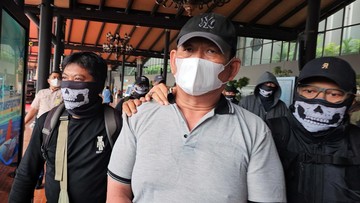

Court pushes for acid attack victim's testimony amid medical and procedural delays
Translated from Indonesian, summarized and contextualized by DistantNews.
TLDR
- The trial for the acid-throwing case against KontraS coordinator Andrie Yunus is proceeding without his presence as a witness.
- The military prosecutor's office is attempting to bring Andrie Yunus to court, but has not yet received a response from the hospital where he is being treated.
- Andrie Yunus's legal team stated he is still under medical observation for his burn injuries and has not formally received a summons from the military court.
The ongoing trial concerning the acid attack on KontraS coordinator Andrie Yunus continues to face procedural hurdles, with his presence in court as a victim witness still uncertain. The military prosecutor's office has affirmed its commitment to ensuring Andrie can testify, indicating that efforts are underway to secure his attendance. However, their attempts to coordinate with the hospital where Andrie is receiving treatment have yet to yield a definitive response, highlighting the complexities of balancing legal proceedings with medical care.
We are still writing to the hospital and our last letter has not yet been answered.
Andrie Yunus's legal counsel, part of the Advocacy Team for Democracy (TAUD), has confirmed his continued absence due to ongoing medical observation and treatment for his severe burn injuries. They emphasize that his recovery, including skin graft monitoring, is paramount and that he is not yet in a condition to attend court. Furthermore, TAUD points out that Andrie has not formally received any summons from the Military Court II-08 Jakarta, raising questions about the procedural validity of expecting his attendance at this stage.
Because his status is still under observation, control, and requires several medical procedures.
This case has taken on significant importance, particularly given Andrie Yunus's previous strong stance against a military trial for his attackers. He has vocally advocated for any perpetrators, whether civilian or military, to be tried in a general court, arguing that military justice systems often fail to deliver true justice and can become a haven for impunity. This perspective underscores a broader concern within Indonesian civil society regarding accountability for human rights violations and the role of military versus civilian courts. The current situation, where the victim's ability to participate is hampered by his medical condition and procedural ambiguities, only intensifies scrutiny on the judicial process.
So formally, from the perspective of military or civil criminal procedure, Andrie has not actually received the summons.
DistantNews Editorial
Originally published by Tempo in Indonesian. Translated, summarized, and contextualized by our editorial team with added local perspective. Read our editorial standards.
More Stories

From Our Blog

What Gets Lost (and Found) When News Is Translated

The Critical Role of Diaspora Media in Global News

What Travellers Should Know About Countries with Restricted Press

A Digital Nomad's Guide to Following Local News

How the Same Story Looks Different in Different Countries
