

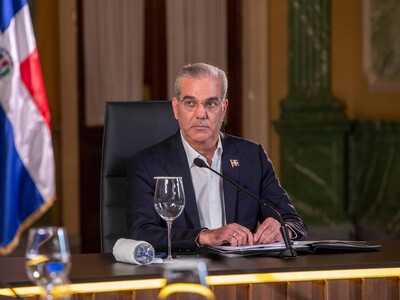
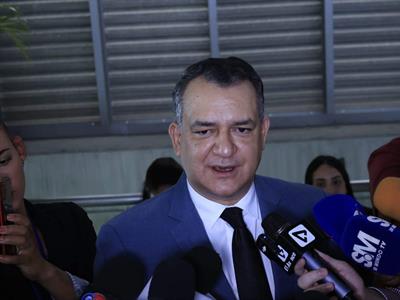
Dominican electoral chief rejects claims that poll suspension weakened the commission
Translated from Spanish and summarized by DistantNews. Read the original for the full story.
At a glance
News
Named sources
Ongoing story
- Román Jáquez Liranzo said the Dominican electoral commission was not pressured into suspending its restriction on publishing electoral polls before the pre-campaign period.
- The commission suspended the restriction on Aug. 20 after legal challenges, including claims that it violated fundamental rights.
- Jáquez said the commission would await the Superior Electoral Tribunal’s decision on more than 20 parties that received less than 1% of the vote, and confirmed an investigation into a viral marriage involving two transgender people.
Román Jáquez Liranzo rejected the idea that the Dominican electoral commission backed down when it suspended its own ban on publishing electoral polls.
“The commission does not kneel, not even to ask for marriage,” said Jáquez, president of the Central Electoral Board, known by its Spanish initials JCE. He said the reasons for suspending the restriction appeared in the certification of the commission’s latest ordinary session.
The commission does not kneel, not even to ask for marriage.
The JCE’s plenary body voted on Aug. 20 to suspend application of Article 13 of the regulation governing polling firms and the publication of electoral surveys. The provision had barred electoral polling from being published until October 2027. The measure has faced challenges before the Superior Electoral Tribunal and the Constitutional Court over alleged violations of fundamental rights.
Jáquez said the plenary had already made its decision and that he should not discuss its substance without referring to the official record. He also said the JCE would wait for the Superior Electoral Tribunal to rule on the continued presence of more than 20 political organizations that won less than 1% of the vote.
We must wait for a decision that is in the hands of the Superior Electoral Tribunal, where the continued presence in the system of more than 20 parties that received less than 1% is being challenged.
According to Jáquez, those parties retain legal recognition because electoral law, regulations and current resolutions establish other criteria beyond their vote share. “We must wait for a decision that is in the hands of the Superior Electoral Tribunal,” he said.
The JCE chief also confirmed that the commission had opened an investigation into a marriage between two transgender people that recently went viral on social media. He said preliminary registry information listed the two spouses as having different sexes, while matters involving gender identity or sexual orientation required separate consideration under the law.
The commission has just ordered an investigation into the matter, but our preliminary information is that, in fact, it is a man and a woman.
About this summary
Originally published by Diario Libre in Spanish. Translated, summarized, and contextualized automatically by DistantNews, with a note on how the source frames the story. Not individually reviewed before publishing. How this works.
More Stories
From Our Blog

What Gets Lost (and Found) When News Is Translated

The Critical Role of Diaspora Media in Global News

What Travellers Should Know About Countries with Restricted Press

A Digital Nomad's Guide to Following Local News

How the Same Story Looks Different in Different Countries
