


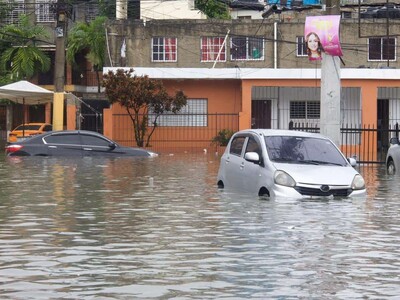
Dominican Republic faces 45% rainfall deficit; dam and river conditions monitored
Translated from Spanish, summarized and contextualized by DistantNews.
At a glance
News
Official statement
Context piece
- Rainfall in the Dominican Republic has been significantly below average over the past 60 days, with deficits ranging from 20% to 45%.
- Several river basins are experiencing reduced flow, indicating drought conditions, but no systems are at risk of supply shortages.
- Water management will prioritize human consumption, followed by agriculture and hydroelectric power, if dry conditions persist.
The Dominican Republic is experiencing a notable deficit in rainfall, with precipitation levels falling between 20% and 45% below normal over the last 60 days, according to the National Institute of Hydraulic Resources (Indrhi). This lack of rain is beginning to impact the country's rivers and streams, particularly in the East, Central, Southwest, and North regions. The South-Southwest region is currently facing the most significant rainfall deficit.
Indrhi has observed that some river basins are showing signs of "estiaje," a period of reduced water flow. This is evident in the Yuna River basin, regulated by the Hatillo dam; the Rincón reservoir on the Jima River; and the basins of the Yaque del Sur, Grande del Medio, and Las Cuevas rivers, which are managed by the Sabana Yegua dam. Despite these conditions, the institution assures that none of the currently operating water systems are at risk of shortages.
Should the dry spell continue, water management will adhere to established priorities. Human consumption, primarily for aqueducts, will be the foremost concern. Agricultural production will follow, with hydroelectric power generation and other uses taking precedence thereafter. The country's response to potential water scarcity is coordinated through the Water Observatory, which meets weekly to assess the situation, analyze weather patterns, and forecast rainfall to determine the distribution of water from reservoirs.
As of August 10, the water levels in most of the country's dams are between 60% and 80% of their capacity, which Indrhi considers to be within safe parameters. For example, the Tavera dam holds 92.66 million cubic meters of water, representing 70.32% of its maximum capacity.
DistantNews Editorial
Originally published by Diario Libre in Spanish. Translated, summarized, and contextualized by our editorial team with added local perspective. Read our editorial standards.
More Stories

From Our Blog

What Gets Lost (and Found) When News Is Translated

The Critical Role of Diaspora Media in Global News

What Travellers Should Know About Countries with Restricted Press

A Digital Nomad's Guide to Following Local News

How the Same Story Looks Different in Different Countries
