

Egypt: 'Mud God' Discovered in Nile Delta Water Temple at Tel el-Farama
Translated from Greek, summarized and contextualized by DistantNews.
TLDR
- Archaeologists in Egypt have discovered a circular water temple dedicated to a little-known god associated with Nile mud at the Tel el-Farama site.
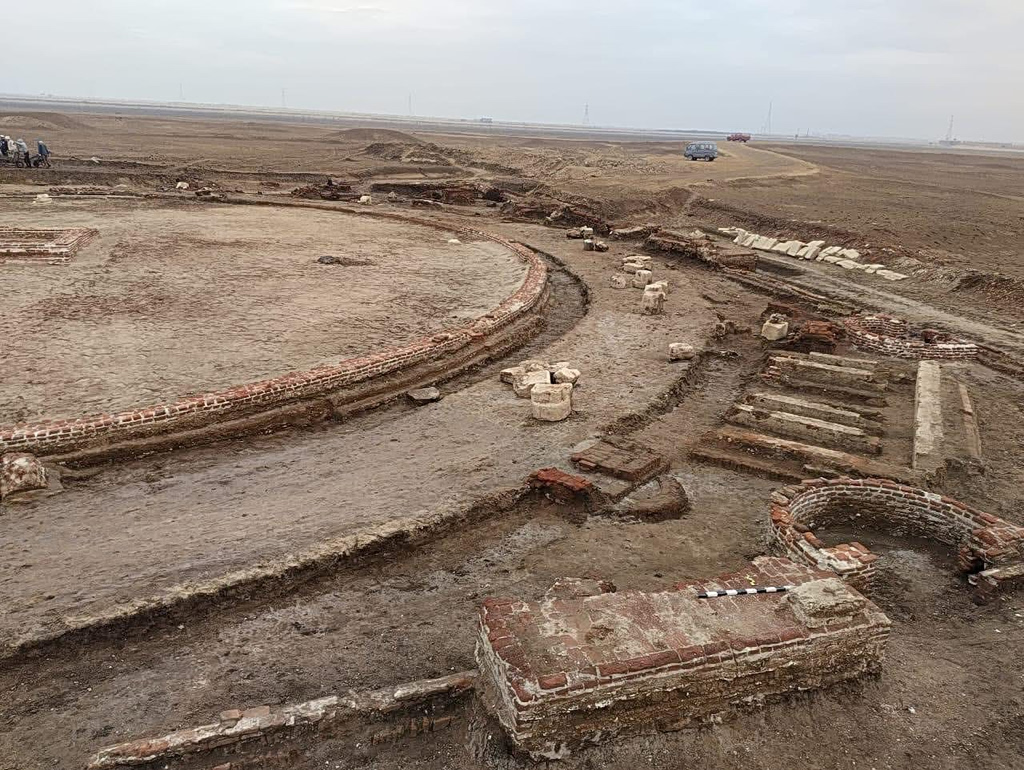
- The temple, dating from the Hellenistic to Roman periods, features a central reservoir and channels designed for collecting Nile water and its fertile silt.
- This discovery sheds light on the region's cultural synthesis and the religious significance of water management in ancient Egypt.
In a remarkable find on the eastern edge of the Nile Delta, archaeologists have unearthed a unique circular water temple at the ancient site of Pelusium (Tel el-Farama). This discovery is not just another ancient ruin; it offers a profound glimpse into the religious practices and cultural intricacies of Egypt during the Hellenistic and Roman periods. The temple, initially misidentified as an administrative building, has revealed itself to be a sacred installation centered around water and ritual. Its circular design, with a 35-meter reservoir and a network of channels, points to a sophisticated system for managing the life-giving waters of the Nile and its fertile silt. Researchers believe it was dedicated to Pelusios, a mysterious river god whose name directly translates to "mud" or "silt," a substance fundamental to ancient Egyptian agriculture and prosperity. What makes this discovery particularly fascinating from an Egyptian perspective is how it deepens our understanding of the Nile's role not merely as a source of life but as a divine entity. While international coverage might focus on the archaeological significance, for us in Egypt, it's a tangible connection to the ancient reverence for the river that has shaped our civilization for millennia. The temple's architecture, blending Egyptian, Greek, and Roman elements, also underscores the rich cultural tapestry of Pelusium as a historical crossroads. This find challenges previous assumptions and opens new avenues for research into the worship of water deities, particularly the less-documented figures like Pelusios, who stand in contrast to more famous gods like Apis. It's a powerful reminder of the enduring legacy of ancient Egyptian ingenuity and spirituality, intricately linked to the rhythms of the Nile.
DistantNews Editorial
Originally published by Ta Nea in Greek. Translated, summarized, and contextualized by our editorial team with added local perspective. Read our editorial standards.
More Stories


From Our Blog

What Gets Lost (and Found) When News Is Translated

The Critical Role of Diaspora Media in Global News

What Travellers Should Know About Countries with Restricted Press

A Digital Nomad's Guide to Following Local News

How the Same Story Looks Different in Different Countries
