


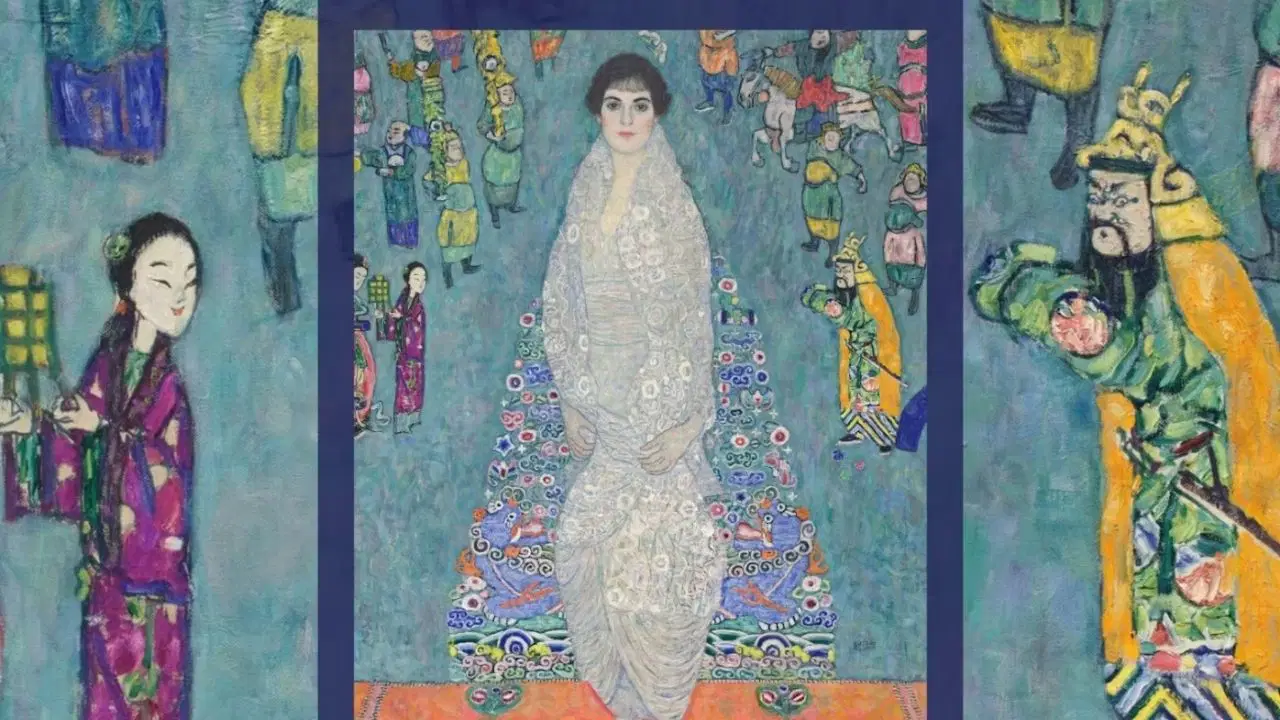
Elisabeth's Journey: A Klimt Portrait's Tale of Survival and Deception
Translated from Turkish, summarized and contextualized by DistantNews.
TLDR
- A Gustav Klimt portrait of Elisabeth Lederer sold for a record $236.4 million in New York.
- The painting's value is linked to its history during a turbulent 20th century, including Nazi occupation.
- Elisabeth Lederer survived the Nazi era by spreading a false rumor that she was Klimt's illegitimate daughter, a story that saved both her and the painting.
The recent record-breaking sale of Gustav Klimt's portrait of Elisabeth Lederer for $236.4 million in New York is more than just a triumph for the art market; it's a testament to a remarkable story of survival and deception during one of history's darkest periods. This 1914-1916 oil painting, while not Klimt's most famous, carries a weight far beyond its aesthetic qualities. It embodies the fear, lies, and sheer will to live that defined the era. Elisabeth Lederer, daughter of Klimt's patrons, found herself in a perilous situation after the Nazi annexation of Austria in 1938. Classified as 'fully Jewish,' her chances of survival were slim. Yet, through a desperate act of creativity, she fabricated a story of being Klimt's illegitimate child, a claim supported by her mother's sworn statement. This audacious lie, playing on the Nazis' desire to preserve Klimt's works as 'Aryan art,' ultimately saved both Elisabeth and the painting from persecution and destruction.
This narrative offers a unique perspective from Turkey, where historical understanding often emphasizes resilience in the face of adversity and the complex interplay of art, politics, and survival. Unlike Western coverage that might focus solely on the art market's record-breaking aspect, our perspective highlights the human drama and the strategic cunning employed to navigate a genocidal regime. The painting's journey, from its creation amidst the twilight of the Austro-Hungarian Empire to its survival through war and upheaval, mirrors the turbulent history of the 20th century that we in Turkey understand so well.
The painting's survival is a powerful symbol. While Elisabeth tragically succumbed to illness in 1944, her portrait endured. It was later returned to her brother and eventually acquired by Leonard A. Lauder, who, according to reports, treats it not merely as an investment but as a cultural artifact. This resonates with a cultural appreciation for heritage and the stories embedded within objects, especially those that have witnessed profound historical shifts. The fact that the painting's value has increased, even as it represents a period of immense suffering, serves as a stark, almost ironic, reminder of how history's tragedies can sometimes imbue objects with extraordinary significance and market value.
DistantNews Editorial
Originally published by Cumhuriyet in Turkish. Translated, summarized, and contextualized by our editorial team with added local perspective. Read our editorial standards.
More Stories



From Our Blog

What Gets Lost (and Found) When News Is Translated

The Critical Role of Diaspora Media in Global News

What Travellers Should Know About Countries with Restricted Press

A Digital Nomad's Guide to Following Local News

How the Same Story Looks Different in Different Countries
