


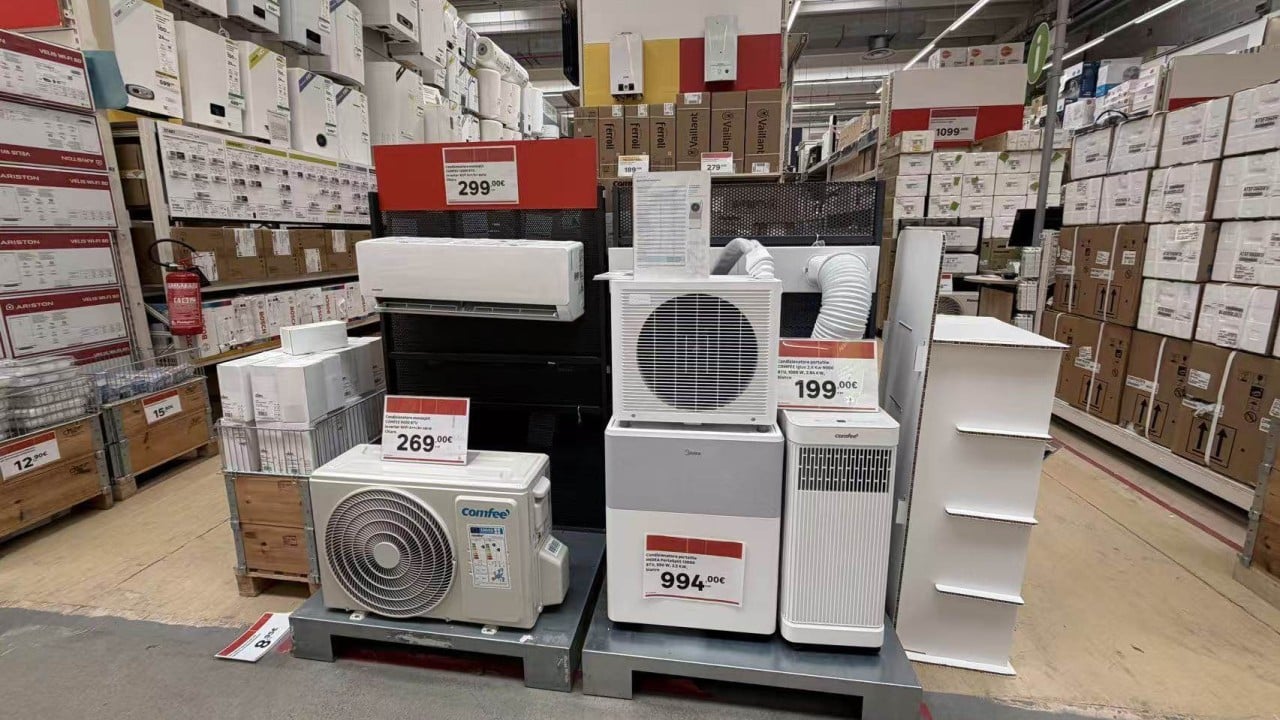
Europe's heatwave exposes trade policy gap with China
Translated from English, summarized and contextualized by DistantNews.
At a glance
News
Named sources
Context piece
- Europe faces a contradiction as demand for Chinese air conditioners surges during a heatwave, while the EU tightens trade policy toward China.
- Observers note this exposes a gap between public needs and political rhetoric on trade deficits.
- The EU is struggling with extreme weather, facing criticism for underinvestment in climate policy and public services.
Europe's struggle to cope with a record-breaking heatwave has exposed a glaring contradiction in its trade policy toward China. As extreme temperatures disrupt infrastructure, trigger droughts, and cause thousands of heat-related deaths, citizens across the continent are flocking to buy Chinese air conditioners, driving unprecedented demand.
This surge in consumer purchases comes at a time when Brussels is seeking to narrow its significant trade deficit with China through new restrictions. Observers point out that this situation highlights a disconnect between public demand, driven by immediate needs like cooling during a heatwave, and the political rhetoric emanating from Brussels. The EU's focus on new restrictions is seen by some as shifting blame rather than addressing its own structural shortcomings in trade policy.
European governments are facing sharp criticism for their response to the extreme weather. Accusations of poor emergency management and underinvestment in essential public services and climate adaptation policies are widespread. Meanwhile, the reliance on Chinese-made appliances underscores a complex economic reality for many Europeans, who prioritize cost-of-living concerns and daily comfort.
Ding Chun, director of the Centre for European Studies at Fudan University, commented on this disconnect, noting that ordinary citizens naturally focus on their immediate realities. The rush for affordable cooling solutions, like Chinese air conditioners, directly contrasts with the EU's broader geopolitical and trade objectives, revealing a significant gap between political aspirations and the practical needs of the populace.
The public naturally focused on cost-of-living realities and daily life.
DistantNews Editorial
Originally published by South China Morning Post in English. Translated, summarized, and contextualized by our editorial team with added local perspective. Read our editorial standards.
More Stories
From Our Blog

Countries Without a Free Press: What You Need to Know

What Press Freedom Means for the News You Read

What Gets Lost (and Found) When News Is Translated

The Critical Role of Diaspora Media in Global News

What Travellers Should Know About Countries with Restricted Press
