


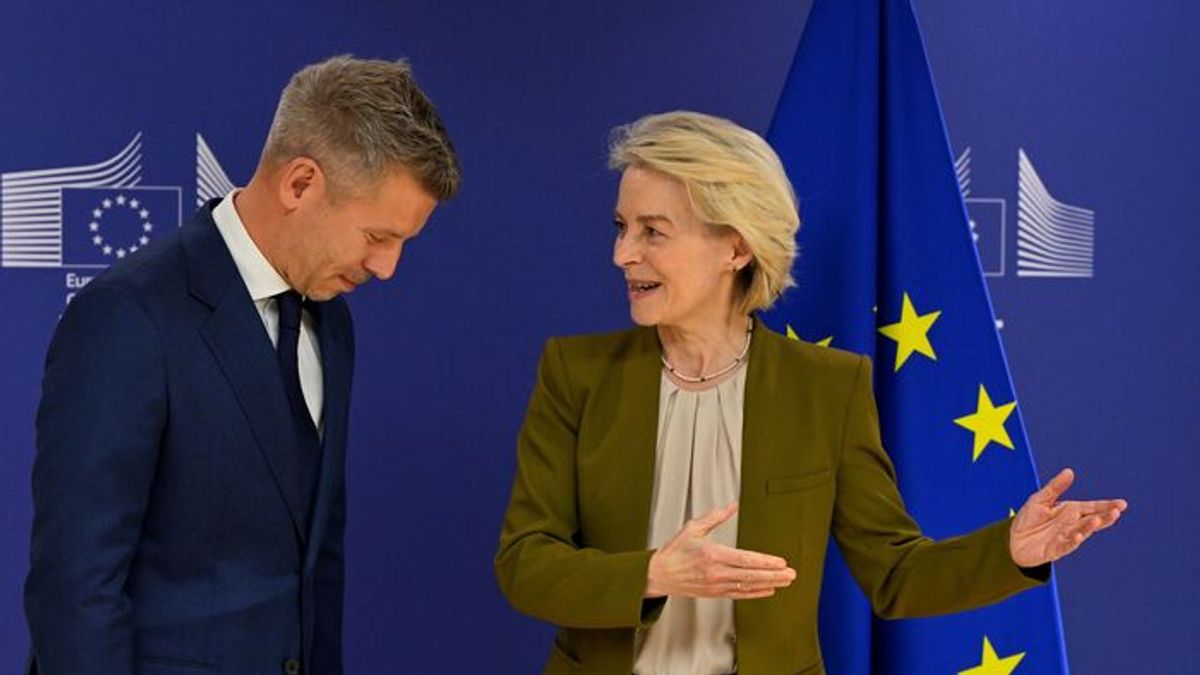
European Commission Once Again Targets Hungarians’ Wallets
Summarized and contextualized by DistantNews.
TLDR
- The European Commission is scrutinizing fiscal measures implemented by member states, such as fuel tax reductions, aimed at easing the economic impact of the war.
- Slovakia's implementation of regulated diesel prices for domestically registered vehicles, while charging higher prices for foreign-registered cars, has drawn attention.
- Prime Minister Robert Fico defended these measures as 'positive discrimination' against 'fuel tourists,' particularly those from Poland, citing instances of Slovakian petrol stations being emptied due to lower prices.
The European Commission's renewed focus on member states' fiscal policies, particularly those impacting energy costs, is being closely watched here in Hungary. While the stated aim is to alleviate the burden of the war on energy bills, the Commission's scrutiny often feels like an attempt to impose a one-size-fits-all economic approach that disregards national specificities.
Slovakia's recent implementation of differentiated fuel prices, favoring domestically registered vehicles over those from neighboring countries like Poland, exemplifies the kind of national-level response that Brussels seems keen to curb. Prime Minister Robert Fico's justification of these measures as 'positive discrimination' against 'fuel tourists' resonates with a sentiment felt in many Central European nations: that national interests must sometimes take precedence, especially when facing external economic pressures.
We reached a situation where dozens of petrol stations in northern Slovakia were literally emptied, as prices there were lower than in Poland.
From our perspective at Magyar Nemzet, these actions by the European Commission often appear to prioritize abstract market principles over the practical needs of citizens and national economies. The Commission's concern over potential 'emptying' of Slovakian petrol stations due to lower prices for locals, while framed as a market distortion, can also be seen as a defense of cross-border price arbitrage that benefits some at the expense of others. This highlights a recurring tension between Brussels's vision of an integrated European market and the desire of individual nations to protect their own economic stability and citizens.
We reached a situation where dozens of petrol stations in northern Slovakia were literally emptied, as prices there were lower than in Poland.
DistantNews Editorial
Originally published by Magyar Nemzet. Summarized and contextualized by our editorial team with added local perspective. Read our editorial standards.
More Stories

From Our Blog

Countries Without a Free Press: What You Need to Know

What Press Freedom Means for the News You Read

What Gets Lost (and Found) When News Is Translated

The Critical Role of Diaspora Media in Global News

What Travellers Should Know About Countries with Restricted Press
