

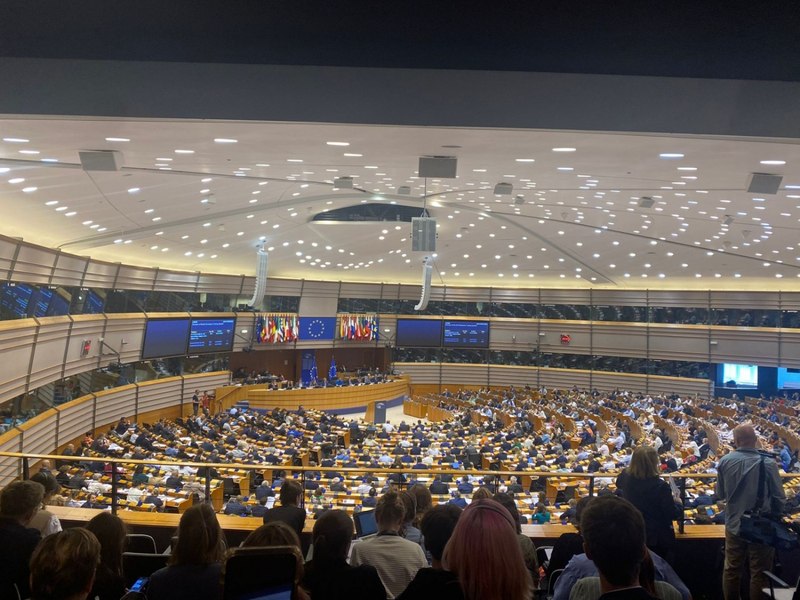
European Parliament seeks a larger budget for the community bloc. Siegfried Mureșan: We are ready to get involved
Translated from Romanian, summarized and contextualized by DistantNews.
TLDR
- The European Parliament is advocating for a larger and more ambitious EU budget for the 2028-2034 period, aiming to maintain funding for traditional policies while integrating new priorities.
- MEPs propose setting the budget at 1.27% of the EU's GNI, excluding NextGenerationEU debt repayment, and suggest a roughly 10% increase over the European Commission's proposal.
- The Parliament emphasizes the need for the budget to remain an investment tool supporting policies, citizens, businesses, and ensuring European added value, opposing any renationalization of funds.
From the perspective of Adevărul, a prominent Romanian publication, the European Parliament's push for a significantly larger EU budget for 2028-2034 signals a critical juncture for the bloc's future. The Parliament's clear stance, demanding a budget set at 1.27% of the Gross National Income (GNI) and a substantial increase over the Commission's proposal, underscores a desire for robust investment in key areas.
This call for increased funding is not merely about maintaining the status quo for agriculture and cohesion policies. It reflects a strategic vision to bolster new priorities such as defense, competitiveness, and the green transition. The Parliament's insistence on integrating these crucial areas without compromising democratic control and transparency highlights a commitment to a forward-looking and accountable European Union. The proposed increase, amounting to approximately 10% more than the Commission's initial figures, demonstrates the urgency felt by MEPs to adequately resource these vital policy objectives.
Crucially, the European Parliament champions the long-term budget as a powerful investment instrument. It aims to support citizens, regions, companies, and especially small and medium-sized enterprises (SMEs) across the Union. The emphasis on delivering tangible European added value, distinct from national spending, and the firm opposition to any form of renationalization, are central to this vision. This approach seeks to prevent a fragmented Europe and ensure that collective EU policies remain strong and effective, resisting the temptation of an 'à la carte' or state-by-state approach that could weaken the Union's overall impact and transparency. Siegfried Mureșan's readiness to engage further underscores the active role Romania seeks to play in shaping this crucial financial framework.
We are prepared to get involved.
DistantNews Editorial
Originally published by Adevărul in Romanian. Translated, summarized, and contextualized by our editorial team with added local perspective. Read our editorial standards.
More Stories
From Our Blog

What Gets Lost (and Found) When News Is Translated

The Critical Role of Diaspora Media in Global News

What Travellers Should Know About Countries with Restricted Press

A Digital Nomad's Guide to Following Local News

How the Same Story Looks Different in Different Countries
