


Fact check: Bulldozer video misrepresents protest response in Jakarta
Translated from Indonesian and summarized by DistantNews. Read the original for the full story.
At a glance
News
Sources not specified
Outcome reported
- A viral video falsely claims four bulldozers were deployed to the Indonesian House of Representatives (DPR RI) building during a protest on August 27, 2026.
- Fact-checking revealed the video actually shows trucks transporting heavy equipment in Jambi in October 2025, not bulldozers at the protest site.
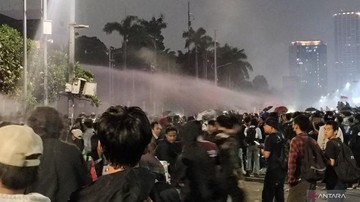
- Police used armored vehicles with water cannons and tear gas to disperse the protest, not bulldozers.
A video circulating on social media platforms falsely claims that four bulldozers were deployed to the Indonesian House of Representatives (DPR RI) building to counter a protest on August 27, 2026. The accompanying text suggests the vehicles were ready to move once the Asset Forfeiture Bill was passed.
However, Tempo's fact-checking investigation has debunked this claim. Reverse image searches, geolocation, and verification with credible sources confirm that the footage does not depict heavy equipment being sent to the protest site. Instead, the video was recorded in Jambi in October 2025 and shows trucks transporting heavy equipment, not bulldozers.
The video's location was identified as Jalan Lintas Sumatera, Simpang Muara, Bungo Regency, Jambi Province, with visual elements like billboards and shop houses matching Google Street View imagery from 2025. The original footage of the convoy was uploaded by a TikTok account from Jambi in October 2025.
During the August 27, 2026, protest at the DPR RI building, organized by the Pati United Community Alliance, police deployed armored vehicles equipped with water cannons and tactical vehicles. Officers used water cannons and tear gas from within the Senayan complex to disperse the crowd, a response entirely different from the bulldozers depicted in the viral video.
About this summary
Originally published by Tempo in Indonesian. Translated, summarized, and contextualized automatically by DistantNews, with a note on how the source frames the story. Not individually reviewed before publishing. How this works.
More Stories


From Our Blog

What Gets Lost (and Found) When News Is Translated

The Critical Role of Diaspora Media in Global News

What Travellers Should Know About Countries with Restricted Press

A Digital Nomad's Guide to Following Local News

How the Same Story Looks Different in Different Countries
