


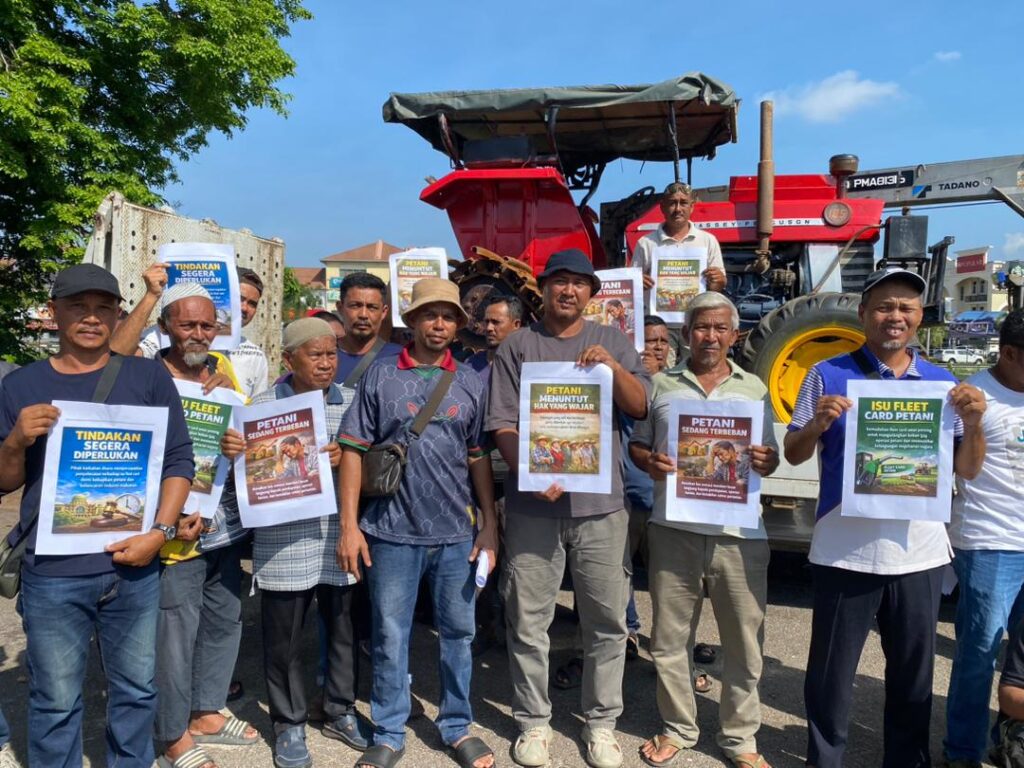
FARMERS DEMAND FLEET CARD, HIGHER PADI FLOOR PRICE
Translated from Malay, summarized and contextualized by DistantNews.
TLDR
- Malaysian farmers' group PeSAWAH argues that the increased Farming Lease Incentive (IPKP) of RM300 per hectare is insufficient.
- They cite rising operational costs, particularly diesel prices, as the primary challenge.
- PeSAWAH states that the IPKP does not adequately compensate for the escalating costs driven by the global energy crisis.
Utusan Malaysia reports on the concerns of the Pertubuhan Persaudaraan Pesawah Malaysia (PeSAWAH), a farmers' association, regarding the adequacy of government incentives. The article focuses on the RM300 per hectare Farming Lease Incentive (IPKP), which PeSAWAH argues falls short of addressing the real financial pressures faced by farmers.
The core issue highlighted is the significant increase in operational costs, especially the price of diesel, which directly impacts farming activities. PeSAWAH's chairman, Abdul Rashid Yob, emphasizes that while the IPKP represents an increase, it fails to offset the escalating expenses that farmers are currently grappling with. This perspective frames the government's support as insufficient in the face of a global energy crisis that is driving up essential commodity prices.
The increase in the Farming Lease Incentive to Farmers (IPKP) to RM300 per hectare is still not enough.
From the viewpoint of Utusan Malaysia, which often reflects a focus on the welfare of rural communities and agricultural sectors, this story emphasizes the struggles of Malaysian farmers. The article conveys the "rintihan" (cries) from farmers, suggesting a disconnect between policy intentions and the ground reality. The piece underscores that the IPKP, while seemingly a positive step, is not the comprehensive solution needed to balance the rising costs in the agricultural sector.
This narrative is particularly relevant in Malaysia, where agriculture remains a significant sector, and the livelihoods of many depend on it. The article implicitly calls for greater attention and more substantial support for farmers, positioning them as vital contributors to the nation's economy who are currently bearing the brunt of global economic instability. The framing suggests that current measures are merely a temporary patch rather than a sustainable solution for the challenges faced by the farming community.
IPKP is not the real solution to balance the soaring costs due to the current global energy crisis.
DistantNews Editorial
Originally published by Utusan Malaysia in Malay. Translated, summarized, and contextualized by our editorial team with added local perspective. Read our editorial standards.
More Stories



From Our Blog

What Gets Lost (and Found) When News Is Translated

The Critical Role of Diaspora Media in Global News

What Travellers Should Know About Countries with Restricted Press

A Digital Nomad's Guide to Following Local News

How the Same Story Looks Different in Different Countries
