

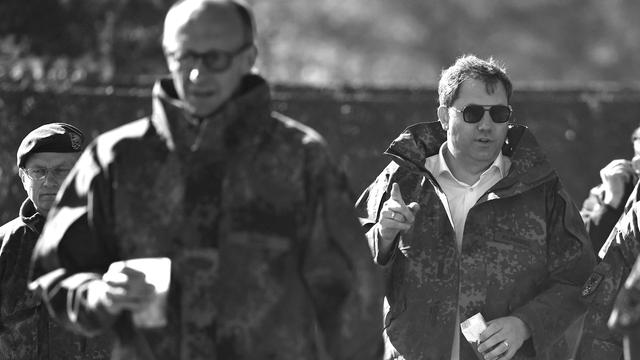

Friedrich Merz: Too Impulsive? Not This Time!
Translated from German, summarized and contextualized by DistantNews.
TLDR
- Friedrich Merz, a prominent German politician, is criticized for his impulsive public speaking style.
- Merz recently made controversial remarks about the US and Iran, potentially harming German economic interests and European security.
- Critics question his suitability for leadership due to his perceived emotional and unstrategic approach.
Friedrich Merz, a figure often seen as a potential candidate for higher office, once again finds himself under scrutiny for his public pronouncements. His talent for free speech, while a potential asset, has also proven to be a double-edged sword. Observers note Merz's tendency to address the immediate audience, allowing himself to be carried away by emotion—be it sentiment, anger, or even recklessness.
This impulsivity recently manifested in remarks made to students in the Sauerland region, where he disparaged the US-led actions in Iran, calling the US "humiliated" and accusing it of lacking strategy. Such statements, made without apparent consideration for the broader geopolitical and economic implications, risk alienating allies and potentially jeopardizing Germany's economic stability through retaliatory tariffs or the withdrawal of US troops from Germany.
The criticism leveled against Merz suggests a pattern of diplomatic unrefinement. His detractors argue that such emotionally charged and strategically unsound pronouncements undermine not only his own credibility but also Germany's standing on the international stage. The concern is that his perceived lack of strategic thinking and emotional volatility make him unfit for the responsibilities of leadership, particularly in navigating complex international relations.
From a German perspective, the debate around Merz's rhetoric highlights a tension between direct, sometimes provocative, communication and the careful diplomacy expected of a major European power. While some may appreciate his willingness to speak his mind, others worry that his impulsivity could have tangible negative consequences for Germany's economy and security, especially in the current volatile global climate.
DistantNews Editorial
Originally published by Die Zeit in German. Translated, summarized, and contextualized by our editorial team with added local perspective. Read our editorial standards.
More Stories

From Our Blog

What Gets Lost (and Found) When News Is Translated

How the Same Story Looks Different in Different Countries

The Critical Role of Diaspora Media in Global News

What Travellers Should Know About Countries with Restricted Press

A Digital Nomad's Guide to Following Local News
