


Greek Prosecutor Accused of Illegally Approving Wiretaps on Top Officials
Translated from Greek, summarized and contextualized by DistantNews.
TLDR
- A Greek prosecutor is accused of consciously violating the law and acting unethically in handling a wiretapping case.
- The prosecutor allegedly approved wiretaps for national security reasons on high-ranking officials, including the Deputy Prime Minister.
- Critics argue the prosecutor's actions were illegal and arbitrary, citing conflicts of interest and a lack of proven national security necessity.
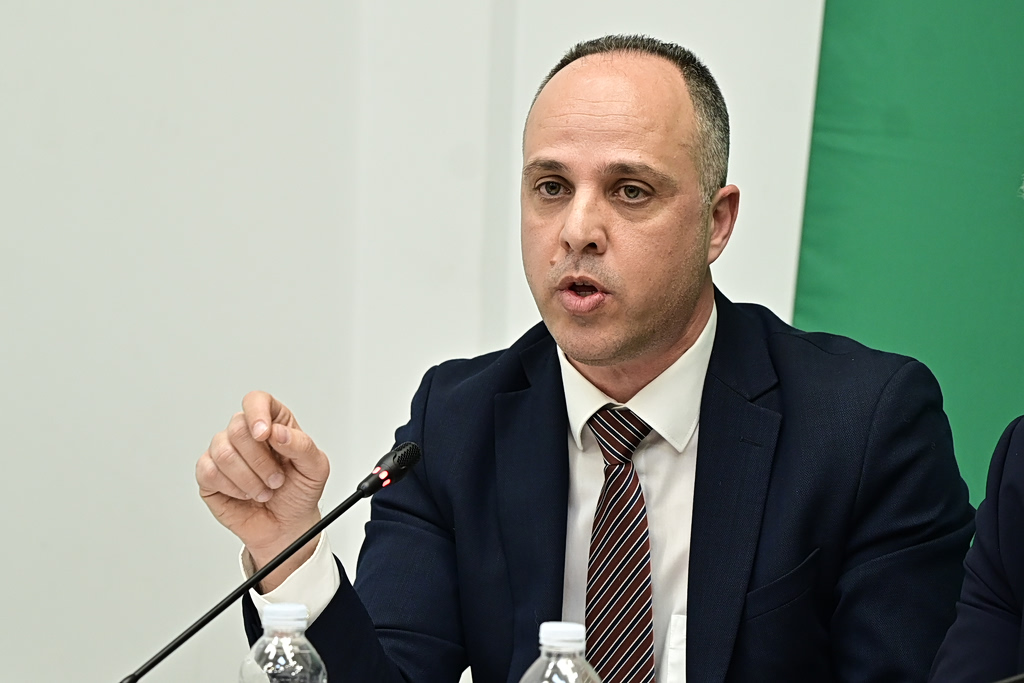
The recent revelations surrounding the wiretapping scandal in Greece have taken a dramatic turn, with accusations now leveled directly at the Prosecutor of the Supreme Court, Konstantinos Tzavellas. Lawyer Zacharias Kesses, representing victims of illegal surveillance, has publicly stated that Tzavellas "consciously decided to violate the law and handle the case," a grave charge that strikes at the heart of judicial integrity.
decided consciously to violate the law and handle the case
Kesses asserts that Tzavellas's approval of wiretaps, citing national security as justification, was not only unlawful but also arbitrary. The list of individuals subjected to surveillance is particularly damning, including the Deputy Prime Minister, the Economic Prosecutor, and close associates of the Prime Minister's wife. This alleged misuse of power, according to Kesses, implicates Tzavellas directly in a cover-up, undermining public trust in the justice system.
What makes this situation particularly concerning from a Greek perspective is the direct involvement of the highest judicial authority in what appears to be a systematic violation of privacy and legal procedures. The article details several specific instances where Tzavellas's actions are questioned, including his prior oversight of the National Intelligence Service (EYP) during the period when alleged collusion with Intellexa occurred, and his role in the wiretapping of journalist Thanasis Koukakis, who is himself a party in the legal proceedings. This creates a clear conflict of interest and raises serious doubts about impartiality.
As Mr. Kesses stressed, the Supreme Court Prosecutor "signed the unprecedented surveillance for national security reasons of the Deputy Prime Minister K. Hadjidakis, the Economic Prosecutor Ch. Bardakis, G. Mylonakis and his wife T. Mesaropoulou, as well as A. Xagorari, a close associate of the Prime Minister's wife."
Furthermore, the article highlights Tzavellas's alleged role in the issuance and subsequent abrupt termination of wiretap orders, suggesting a manipulation of evidence and a lack of genuine national security concerns. The fact that these wiretaps were allegedly followed by Predator spyware infections on the targeted individuals raises further alarms about the extent of the surveillance and its purpose. From our vantage point, this is not merely a legal or political issue; it is a profound crisis of confidence in the institutions meant to protect citizens' rights and uphold the rule of law. The international press might focus on the technical aspects of surveillance or the political fallout, but for us, it's about the potential erosion of democratic safeguards from within.
Therefore, the provision of Mr. Tzavellas is in principle illegal and arbitrary, and he himself is criminally and disciplinarily accountable. The cover-up bears his name in the most celebratory way.
DistantNews Editorial
Originally published by Ta Nea in Greek. Translated, summarized, and contextualized by our editorial team with added local perspective. Read our editorial standards.
More Stories



From Our Blog

What Gets Lost (and Found) When News Is Translated

The Critical Role of Diaspora Media in Global News

What Travellers Should Know About Countries with Restricted Press

A Digital Nomad's Guide to Following Local News

How the Same Story Looks Different in Different Countries
