


Green energy: High-rise residences need transformation
Translated from Malay, summarized and contextualized by DistantNews.
At a glance
News
Sources not specified
Context piece
- Awareness of energy efficiency in Malaysian high-rise buildings is growing, with new projects adopting green certifications.
- However, implementation is inconsistent, with many developments focusing only on minimum building code compliance.
- Experts call for a holistic approach combining passive design, renewable energy, and smart management to optimize energy use and occupant comfort.
High-rise residential buildings in Malaysia are increasingly incorporating green certifications and environmental, social, and governance (ESG) principles, signaling a growing awareness of energy efficiency. Projects are adopting standards like GreenRE and the Green Building Index (GBI) as added value.
Despite this trend, the widespread adoption of energy-efficient practices remains limited. Many new developments still prioritize meeting minimum building regulations over optimizing energy performance throughout the building's lifecycle. Key areas such as building orientation for natural ventilation, renewable energy integration, and overall energy efficiency are not yet fully optimized.
According to Ar. Azril Amir Jaafar, Director of VERITAS Architects Sdn. Bhd., common weaknesses include building orientations ill-suited to the tropical climate, restricted window openings, heavy reliance on air conditioning and artificial lighting, and the use of heat-absorbing construction materials. He also noted that shared spaces like lobbies, corridors, and parking areas often consume energy continuously without efficient smart control systems.
Cross-ventilation, correct building orientation, shading from direct sunlight, and natural lighting can significantly reduce the need for air conditioning and lights during the day. In Malaysia's climate, this approach can significantly reduce energy consumption, while also improving occupant comfort.
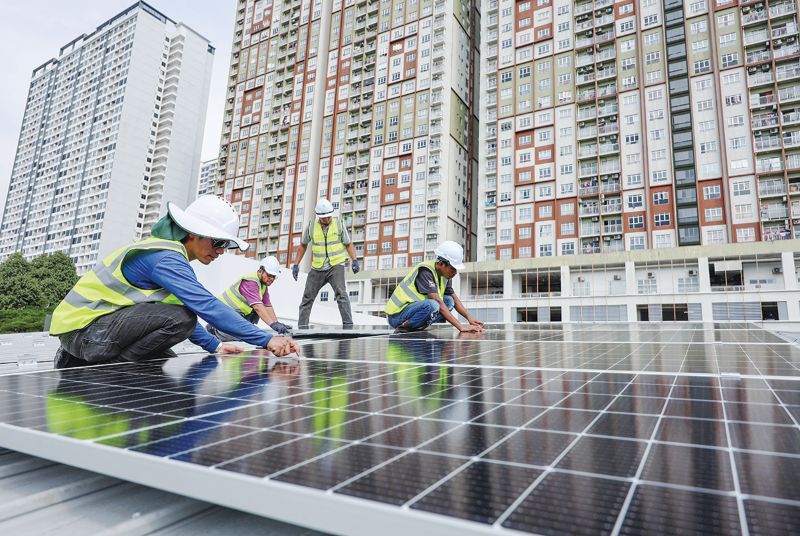
Jaafar emphasized that passive design strategies are the most effective first step. "Cross-ventilation, correct building orientation, shading from direct sunlight, and natural lighting can significantly reduce the need for air conditioning and lights during the day," he told Utusan Malaysia. He added that installing solar panels on rooftops to generate electricity is crucial for reducing dependence on the grid, though challenges like limited roof space, initial costs, maintenance, benefit sharing, and coordination with building management and utilities persist.
"Therefore, the solution is not just installing solar panels, but requires a holistic approach that combines design, technology, and a suitable management model," Jaafar stated. Datuk TPr Dr. Alias Rameli, Director-General of Town and Country Planning (PLANMalaysia), confirmed that the Ministry of Housing and Local Government (KPKT) is seriously addressing the issue of apartment designs in Malaysia that do not yet support green energy use, particularly in older buildings. The ministry has provided guidelines for local authorities and developers to ensure new high-rise developments integrate green energy elements.
Therefore, the solution is not just installing solar panels, but requires a holistic approach that combines design, technology, and a suitable management model.
DistantNews Editorial
Originally published by Utusan Malaysia in Malay. Translated, summarized, and contextualized by our editorial team with added local perspective. Read our editorial standards.
More Stories

From Our Blog

What Gets Lost (and Found) When News Is Translated

The Critical Role of Diaspora Media in Global News

What Travellers Should Know About Countries with Restricted Press

A Digital Nomad's Guide to Following Local News

How the Same Story Looks Different in Different Countries
