

Green Party Leadership: New Co-Leaders for Greens in Rhineland-Palatinate
Translated from German, summarized and contextualized by DistantNews.
TLDR
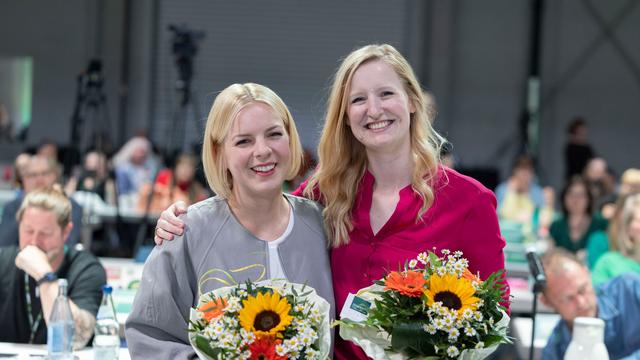
- The Green Party in Rhineland-Palatinate has elected a new leadership duo: Carolin Cloos and Christin Sauer.
- Both newly elected leaders emphasized the need for the party to be more vocal and present in all regions of the state, particularly in rural areas.
- The party, now in opposition after 15 years in government, aims to strengthen its campaign capabilities and connect more with citizens.
In Rheinland-Pfalz, the Green Party is embarking on a new chapter with the election of Carolin Cloos and Christin Sauer as its new state leaders. This transition occurs as the party finds itself in the opposition benches of the state parliament after a significant 15-year tenure in government. The delegates at the party congress in Idar-Oberstein have placed their trust in this new leadership to navigate the challenges ahead.
Both Cloos and Sauer have articulated a clear vision for the party's future. Cloos stressed that the Greens must amplify their voice in opposition, advocating for non-negotiable principles like climate protection, democracy, and social justice. Sauer, meanwhile, focused on strengthening the party's grassroots presence, emphasizing the importance of listening to citizens, explaining political decisions, and addressing local concerns, especially in rural regions.
The Greens must not become quieter in the state parliament's opposition, but must be even louder.
This strategic focus on increased presence and engagement in all areas of Rheinland-Pfalz is crucial. After years in government, the party must now reconnect with voters from a different position. The emphasis on developing campaign capabilities, including in the digital sphere, signals a forward-looking approach to political communication and mobilization.
As the smallest of the four parties in the new state parliament, with 7.9 percent of the vote, the Greens face the task of rebuilding and asserting their influence. The decision by the previous leaders, Natalie Cramme-Hill and Paul Bunjes, to step down from party leadership due to the separation of office and mandate demonstrates a commitment to party principles. Their departure from leadership, while continuing as members of the state parliament, sets a precedent for the new leadership to follow.
It is about going into the rural regions of the state and being present there.
DistantNews Editorial
Originally published by Die Zeit in German. Translated, summarized, and contextualized by our editorial team with added local perspective. Read our editorial standards.
More Stories
From Our Blog

What Gets Lost (and Found) When News Is Translated

How the Same Story Looks Different in Different Countries

The Critical Role of Diaspora Media in Global News

What Travellers Should Know About Countries with Restricted Press

A Digital Nomad's Guide to Following Local News
