


Guatemala: Infrastructure Commission Warns of Bridge Risks as Rainy Season Approaches
Translated from Spanish, summarized and contextualized by DistantNews.
TLDR
- Guatemala's infrastructure commission identified 33 bridges and 35 structures at risk due to the upcoming rainy season, citing issues like cracks, unevenness, and lack of maintenance.
- The Ministry of Communications stated that not all structures are in critical condition and are being monitored and maintained by Covial.
- While some bridges require emergency attention or are under repair, the majority are considered passable with routine maintenance, though 54% of listed bridges need some form of attention.
Guatemala's infrastructure is facing a critical juncture as the rainy season approaches, with the "Guatemala No Se Detiene" infrastructure commission highlighting significant risks to 33 bridges and 35 other structures across the country. These identified vulnerabilities, ranging from cracks and uneven surfaces to a general lack of upkeep, are concentrated on strategic routes like CA-1, CA-2, and CA-9 Norte, raising concerns about potential disruptions and safety hazards.
No todas están en estado crítico y estamos al tanto. Ya las estamos atendiendo por medio de Covial. Es un esfuerzo grandísimo el que estamos haciendo porque es muchísima la necesidad que tenemos en infraestructura vial.
In response, the Ministry of Communications, Infrastructure, and Housing (CIV) has moved to reassure the public, with Minister Norma Zea asserting that not all structures are in a state of critical disrepair. She emphasized that ongoing monitoring and maintenance efforts are in place through Covial, acknowledging the immense need for infrastructure investment nationwide. The ministry's immediate priority is to address these bridges before the heavy rains begin, aiming to mitigate immediate risks.
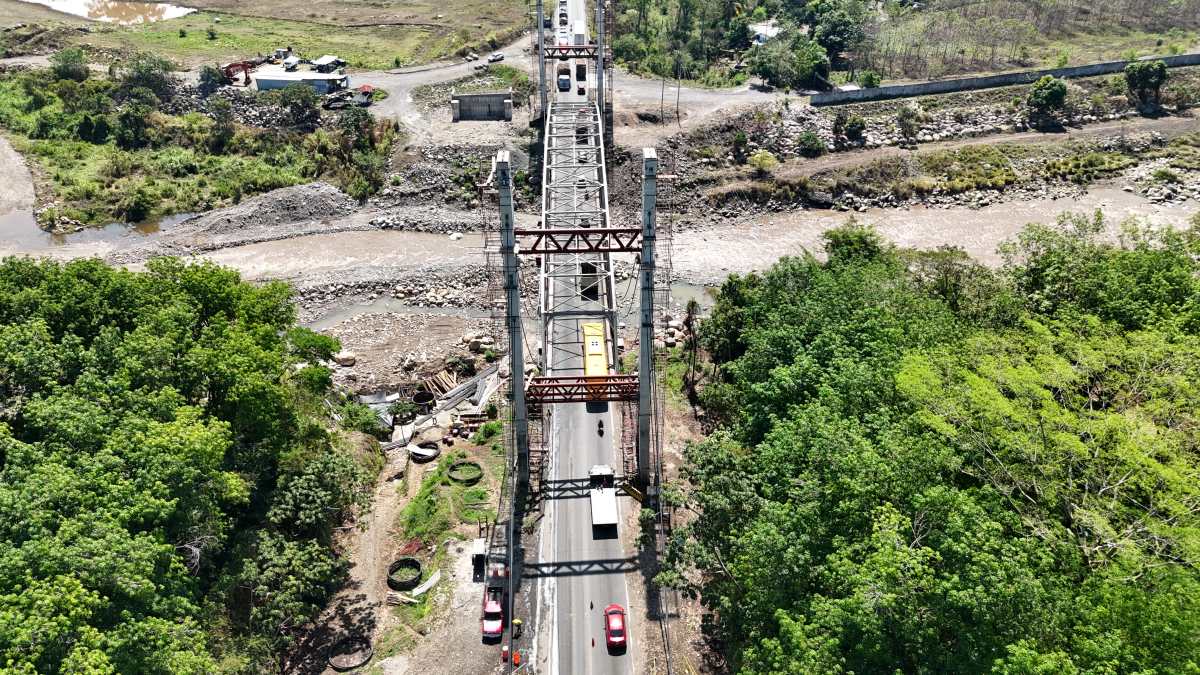
While the CIV acknowledges the identified structures within its network, reports indicate that four bridges require emergency intervention: Brisas de Mocá, Las Pericas, Santa Bárbara, and Río Dulce. The Santiago bridge is undergoing reconstruction, with a provisional Bailey bridge facilitating traffic. Sixteen other bridges are deemed passable and are receiving routine maintenance. However, official data suggests that a significant portion, at least 54%, of the listed bridges require some level of attention, from technical evaluation to direct repairs, with administrative processes potentially delaying some interventions.
Cuando un puente ya no es transitable es porque de alguna manera ya no funciona, y eso es lo que queremos evitar.
The private sector, represented by figures like Juan Carlos Zapata, stresses the paramount importance of consistent and robust maintenance. Zapata calls for clear definitions of "transitability" and adherence to international standards for the nation's road network. The concern is that without adequate and timely maintenance, the country risks not only economic disruption but also jeopardizing the safety of its citizens. This situation underscores a persistent challenge in Guatemala: ensuring that infrastructure development and maintenance keep pace with the nation's needs and the demands of its geography.
Los puentes deben estar en condiciones óptimas y por eso el mantenimiento debe ser constante. El gran desafío que tenemos como país es que el mantenimiento no se hace con la magnitud y seriedad que requiere.
DistantNews Editorial
Originally published by Prensa Libre in Spanish. Translated, summarized, and contextualized by our editorial team with added local perspective. Read our editorial standards.
More Stories


From Our Blog

What Gets Lost (and Found) When News Is Translated

The Critical Role of Diaspora Media in Global News

What Travellers Should Know About Countries with Restricted Press

A Digital Nomad's Guide to Following Local News

How the Same Story Looks Different in Different Countries
