

Hegseth: We are in an existential battle with Iran – New threats against 'unwilling' U.S. allies
Translated from Greek, summarized and contextualized by DistantNews.
TLDR
- U.S. Secretary of War Pete Hegseth stated that the U.S. will support allies strengthening their defense but will penalize those who do not.
- Hegseth emphasized the urgency of the moment and requested a $1.5 trillion defense budget for fiscal year 2027 to maintain a strong military amid complex global threats.
- He specifically addressed Iran, calling it the "greatest challenge" and warning against "reckless, misguided, and defeatist words" from certain members of Congress, asserting that Iran cannot obtain a nuclear bomb.
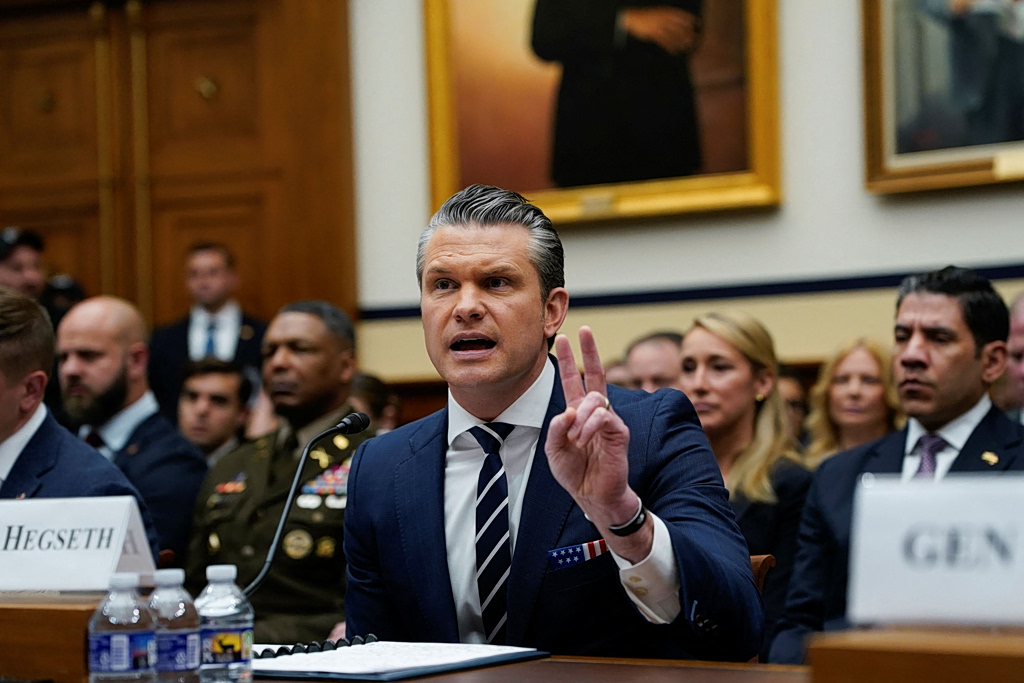
In Washington, U.S. Secretary of War Pete Hegseth delivered a stark message regarding international defense cooperation, framing the current global landscape as an "existential battle." Speaking before Congress, Hegseth articulated a clear policy: allies who step up, like Israel, South Korea, Poland, and Finland, will receive preferential treatment. Conversely, those who fail to meet their collective defense obligations will face consequences.
Οι σύμμαχοι-πρότυπα που θα αναλάβουν δράση, όπως το Ισραήλ, η Νότια Κορέα, η Πολωνία, η Φινλανδία, οι χώρες της Βαλτικής και άλλες, θα λάβουν την ιδιαίτερη εύνοιά μας
This stance underscores a significant shift in U.S. foreign policy under the current administration, prioritizing a transactional approach to alliances. The emphasis is on tangible contributions to mutual security, moving away from automatic support for nations perceived as not pulling their weight. Hegseth's call for a $1.5 trillion defense budget for fiscal year 2027 signals a commitment to bolstering American military might to counter a "complex threat environment" across multiple theaters.
οι σύμμαχοι που δεν το κάνουν – σύμμαχοι που εξακολουθούν να μην καταφέρνουν να κάνουν το καθήκον τους για τη συλλογική άμυνα – θα αντιμετωπίσουν συνέπειες
The Secretary's remarks also carried a pointed message towards Iran, labeling it the primary adversary. Hegseth criticized what he termed "reckless, misguided, and defeatist words" from certain U.S. lawmakers, contrasting them with the administration's firm resolve. The assertion that "Iran cannot have a nuclear bomb" reflects a core U.S. foreign policy objective, with the Secretary indicating a strategy to pressure Tehran into negotiations by highlighting recent actions against its nuclear facilities.
Το αίτημα του προέδρου για τον προϋπολογισμό αντικατοπτρίζει τον επείγοντα χαρακτήρα της στιγμής
From a U.S. perspective, this assertive posture is presented as necessary for safeguarding national interests and global stability. The administration views its allies' defense spending as a crucial component of burden-sharing, essential for confronting adversaries like Iran. The narrative promoted is one of American strength and leadership, demanding accountability from partners while preparing for potential conflicts.
η μεγαλύτερη πρόκληση, ο μεγαλύτερος αντίπαλος που αντιμετωπίζουμε σε αυτό το σημείο είναι τα απερίσκεπτα, άστοχα και ηττοπαθή λόγια των Δημοκρατικών του Κογκρέσου και ορισμένων Ρεπουμπλικανών
DistantNews Editorial
Originally published by Ta Nea in Greek. Translated, summarized, and contextualized by our editorial team with added local perspective. Read our editorial standards.
More Stories

From Our Blog

What Gets Lost (and Found) When News Is Translated

The Critical Role of Diaspora Media in Global News

What Travellers Should Know About Countries with Restricted Press

A Digital Nomad's Guide to Following Local News

How the Same Story Looks Different in Different Countries
