


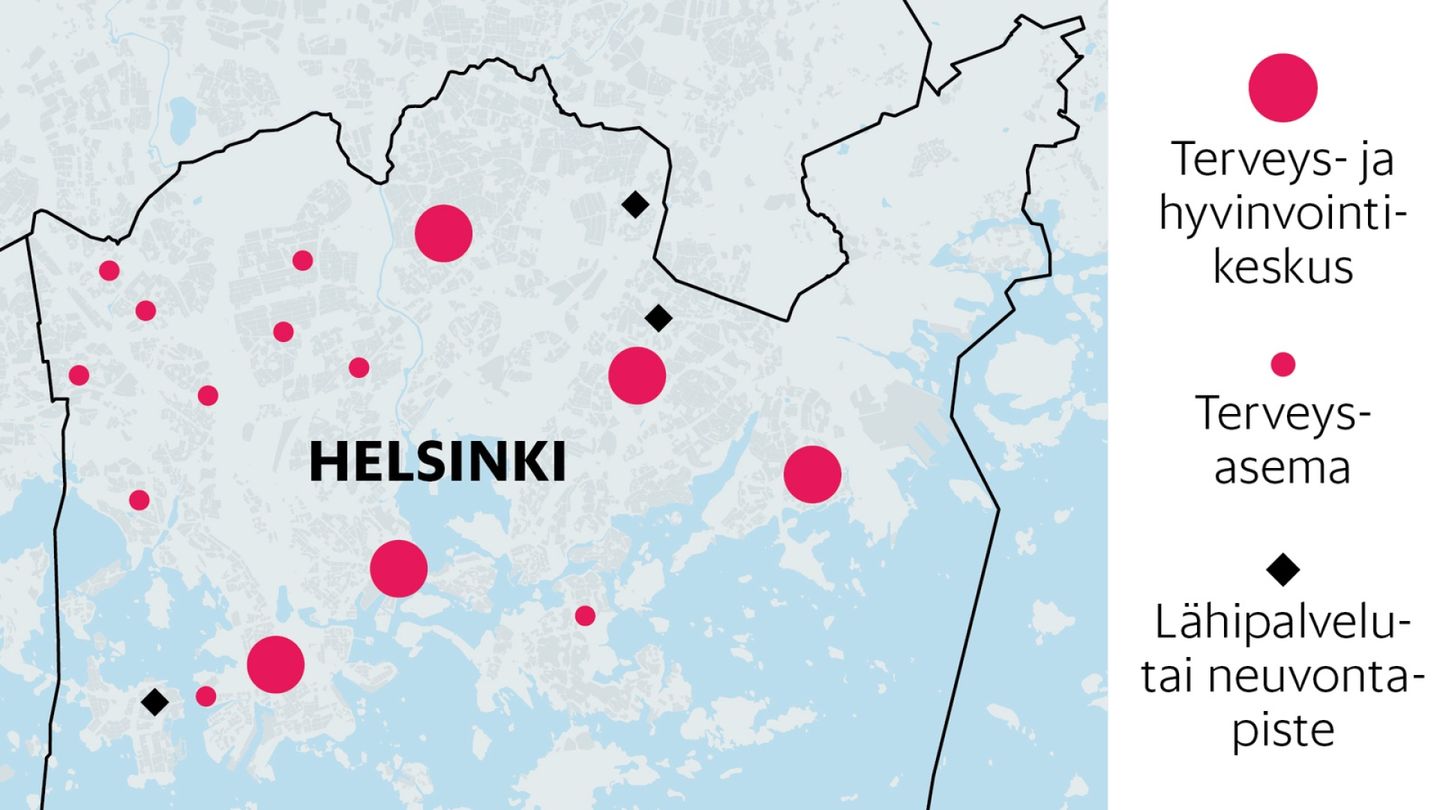
Helsinki's Healthcare Divide: East to See Mega-Centers, West to Keep Small Clinics
Translated from Finnish, summarized and contextualized by DistantNews.
TLDR
- Helsinki is dividing its healthcare services, with large centers planned for the east and smaller, local clinics to be maintained in the west and north.
- This decision, a political one, aims to preserve neighborhood health stations in western and northern areas, despite potential inequalities in access.
- The shift means residents in eastern Helsinki will face longer travel distances to larger health centers, while western and northern areas will retain their existing smaller facilities.
Helsinki is set to undergo a significant transformation in its healthcare service delivery, creating a noticeable divide between its eastern and western districts. The city's social and healthcare services will be distributed unevenly, with the eastern and northeastern parts slated to see the consolidation of smaller health stations into large, centralized centers. Conversely, the western and northern areas will retain their existing smaller, local health centers, a decision framed as a political principle to preserve neighborhood-level care.
Helsinki jakaa sosiaali- ja terveyspalvelut tulevina vuosina epätasaisesti: lännessä ja pohjoisessa pienet terveysasemat säilyvät, mutta koillisessa ja idässä ne katoavat jättikeskuksiin.
This strategic shift, detailed in Helsingin Sanomat, deviates from earlier plans to establish seven large health and well-being centers across the city. The current city strategy, adopted last autumn, has halted the development of major centers in Haaga and Oulunkylä for the current council term. Project manager Lars Rosengren explains that this is not a cost-saving measure, as renovating existing facilities would cost roughly the same as building new mega-centers. Instead, it represents a deliberate political choice to maintain accessible local health services in the western and northern parts of the city.
Poliitikot päättivät viime syksynä, ettei Haagan ja Oulunkylän suunniteltuja jättikeskuksia edistetä tällä valtuustokaudella.
Mayor Daniel Sazonov (National Coalition Party) elaborated on the rationale, citing the dispersed nature of health stations in areas like Haaga and Oulunkylä, coupled with inconvenient public transport connections. Resident feedback, particularly concerning the Oulunkylä center, highlighted these accessibility issues. This political decision aims to balance the provision of large-scale, centralized services with the need for smaller, more accessible local facilities, acknowledging that residents will indeed find themselves in "slightly different situations" regarding proximity to their nearest health center.
Pormestari Daniel Sazonov sanoo, että päätös perustuu alueiden hajanaisiin terveysasemiin ja hankaliin joukkoliikenneyhteyksiin.
The implications of this division are significant. While residents in the west and north will largely see their local services continue, those in the east will face longer journeys to the new mega-centers, the first of which, Malmi, is not expected to open until 2035. This creates a two-tiered system of healthcare access within the capital, raising questions about equity and the long-term impact on patient care and community health in the affected areas. The decision, born from inter-party negotiations on the city strategy, underscores the complex balancing act Helsinki faces in modernizing its services while addressing diverse community needs.
Projektipäällikkö Lars Rosengren kertoo, että kyseessä on poliittinen periaatepäätös, jolla halutaan säilyttää pohjoisen ja lännen lähiterveysasemia.
DistantNews Editorial
Originally published by Helsingin Sanomat in Finnish. Translated, summarized, and contextualized by our editorial team with added local perspective. Read our editorial standards.
More Stories



From Our Blog

What Gets Lost (and Found) When News Is Translated

The Critical Role of Diaspora Media in Global News

What Travellers Should Know About Countries with Restricted Press

A Digital Nomad's Guide to Following Local News

How the Same Story Looks Different in Different Countries
