

Holding Onto Unity - Holding Onto the Future
Translated from Vietnamese, summarized and contextualized by DistantNews.
TLDR
- Vietnam commemorates April 30, 1975, a date marking not only the end of war but also national reunification and the reunion of millions of Vietnamese hearts.
- The article emphasizes that national unity was achieved through immense sacrifice and a powerful, shared will, serving as a crucial lesson for the nation's future.
- It argues that in today's volatile world, Vietnam must maintain unity of purpose and action to achieve its goals of becoming a strong, prosperous, and civilized nation.
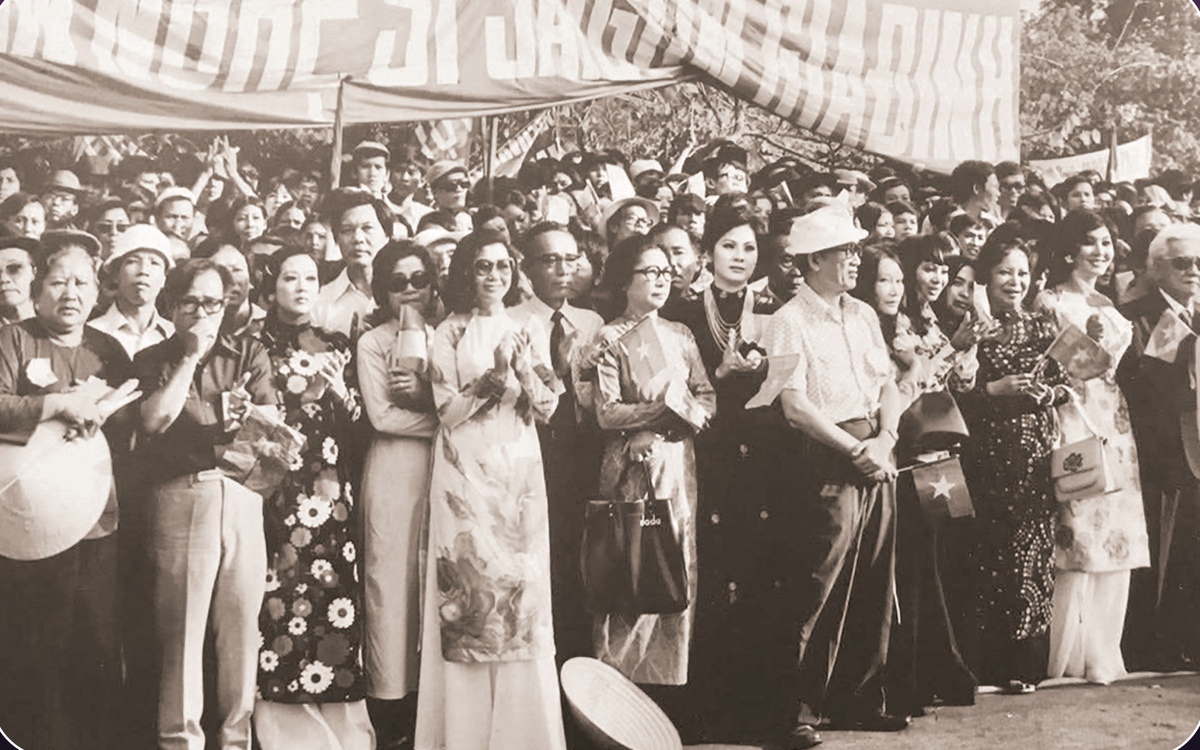
As journalists at Tuổi Trẻ, we reflect on April 30th, a day etched not just in history but in the collective memory of our resilient nation. This date signifies more than the cessation of conflict; it represents the end of division and the joyous reunion of millions of Vietnamese hearts.
The profound lesson from 51 years of history is that national reunification was not a given. It was earned through the blood, tears, and sacrifices of countless generations. Yet, the true bedrock of this achievement was an extraordinary force: the unwavering will for unity. Even in the darkest hours, the belief that Vietnam must be one, and its people one, never faltered. This conviction carried us through unimaginable losses, through bombardment, separation, and devastation, ultimately leading to our day of reunion.
The greatest value of April 30 is not just pride. The greater value is the lesson. The lesson that the great turning points of the country can only form when there is unity of will in the heart of the nation.
History repeatedly shows that a nation, even if not materially wealthy, can achieve the extraordinary if it possesses a strong will and collective solidarity. Vietnam stands as a testament to this truth. Our victories were not solely won with weapons, but fundamentally by a shared, overarching goal that transcended all differences: independence for the homeland, unity for the nation.
In such a world, a nation not only needs the aspiration to develop; it also needs the capacity to act as a unified bloc.
The greatest legacy of April 30th is not merely pride, but a vital lesson. It teaches us that pivotal moments in a nation's journey are forged when there is a unified will among the people. In 1975, this unity propelled us to reclaim our land. In 1986, it guided us into the Đổi Mới era. Today, amidst a world in constant flux, this lesson remains profoundly relevant: to progress, the nation must move forward together. The challenges we face now are not territorial divisions, but the risks of fragmented resources, scattered will, and delayed action. In this era of rapid global change, intense international competition, disruptive technology, and ever-present geopolitical, economic, and environmental uncertainties, a nation needs more than just aspirations; it requires the capacity to act as a cohesive unit.
Modern unity is not about exclusion or blind conformity. It is about alignment in objectives, vision, and the fundamental interests of the nation. While diverse thoughts, methods, and initiatives are welcome, they must converge towards a common destination: building a strong, prosperous, civilized Vietnam where citizens live better, freer, safer lives with greater opportunities. A dynamic society thrives on diversity, but a nation aspiring to ascend must possess consensus on its foundational values. This is the spirit that continues to guide us, a spirit born from the hard-won unity of April 30th.
Unity today is no longer understood in a closed or mechanically identical sense. Unity of the new era is unity in objectives, in vision, in the fundamental interests of the nation.
DistantNews Editorial
Originally published by Tuổi Trẻ in Vietnamese. Translated, summarized, and contextualized by our editorial team with added local perspective. Read our editorial standards.
More Stories



From Our Blog

What Gets Lost (and Found) When News Is Translated

The Critical Role of Diaspora Media in Global News

What Travellers Should Know About Countries with Restricted Press

A Digital Nomad's Guide to Following Local News

How the Same Story Looks Different in Different Countries
