


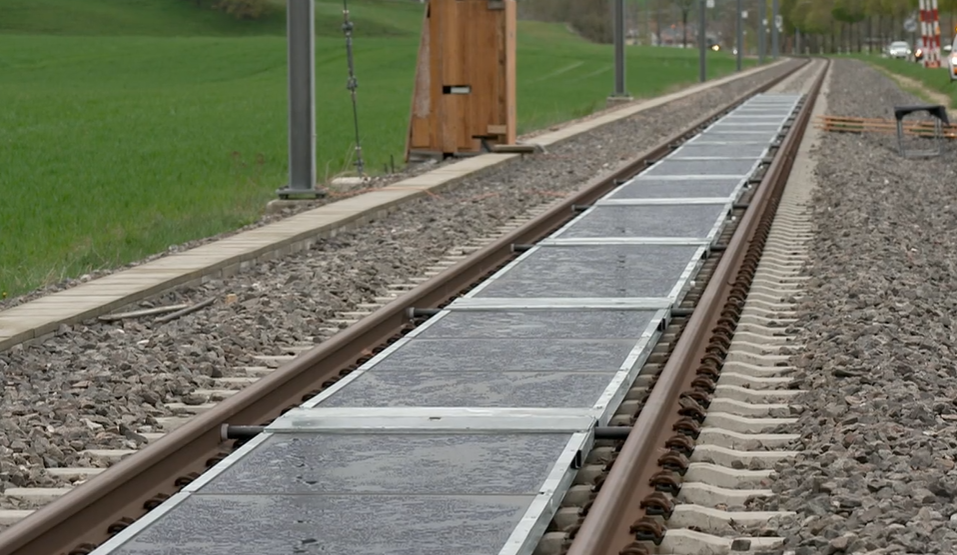
How Switzerland is reinventing the railway with solar panels
Translated from Greek, summarized and contextualized by DistantNews.
TLDR
- Swiss startup Sun-Ways is developing a system to install removable solar panels between railway tracks, turning rail networks into power sources.
- This innovation aims to generate clean energy without requiring new land or altering landscapes, addressing concerns about land use for renewables.
- While promising, the system faces challenges related to panel durability, network safety, and maintenance, but its modular design offers flexibility.
Switzerland, a nation renowned for its engineering prowess and commitment to sustainable infrastructure, is once again at the forefront of innovation with Sun-Ways' groundbreaking approach to renewable energy. This Swiss startup is redefining our understanding of public infrastructure by ingeniously integrating solar power generation directly into the existing railway network. The concept is elegantly simple yet profoundly impactful: installing removable photovoltaic panels in the unused space between railway tracks. This transforms the vast, often overlooked, rail corridors into active sources of clean energy, generating electricity without demanding additional land or disrupting the natural landscape.
In an era where the energy transition is causing reactions due to the occupation of land by wind turbines or large solar parks, such solutions gain particular importance.
In an era where the expansion of wind turbines and large solar farms often sparks debate over land use and environmental impact, Sun-Ways' solution offers a compelling alternative. By utilizing existing infrastructure, the technology avoids the need for new land acquisition, preserves scenic beauty, and eliminates conflicts with other land uses like agriculture or biodiversity conservation. This aligns with a broader global trend towards developing 'invisible' energy infrastructures, seamlessly integrating power generation into urban and rural environments. The potential for countries with extensive rail networks, such as the United States, to generate significant amounts of energy without dedicating further land is particularly exciting, offering a pathway to meet energy demands sustainably.
They do not require new land, do not alter the landscape, and do not conflict with other land uses, such as agriculture or biodiversity protection.
While the vision is ambitious, the practical implementation presents hurdles. Ensuring the durability of panels against vibrations, maintaining network safety, and addressing maintenance needs under varying conditions are critical factors. However, the inherent flexibility and removability of the Sun-Ways system provide a distinct advantage over more rigid infrastructure projects. This innovation embodies a philosophy that prioritizes resourcefulness, transforming 'empty' spaces into valuable energy assets. If successful, this Swiss initiative could pave the way for a future where trains glide over networks that silently power our world, demonstrating a truly integrated approach to energy and infrastructure.
If the model expands, the possibilities are impressive. In countries with extensive railway networks, the usable surface area is enormous.
DistantNews Editorial
Originally published by Ta Nea in Greek. Translated, summarized, and contextualized by our editorial team with added local perspective. Read our editorial standards.
More Stories



From Our Blog

What Gets Lost (and Found) When News Is Translated

The Critical Role of Diaspora Media in Global News

What Travellers Should Know About Countries with Restricted Press

A Digital Nomad's Guide to Following Local News

How the Same Story Looks Different in Different Countries
