

Humboldt Penguin Faces Emergency as Population Drops 60% Amid El Niño
Translated from Spanish, summarized and contextualized by DistantNews.
At a glance
News
Named sources
Outcome reported
- The Humboldt penguin population in Peru has plummeted by approximately 60% in the last 10-15 years, with only 5,465 individuals remaining, according to a 2025 census.
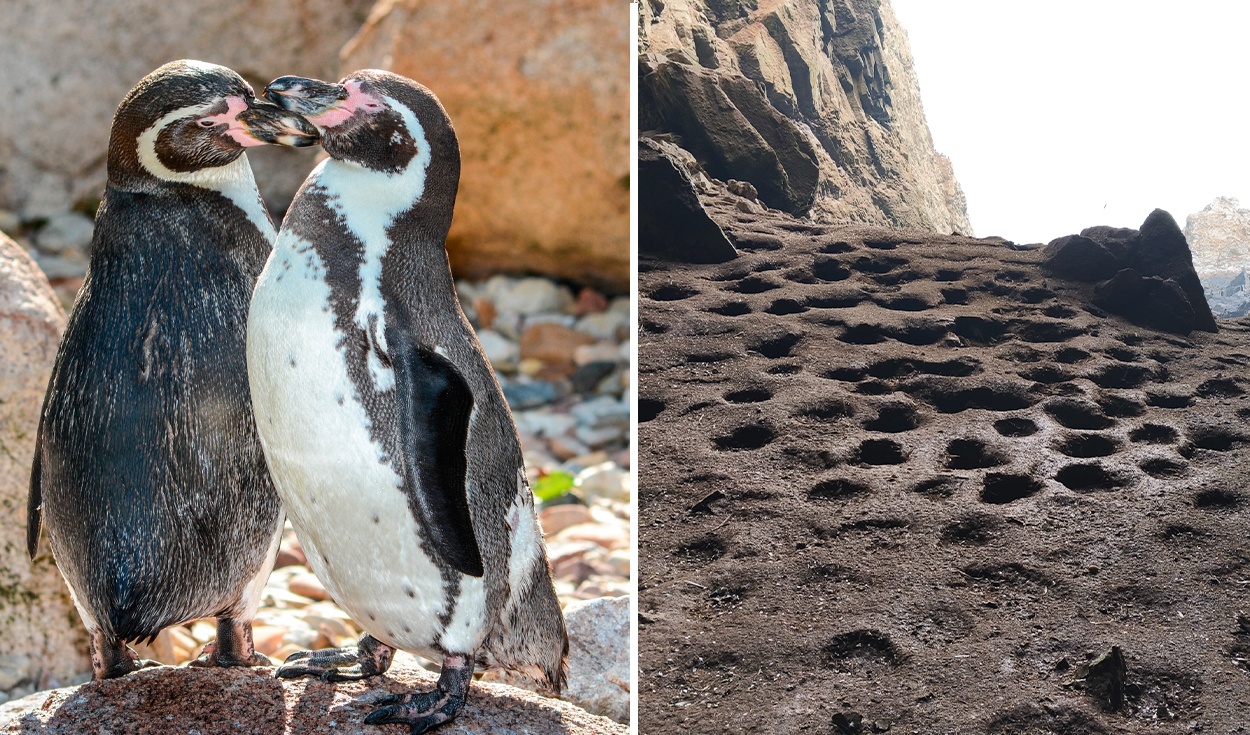
- Researchers found widespread abandonment of breeding colonies, with empty nests and malnourished chicks, indicating a severe crisis.
- The decline is attributed to the El Niño phenomenon, which warms waters and displaces anchovies, the penguins' primary food source, leading to starvation and mass mortality.
Peru's iconic Humboldt penguin population is facing an unprecedented crisis, with numbers dropping by nearly 60% in the last decade and a half. A national census conducted in 2025 by ACOREMA and international researchers revealed only 5,465 individuals remain along the Peruvian coast, a stark decline from previous estimates.
However, the most alarming finding is not just the reduced population but the state of their breeding colonies. A recent survey by the Universidad Científica del Sur in May and June of this year documented a devastating scenario. Biologist Carlos Zavalaga, director of the university's Marine Bird Ecology and Conservation Research Unit, described finding numerous colonies deserted, with abandoned eggs and severely malnourished chicks that died waiting for their parents.
Our goal was not to recount the total population, but to find out how many of those remaining 5,500 penguins were still reproducing. What we found was a quite desolate scenario.
"We have seen nests with abandoned eggs, skeletal chicks because the parents stopped feeding them, adults who are simply no longer in the colonies, and dead penguins on different beaches along the coast," Zavalaga told La República. This points to a mass abandonment of breeding sites, adult penguins dispersing in search of food, potentially migrating as far as Chile, and widespread starvation.
The primary culprit is the El Niño phenomenon. Its warming waters disrupt the cold Humboldt Current, forcing anchovies – the penguins' main food source – to migrate south or dive deeper, making them inaccessible to the penguins. This disruption in the food chain is directly linked to the observed mortality and the penguins' struggle to reproduce.
We have seen nests with abandoned eggs, skeletal chicks because the parents stopped feeding them, adults who are simply no longer in the colonies, and dead penguins on different beaches along the coast.
DistantNews Editorial
Originally published by La República in Spanish. Translated, summarized, and contextualized by our editorial team with added local perspective. Read our editorial standards.
More Stories



From Our Blog

What Gets Lost (and Found) When News Is Translated

The Critical Role of Diaspora Media in Global News

What Travellers Should Know About Countries with Restricted Press

A Digital Nomad's Guide to Following Local News

How the Same Story Looks Different in Different Countries
