


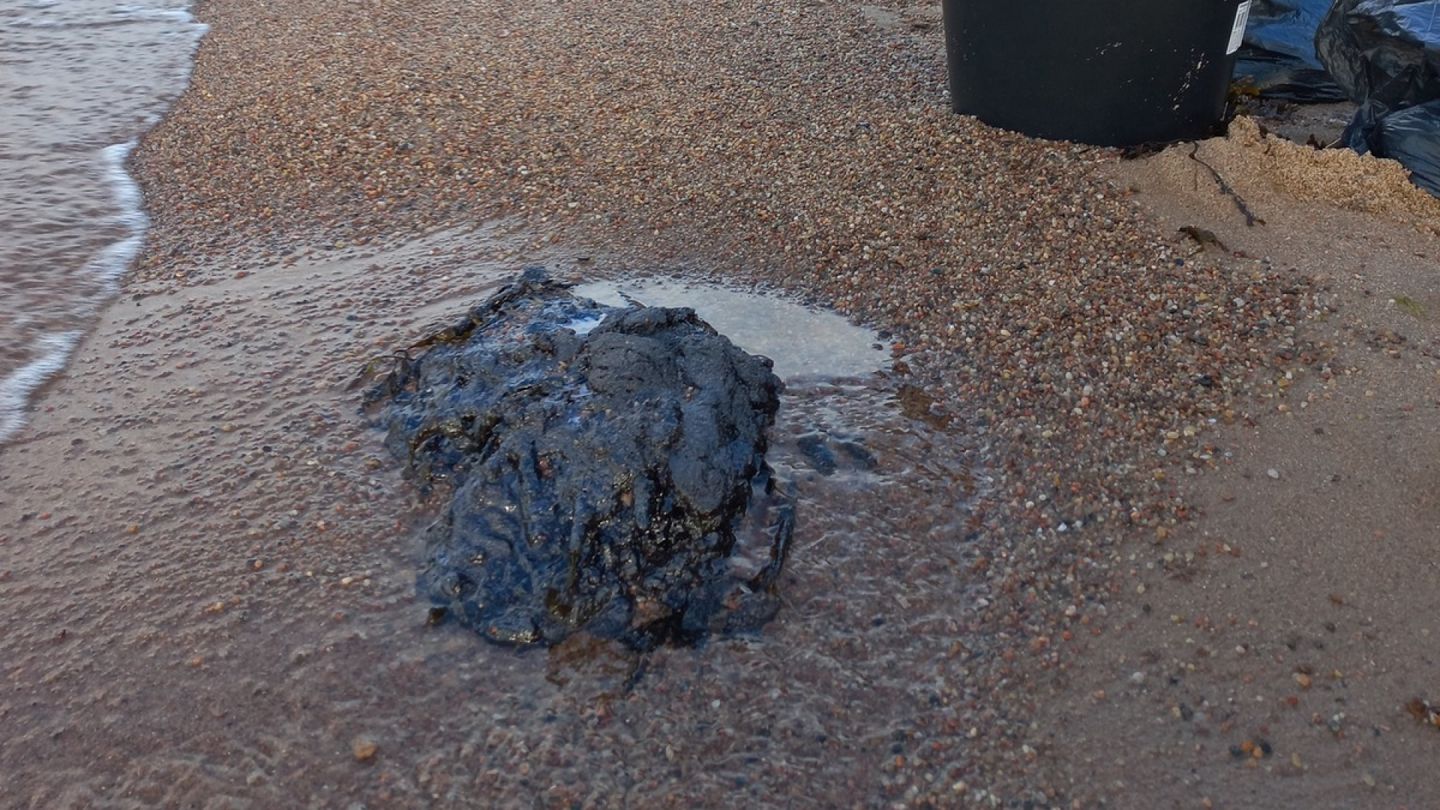
Hundreds of Kilograms of Oil Lumps Found on Estonian Coast, Likely from Russian Ports Hit by Drones
Translated from Finnish, summarized and contextualized by DistantNews.
TLDR
- Hundreds of kilograms of heavy fuel oil lumps have been collected from Estonia's northern coast.
- Authorities believe the oil originated from Russian ports in Primorsk or Ust-Luga, damaged by Ukrainian drone attacks.
- The oil could still be drifting in the Gulf of Finland, posing a risk to both Estonia and Finland.
Estonia's northern coastline has become the unfortunate recipient of hundreds of kilograms of heavy fuel oil lumps, a stark environmental consequence believed to stem from recent Ukrainian drone attacks on Russian ports. The Estonian Environment Agency, through its crisis management counselor Teet Koitjärv, has identified the oil's likely origin as the Russian ports of Primorsk or Ust-Luga, which sustained damage in late March and April drone strikes. This incident highlights the far-reaching and often unintended environmental impacts of geopolitical conflicts.
The oil, a viscous heavy fuel oil, has been found mixed with sand, reeds, and feathers, forming lumps that have been collected by volunteers, particularly in the Haljala municipality and the Lahemaa National Park. Koitjärv explained that the oil likely reached Estonia due to storm activity following the drone attacks. The situation is concerning because this type of fuel oil remains semi-solid in the sea, potentially drifting in intermediate water layers, making its exact location unpredictable.
If it is somewhere in the intermediate layer of the water in the middle of the Gulf of Finland, one cannot know where it might end up. It is a risk for Finland too.
This environmental threat is not confined to Estonia; Koitjärv warned that the oil could still be present in the central Gulf of Finland, posing a significant risk to Finland as well. While no oil slicks were observed on the surface or via satellite imagery immediately after the drone strikes, the discovery of these lumps suggests a more dispersed and insidious form of pollution. Modeling by the Estonian Environment Agency and Tallinn University of Technology (Taltech) has corroborated the theory that the oil traveled to Estonia following the Ukrainian strikes.
The first reports of oil pollution emerged on April 21st from a beach in Vainupea. The incident serves as a potent reminder of how environmental security can be directly impacted by military actions, even those occurring far from the affected shores. For Estonia, this event underscores the vulnerability of its coastline and the need for continued monitoring and preparedness, especially given its proximity to Russian energy infrastructure and the ongoing conflict in Ukraine.
I can't think of any other alternative.
DistantNews Editorial
Originally published by Helsingin Sanomat in Finnish. Translated, summarized, and contextualized by our editorial team with added local perspective. Read our editorial standards.
More Stories



From Our Blog

What Gets Lost (and Found) When News Is Translated

The Critical Role of Diaspora Media in Global News

What Travellers Should Know About Countries with Restricted Press

A Digital Nomad's Guide to Following Local News

How the Same Story Looks Different in Different Countries
