


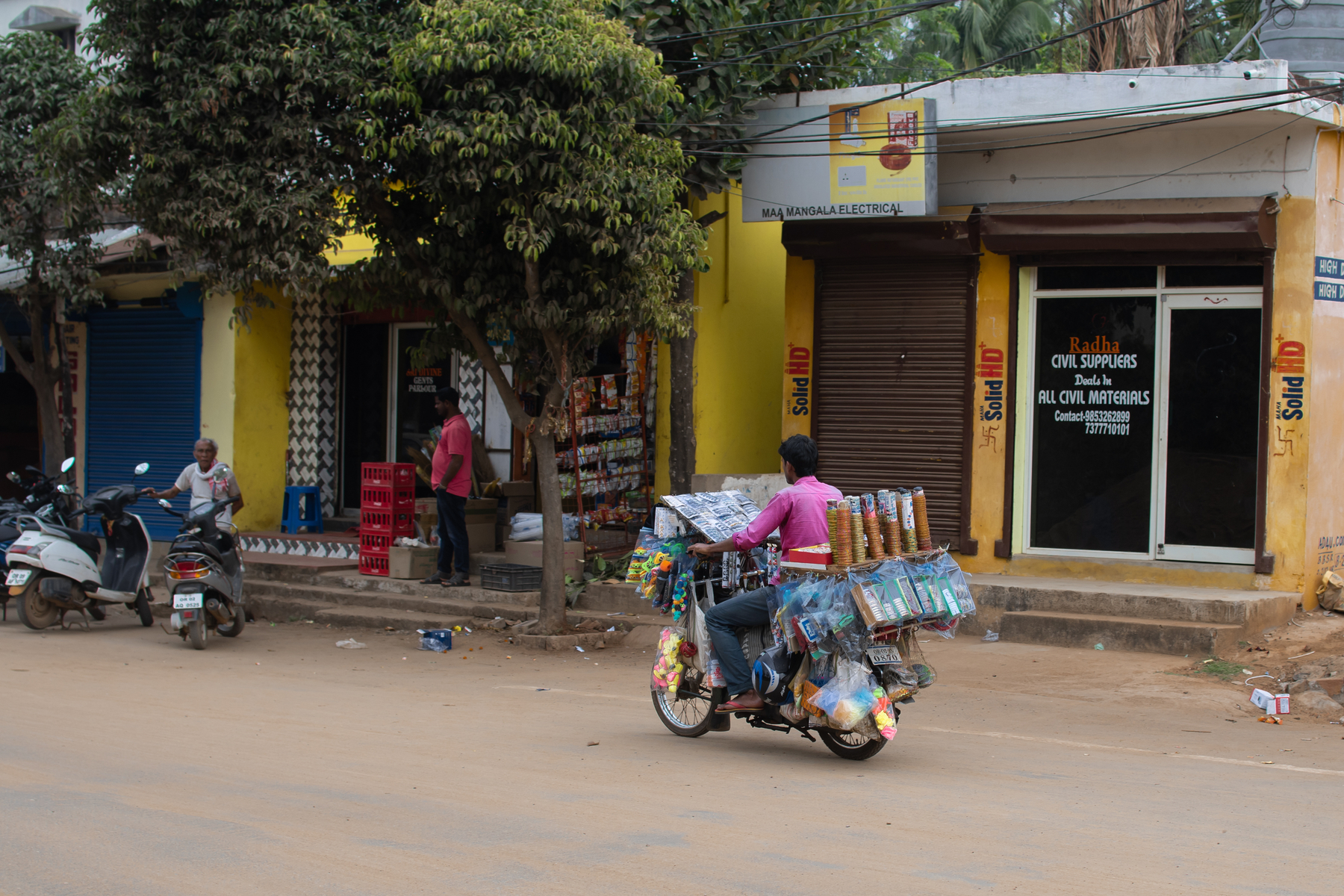
Impressions from an Indian City: Where Modernity Meets Tradition
Translated from German, summarized and contextualized by DistantNews.
TLDR
- The article describes the stark contrasts and chaotic energy of an Indian city, Bhubaneswar, highlighting the juxtaposition of modern development and persistent poverty.
- It details the sensory overload of train stations, bustling streets, and the coexistence of slums with gleaming shopping malls and hotels.
- The author reflects on feeling like an outsider, struggling to grasp the city's essence despite friendly individual interactions, noting a difference in group behavior compared to Western norms.
Writing for Die Presse, Peter Rosei offers a deeply personal and observational account of his experiences in an Indian city, likely Bhubaneswar, which he notes is a 'Smart City.' His impressions are a tapestry of sensory details, capturing the overwhelming dynamism and inherent contradictions of urban India.
Rosei paints a vivid picture of life at a train station – a microcosm of humanity in motion, with families finding respite amidst the bustle. He contrasts the planned boulevards and modern infrastructure of Bhubaneswar with the sprawling slums that line the roads, a common sight across many developing urban centers. The presence of advanced educational and governmental institutions alongside these informal settlements underscores the complex development landscape.
What resonates strongly in Rosei's piece is his feeling of profound otherness. He observes that while individuals may be friendly, group dynamics can appear less considerate, likening them to children moving without malice but with a lack of awareness of their surroundings. This observation, he notes, is reminiscent of experiences in crowded public transport in cities like Moscow or St. Petersburg, suggesting that a 'hard life makes one hard.'
From an Austrian perspective, such an immersive, almost ethnographic, description challenges simplistic views of India. Rosei doesn't offer easy answers or policy recommendations; instead, he invites the reader to experience the city through his eyes – the dust, the noise, the smells, the coexistence of the sacred and the mundane, the ancient and the hyper-modern. His reflection on not being able to 'penetrate' to the 'essential' or 'what is going on here' is a poignant admission of the limits of external observation, particularly when cultural and societal norms differ significantly.
DistantNews Editorial
Originally published by Die Presse in German. Translated, summarized, and contextualized by our editorial team with added local perspective. Read our editorial standards.
More Stories


From Our Blog

What Gets Lost (and Found) When News Is Translated

The Critical Role of Diaspora Media in Global News

What Travellers Should Know About Countries with Restricted Press

A Digital Nomad's Guide to Following Local News

How the Same Story Looks Different in Different Countries
