


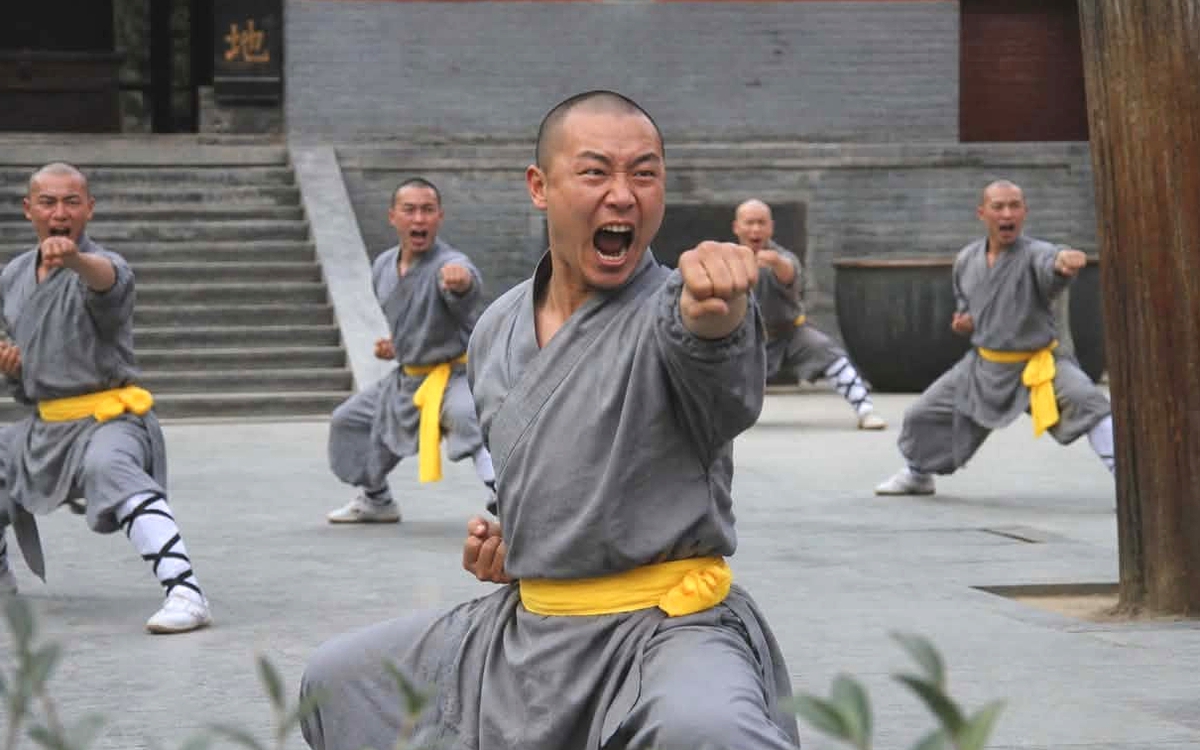
Incredible Techniques in Kim Dung Novels Actually Exist at Shaolin Temple
Translated from Vietnamese, summarized and contextualized by DistantNews.
TLDR
- The article explores the 'Lion's Roar' martial art, originating from Buddhist metaphors and practiced at the Shaolin Temple.
- While fictionalized in martial arts literature, the real-world practice involves vocalizations during combat to enhance power and focus.
- Modern sports science explains this technique as a way to stabilize the core, improve force transmission, and potentially startle opponents.
The Shaolin Temple, a cradle of Chinese martial arts and Buddhist philosophy, once again reveals the profound depth of its traditions. The 'Lion's Roar,' often sensationalized in popular fiction, is here presented with a grounded perspective, tracing its roots from spiritual metaphor to practical application within the martial arts. This exploration highlights how ancient wisdom, when integrated with rigorous physical training, yields tangible benefits. Unlike Western interpretations that might focus solely on the spectacle, this piece delves into the philosophical underpinnings and the physiological advantages, showcasing the holistic approach of Shaolin kung fu. It underscores the enduring legacy of these practices, demonstrating their relevance not just in preserving cultural heritage but also in enhancing physical performance, a testament to the timeless efficacy of Shaolin's methods.
The term 'lion's roar' (shizi hou) appears in scriptures like the Lotus Sutra, referring to the speech of an enlightened being that has absolute persuasive power, silencing all wrong views.
DistantNews Editorial
Originally published by Tuổi Trẻ in Vietnamese. Translated, summarized, and contextualized by our editorial team with added local perspective. Read our editorial standards.
More Stories



From Our Blog

What Gets Lost (and Found) When News Is Translated

The Critical Role of Diaspora Media in Global News

What Travellers Should Know About Countries with Restricted Press

A Digital Nomad's Guide to Following Local News

How the Same Story Looks Different in Different Countries
