


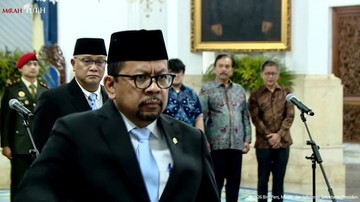
Indonesian Official Highlights Regulatory Gaps Between Social Media and Mass Media
Translated from Indonesian, summarized and contextualized by DistantNews.
TLDR
- M. Qodari, head of the Government Communication Agency (Bakom), highlighted the disparity in regulations between social media and traditional mass media.
- He argued that social media platforms now function like mass media in disseminating information but are not subject to the same journalistic ethics and regulations.
- Qodari stated that Bakom will adopt a more aggressive communication strategy to promote government policies.
M. Qodari, the newly appointed head of Indonesia's Government Communication Agency (Bakom), has drawn attention to a significant regulatory imbalance between social media and traditional mass media. In a recent interview, Qodari pointed out that while social media platforms increasingly mirror the role of traditional media in informing the public, they operate under a vastly different, less stringent regulatory framework.
There is an interesting phenomenon where social media behaves like the press or like media, delivering news, delivering information. Meanwhile, the rules that apply to social media like this are so mismatched, unbalanced with those that apply to mass media.
Qodari articulated his concern that social media, despite its growing influence and function as a news disseminator, is not bound by the same journalistic codes of ethics and regulations that govern established media outlets. He contrasted this with traditional media, which he noted is subject to numerous rules, including adherence to journalistic principles by its reporters and ethical guidelines. This disparity, he argued, creates an uneven playing field, particularly as social media platforms also attract advertising revenue, potentially at the expense of traditional media.
Reflecting on his new role, Qodari indicated that Bakom intends to pursue a more proactive and assertive approach to communicating government policies. He emphasized the importance of this shift, especially given the introduction of numerous new government programs that require a corresponding evolution in communication strategies. This move signals a commitment to ensuring that government messages are effectively conveyed and understood by the public.
This isn't a level playing field.
Qodari also addressed observations by some analysts who perceive his appointment, alongside that of Hasan Nasbi as a special presidential advisor, as a signal of a more combative stance by the government. He responded by questioning the alternative, suggesting that a passive approach to communication would leave government initiatives without adequate defense or explanation. His remarks suggest a readiness to engage more directly and forcefully in the public discourse surrounding government actions.
So, do you want us to keep attacking without anyone responding? That's too easy, sorry.
DistantNews Editorial
Originally published by CNN Indonesia in Indonesian. Translated, summarized, and contextualized by our editorial team with added local perspective. Read our editorial standards.
More Stories


From Our Blog

What Gets Lost (and Found) When News Is Translated

The Critical Role of Diaspora Media in Global News

What Travellers Should Know About Countries with Restricted Press

A Digital Nomad's Guide to Following Local News

How the Same Story Looks Different in Different Countries
