


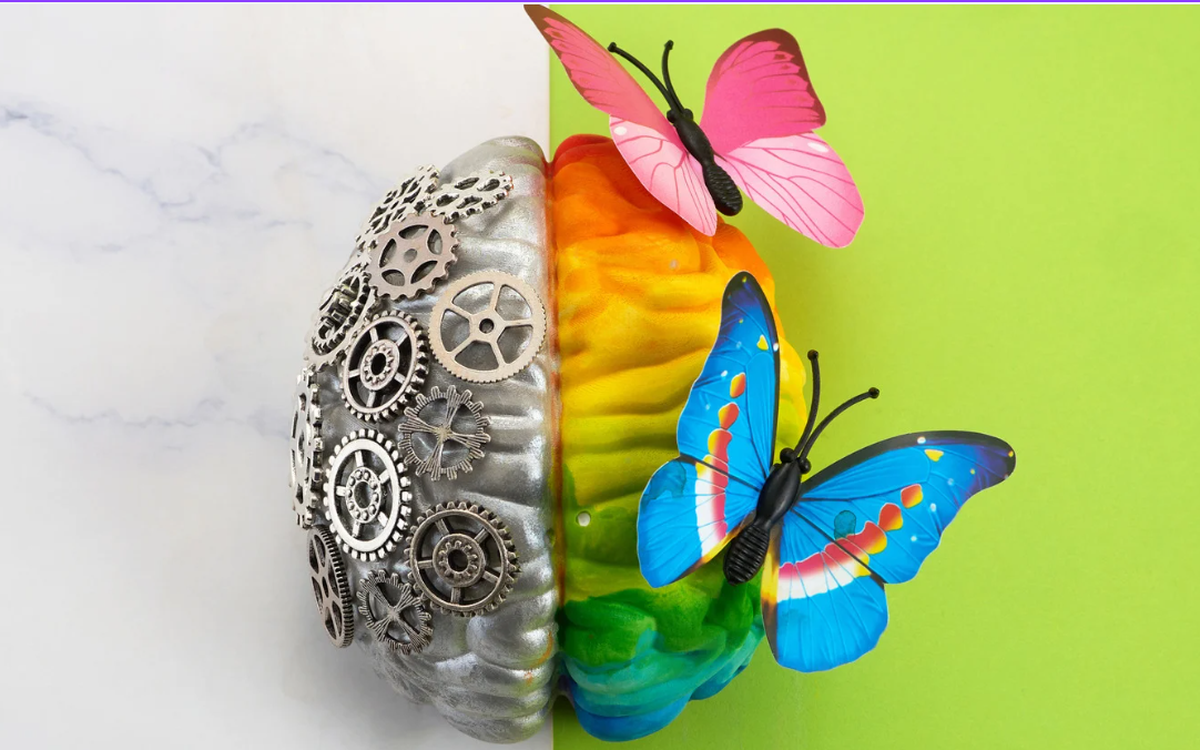
Is Color Real? Scientists Suggest It's a Brain Construct, Not an Object Property
Translated from Vietnamese, summarized and contextualized by DistantNews.
TLDR
- Scientists suggest that color is not an inherent property of objects but rather a subjective experience generated by the brain's interpretation of light wavelengths.
- The physical world consists of photons with varying wavelengths, which are absorbed and reflected by objects, stimulating the retina and sending signals to the brain.
- Individual perception of color, known as 'qualia', can differ between people, though a general 'usable consensus' allows for effective communication.
The vibrant tapestry of colors we perceive daily might be less about the objects themselves and more about the intricate workings of our own minds. As neuroscientists like Christof Koch explain, what we experience as 'red' or 'green' is not a fixed attribute of a tomato or a leaf, but rather the brain's sophisticated interpretation of light wavelengths.
This perspective challenges our everyday assumptions. The physical reality, according to this view, is composed of photons – particles of light carrying different wavelengths. When light interacts with an object, certain wavelengths are absorbed, while others are reflected. Our retinas capture these reflections, converting them into electrical impulses that travel to the brain. It is within the brain that this raw data is processed and translated into the rich, subjective experience we call color.
This understanding sheds light on why describing color to someone who has never seen it is so challenging. The famous thought experiment, 'Mary's Room,' illustrates this point: even possessing all scientific knowledge about color doesn't equate to the direct, subjective experience of seeing it. These individual, subjective experiences are termed 'qualia' in cognitive science, and they underscore the deeply personal nature of our sensory perceptions. While we share a 'usable consensus' that allows us to navigate the world and communicate effectively, the precise 'shade' of blue you see might be fundamentally different from mine.
DistantNews Editorial
Originally published by Tuổi Trẻ in Vietnamese. Translated, summarized, and contextualized by our editorial team with added local perspective. Read our editorial standards.
More Stories



From Our Blog

What Gets Lost (and Found) When News Is Translated

The Critical Role of Diaspora Media in Global News

What Travellers Should Know About Countries with Restricted Press

A Digital Nomad's Guide to Following Local News

How the Same Story Looks Different in Different Countries
