


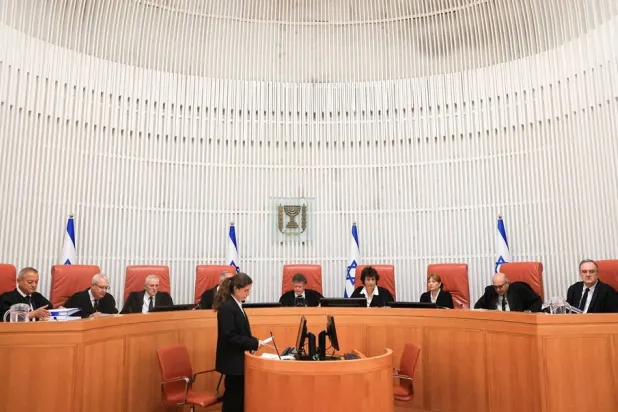
Israel's High Court Hears Petitions to Oust Far-Right Minister Ben-Gvir Amid Political Tensions
Translated from English, summarized and contextualized by DistantNews.
TLDR
- Israel's High Court is hearing petitions seeking the removal of far-right National Security Minister Itamar Ben-Gvir.
- The petitions, supported by the attorney general, accuse Ben-Gvir of undermining police independence and abusing his position.
- The case highlights tensions between the judiciary and Prime Minister Netanyahu's right-wing government, with Ben-Gvir and other ministers criticizing the court's involvement.
The Israeli judiciary is once again at the center of a critical national debate, this time hearing petitions to oust National Security Minister Itamar Ben-Gvir. This legal challenge, backed by Attorney General Gali Baharav-Miara, centers on accusations that Ben-Gvir has overstepped his authority and undermined the independence of the police, a core tenet of democratic governance. The attorney general's request for Prime Minister Netanyahu to explain why he hasn't dismissed the minister underscores the gravity of the situation.
She says I set policy and change the police -- she's right. She says I interfere in appointments, and appointed more than 1,000 people in order to implement my policy -- she's right about that too.
Minister Ben-Gvir, however, remains defiant, framing the legal proceedings as an attack on his policy-making role and a "judicial dictatorship." His supporters and other ministers, including Justice Minister Yariv Levin, have echoed this sentiment, denouncing the hearing as "illegal" and warning against judicial overreach. This narrative positions the court's actions as an impediment to the government's agenda and a threat to democratic principles as they understand them.
Attempts to interfere with a minister's appointment and his powers is dangerous for democracy. Democracy will not fall; the judicial dictatorship will fall.
Prime Minister Netanyahu has also entered the fray, arguing in a lengthy response that the court's demand is "unconstitutional" and that the judiciary lacks the authority to interfere in ministerial appointments, especially during what he terms an "existential war." This defense highlights the deep divisions within Israel's political landscape, pitting the executive and legislative branches against the judiciary, and raising fundamental questions about the balance of power and the definition of democracy in the current political climate.
the judges' decision will have no validity
DistantNews Editorial
Originally published by Asharq Al-Awsat in English. Translated, summarized, and contextualized by our editorial team with added local perspective. Read our editorial standards.
More Stories

From Our Blog

What Gets Lost (and Found) When News Is Translated

The Critical Role of Diaspora Media in Global News

What Travellers Should Know About Countries with Restricted Press

A Digital Nomad's Guide to Following Local News

How the Same Story Looks Different in Different Countries
