


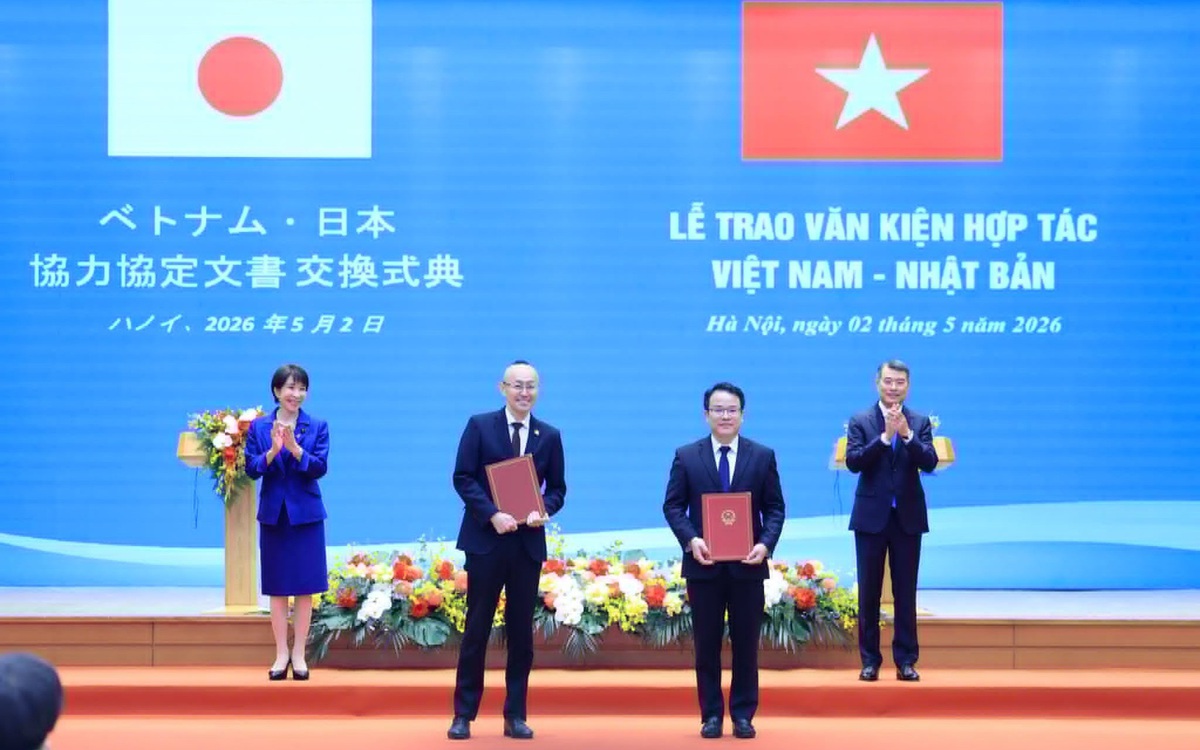
Japanese Investment in Vietnam Expands into Consumer Market, Driven by Profitability and Demand
Translated from Vietnamese, summarized and contextualized by DistantNews.
TLDR
- Japanese investment in Vietnam is expanding beyond manufacturing into the consumer market, with significant new projects in retail and industry.
- In Q1 2026, Japan's new investment reached approximately $191.3 million, making it a top 5 FDI contributor and the third-largest overall investor in Vietnam.
- Japanese businesses in Vietnam report high profitability, with many planning expansion due to growing domestic demand, positioning Vietnam as a key production hub for global strategies.
The enduring partnership between Japan and Vietnam is deepening, with Japanese investment increasingly flowing into Vietnam's dynamic consumer market, moving beyond its traditional manufacturing stronghold. Recent investments, such as Aeon Mall Tân Tiến and Sunhill Vietnam's second factory in Bắc Ninh, exemplify this evolving trend. These projects, totaling nearly $150 million and $3 million respectively, underscore Japan's sustained commitment to Vietnam, a relationship spanning over three decades.
This expansion is reflected in the latest FDI figures. In the first quarter of 2026, Japan injected approximately $191.3 million in new investments, securing its position among the top five nations for new capital and remaining Vietnam's third-largest foreign investor overall, with registered capital exceeding $79.4 billion across roughly 5,630 projects. Familiar Japanese brands like Honda, Toyota, Canon, and Panasonic are not just retail staples but are integral to Vietnam's industrial fabric, with investments spreading across manufacturing, distribution, and supply chains in 33 out of 34 provinces.
Crucially, Vietnam is proving to be a highly lucrative market for Japanese enterprises. A recent JETRO survey revealed that 67.5% of Japanese firms in Vietnam reported profitability in 2025, the highest in 15 years and third-best in Southeast Asia. Furthermore, 35% of these firms export to the U.S., particularly in electronics and transportation, highlighting Vietnam's growing importance as a global production hub within Japanese corporate strategies. The shift towards the consumer market is driven by robust domestic demand, with 60.1% of Japanese companies planning expansions citing this as a key factor. This strategic pivot, coupled with a high rate of planned expansion (56.9% compared to ASEAN's 46.8%), signals Vietnam's transition from an export-oriented manufacturing base to a market with significant consumer potential, a development that is keenly observed and welcomed here in Vietnam.
DistantNews Editorial
Originally published by Tuổi Trẻ in Vietnamese. Translated, summarized, and contextualized by our editorial team with added local perspective. Read our editorial standards.
More Stories


From Our Blog

What Gets Lost (and Found) When News Is Translated

The Critical Role of Diaspora Media in Global News

What Travellers Should Know About Countries with Restricted Press

A Digital Nomad's Guide to Following Local News

How the Same Story Looks Different in Different Countries
