


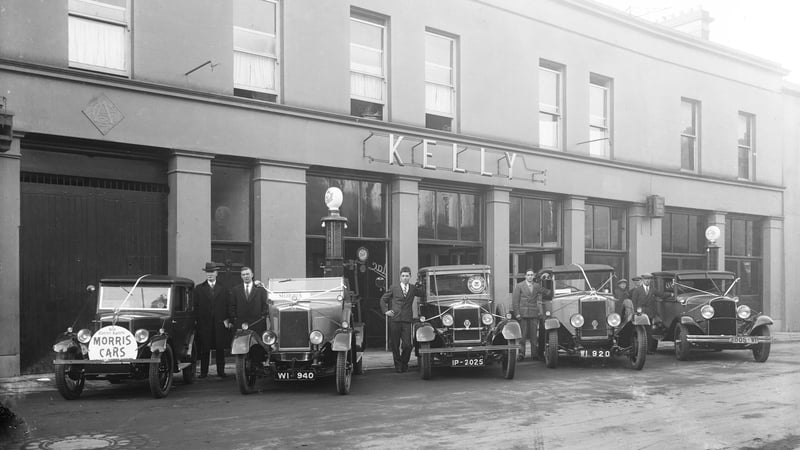
Kildare Leads Ireland's Population Boom Since 1926, Census Reveals
Translated from English, summarized and contextualized by DistantNews.
TLDR
- The 1926 Census of Population records released by the National Archives show Ireland's population was 2.97 million that year.
- Comparing 1926 to the 2022 census, Ireland's population grew by 73% to 5.15 million, with Co. Kildare experiencing the largest growth at 327%.
- Life expectancy has significantly increased, religious demographics have shifted, and the workforce has transformed from agriculture to professional roles over the past century.
The National Archives' release of the 1926 Census of Population records offers a fascinating window into Ireland's past, allowing for a comprehensive comparison with the most recent 2022 census data. This detailed analysis, compiled by the Central Statistics Office (CSO), reveals profound demographic, social, and economic transformations over nearly a century.
Perhaps the most striking finding is the dramatic population growth, particularly in certain counties. While Ireland's overall population increased by 73% from 2.97 million in 1926 to 5.15 million in 2022, Co. Kildare stands out with an astonishing 327% surge. This growth, far outpacing counties like Meath (251%) and Dublin (188%), underscores Kildare's evolution into a major population hub.
Beyond sheer numbers, the data paints a picture of a healthier, more diverse, and differently employed nation. Life expectancy has soared by over 20 years for both men and women, reflecting advancements in healthcare and living standards. Religious demographics have also shifted significantly; while Roman Catholics constituted 93% of the population in 1926, their share had fallen to 69% by 2022, indicating increased religious diversity.
The composition of the workforce has undergone a fundamental change. Agriculture, which dominated employment in 1926 accounting for 51% of the workforce, has dwindled to just 4% in 2022. Conversely, managerial, professional, and non-manual roles have expanded significantly. Furthermore, the gender balance in the workforce has become more equitable, with women comprising 47% of workers in 2022, a substantial increase from 26% in 1926. The census also highlights shifts in national origin, with a notable increase in residents born outside Ireland.
Some notable jobs in 1926 included 10,852 horse vehicle drivers, 1,441 saddlers, 1,012 coopers (cask and barrel makers) and 211 chimney sweepers, of which one was female.
DistantNews Editorial
Originally published by RTÉ News in English. Translated, summarized, and contextualized by our editorial team with added local perspective. Read our editorial standards.
More Stories



From Our Blog

What Gets Lost (and Found) When News Is Translated

The Critical Role of Diaspora Media in Global News

What Travellers Should Know About Countries with Restricted Press

A Digital Nomad's Guide to Following Local News

How the Same Story Looks Different in Different Countries
