

![[Kim Seung-ryeon Column] Politics That Breaks the Taboo of Troop Deployment](https://dimg.donga.com/wps/NEWS/IMAGE/2026/05/10/133895378.1.png)
[Kim Seung-ryeon Column] Politics That Breaks the Taboo of Troop Deployment
Translated from Korean, summarized and contextualized by DistantNews.
TLDR
- The article questions South Korea's capacity and willingness to engage in military action for its alliance with the US and national interests, citing a reluctance to deploy combat troops since the Vietnam War.
- The author argues that Donald Trump's transactional approach to alliances and recent incidents in the Strait of Hormuz have made the 'politics of deployment' a pressing issue.
- The piece criticizes the lack of serious public debate on military deployments in South Korea, where politicians often defer to public opinion rather than taking decisive stances, contrasting this with European nations that accept casualties for international commitments.
The escalating tensions between the United States and Iran present a stark dilemma for South Korea, forcing us to confront a long-standing question: Do we possess the capability and the political will to undertake military action in defense of our alliance and national interests? For over half a century, since the Vietnam War, South Korea has shied away from deploying combat troops abroad. While past US presidents have generally understood this hesitation, the unpredictable nature of Donald Trump's foreign policy, where even alliances are subject to negotiation, has significantly altered the calculus.
The US-Iran war is raising uncomfortable questions. Does South Korea truly have the capability and will for military action for the sake of the US-Korea alliance and national interests?
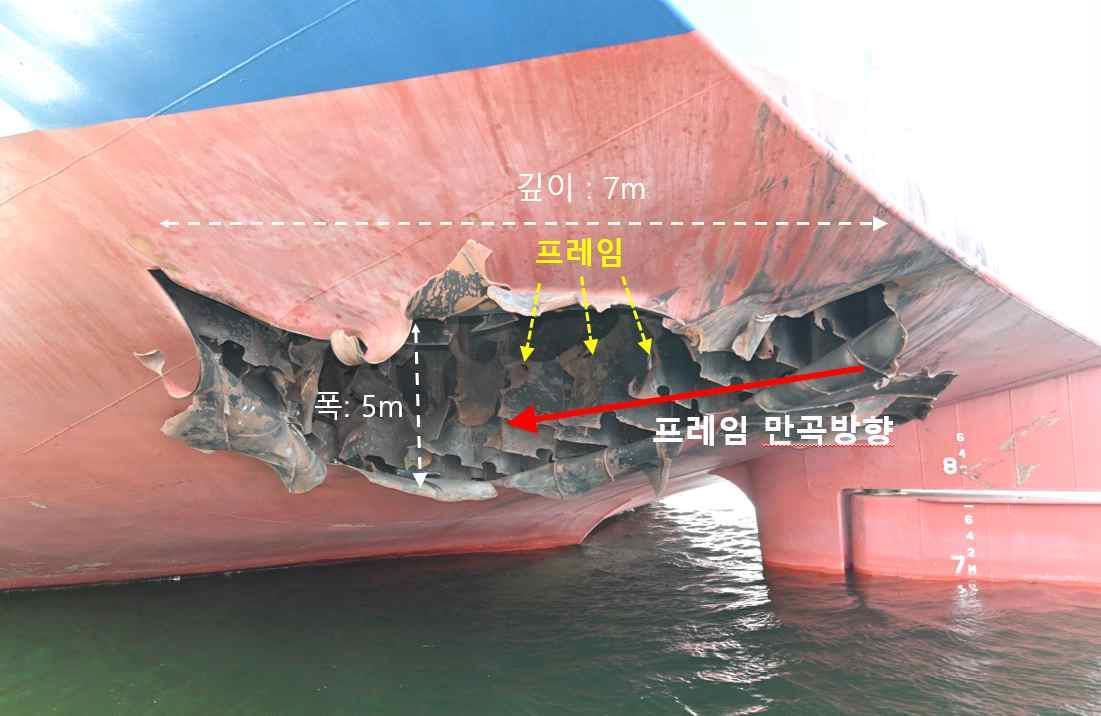
The recent incident involving the cargo ship 'MV Namu' being struck by aerial projectiles in the Strait of Hormuz has reignited the debate surrounding the 'politics of deployment.' Despite Trump's early requests for naval deployment, South Korea, like many Western allies and Japan, found it difficult to intervene. The inherent dangers of the region, coupled with the US's ambiguous explanation for its actions against Iran, cast doubt on the war's justification. Even if Iran were proven responsible for the attack, the lack of casualties would likely dampen public support for deployment.
We have been reluctant to deploy combat troops for over 50 years since the Vietnam War, and past US presidents have generally understood our hesitation.
This issue transcends military strategy; it is fundamentally a matter of political leadership. In South Korea, serious discussions about military deployments have been conspicuously absent. Security officials often remain guarded, while politicians tend to gauge public opinion through polls, a pattern observed across both conservative and progressive administrations. While many in security circles privately acknowledge the necessity of deployment in certain scenarios, few are willing to publicly advocate for it. This environment makes it easy to dismiss US requests for troop deployment with a simple, emotionally resonant question: 'Are they asking us to send our soldiers to their deaths?' This reluctance, coupled with our nation's growing military strength – a $65 billion defense budget supporting the world's fifth-largest military – creates a paradoxical situation where we are strong but unwilling to act in high-risk areas. This is akin to 'hot ice,' a contradiction in terms. As Dong-A Ilbo, we believe it is imperative for our political leaders to step forward, to initiate a national conversation about our role in global security, and to prepare South Korea for a future where we must take greater responsibility for our own destiny and contribute more actively to the international order, even if it means facing public criticism.
However, the emergence of Trump, who treats even alliances as bargaining chips, has significantly changed the calculations.
DistantNews Editorial
Originally published by Dong-A Ilbo in Korean. Translated, summarized, and contextualized by our editorial team with added local perspective. Read our editorial standards.
More Stories


From Our Blog

What Gets Lost (and Found) When News Is Translated

The Critical Role of Diaspora Media in Global News

What Travellers Should Know About Countries with Restricted Press

A Digital Nomad's Guide to Following Local News

How the Same Story Looks Different in Different Countries
