


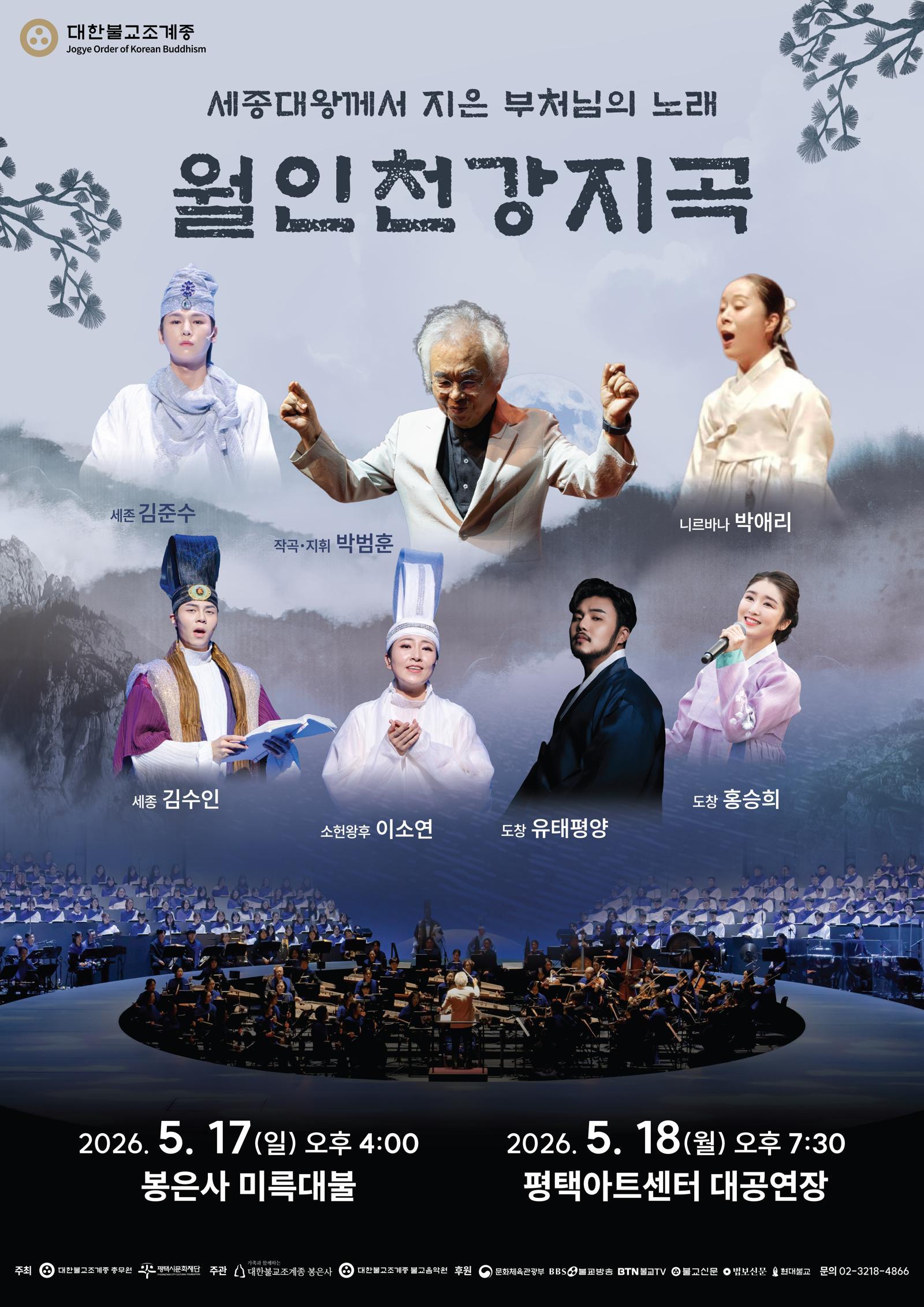
King Sejong's Hangeul Buddhist Chant Revived as Cantata
Translated from Korean, summarized and contextualized by DistantNews.
TLDR
- The ancient Korean Buddhist chant 'Worin Cheongang Jigok,' originally written by King Sejong the Great in Hangeul, has been revived as a cantata.
- The cantata will be performed on May 17-18 at Bongunsa Temple and in Pyeongtaek, featuring collaborations with renowned artists.
- This revival aims to promote Hangeul and celebrate Buddhist music, serving as a significant work in Korean Buddhist music history.
The revival of King Sejong the Great's 'Worin Cheongang Jigok' as a modern cantata is a momentous occasion for Korean culture and Buddhist heritage. This ancient work, penned in Hangeul, the Korean alphabet, by the revered King Sejong himself, is more than just a piece of music; it is a testament to the enduring power of our language and a profound expression of Buddhist devotion.
As reported by The Dong-A Ilbo, this performance is not merely a concert but a cultural event that bridges centuries, connecting us to the wisdom and artistry of our ancestors. The collaboration between esteemed figures like composer Park Beom-hoon, director Son Jin-taek, choreographer Guk Su-ho, and actress Kim Seong-nyeo, alongside talented singers and musicians, underscores the significance of this undertaking. It is a celebration of Korean artistic talent and a reaffirmation of our cultural identity.
This initiative, spearheaded by the Jogye Order of Korean Buddhism, highlights the deep connection between Buddhism and Korean culture. 'Worin Cheongang Jigok' was originally composed to spread Hangeul and pray for the peaceful afterlife of Queen Soheon. Its reinterpretation as a cantata breathes new life into this historical treasure, making it accessible and resonant for contemporary audiences. This event is a source of national pride, showcasing the richness of Korean heritage on a platform that honors both spiritual and artistic expression.
DistantNews Editorial
Originally published by Dong-A Ilbo in Korean. Translated, summarized, and contextualized by our editorial team with added local perspective. Read our editorial standards.
More Stories


From Our Blog

What Gets Lost (and Found) When News Is Translated

The Critical Role of Diaspora Media in Global News

What Travellers Should Know About Countries with Restricted Press

A Digital Nomad's Guide to Following Local News

How the Same Story Looks Different in Different Countries
