


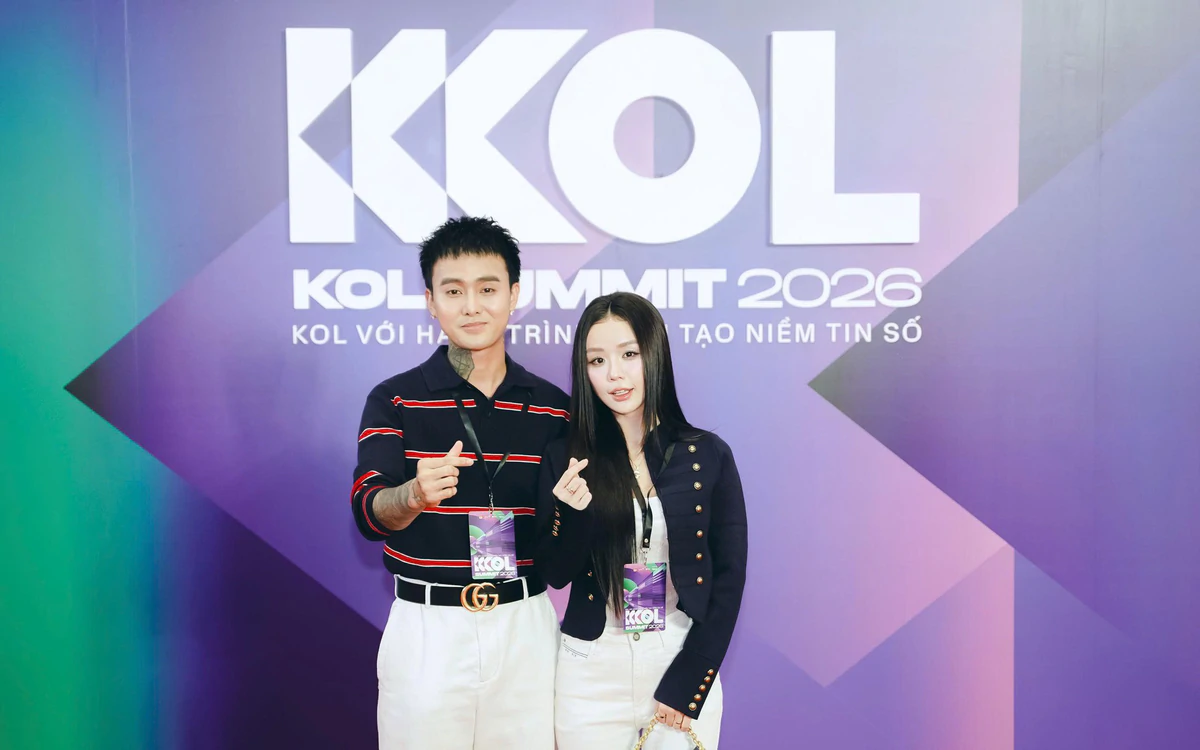

KOL Summit 2026: From content creators to a “shield” protecting the truth
Translated from Vietnamese and summarized by DistantNews. Read the original for the full story.
At a glance
In-depth
Named sources
Context piece
- At KOL Summit 2026, Vietnamese public security official Nguyen Hong Quan said generative AI is expanding creative opportunities while making source verification more important.
- He said trusted KOLs and KOCs can shape public discussion and help communities receive verified information in a digital environment facing a crisis of trust.
- Quan urged influencers to disclose AI use, verify information before sharing it and distinguish facts from opinions.
The most important role for online influencers in the age of generative AI may not be creating more content, but helping people decide what they can trust. At KOL Summit 2026, Colonel and PhD Nguyen Hong Quan, deputy head of A05 under Vietnam’s Ministry of Public Security, described content creation as entering a decisive phase.
Generative AI is rapidly expanding the space for creativity, he said, but it also demands much tighter control over the origins of information. In a world where billions of pieces of information compete for attention every day, being seen is difficult, persuading people to stop and listen is harder, and earning enough trust for them to share and act is hardest of all.
KOLs and KOCs can reach millions with a story, spark public discussion with a viewpoint and influence the choices and actions of entire communities. Quan said their decisive asset is the public’s confidence in the person delivering the information. When that confidence is strong enough, influencers become a community reference point for receiving information, forming perceptions and making decisions.
The factor that determines everything is the public’s level of trust in the person delivering the information.
That power is becoming more important amid what Quan called a crisis of trust in the digital sphere. Trust is under threat, the mechanisms used to establish it are weakening, and the consequences of losing trust can spread through society. The central paradox is that the time and cost required to create false information are approaching zero, while verifying information and establishing the truth requires increasing resources. AI can generate and distribute misinformation at unprecedented speed, but establishing what is true still requires sources, evidence and verification.
Quan said the challenge of the AI era is not only detecting misinformation. It is also building a new system of trust when even evidence once considered reliable can be fabricated. Journalists can provide verified information, authorities can provide official sources, and technology can provide authentication tools. Influencers, he said, can carry truth into individual communities through their own language, credibility and reach. He urged them to take practical steps, including transparency about AI use, verification before sharing and separating facts from opinions.
That is not a distant responsibility. It begins with very specific actions: transparency when using AI, verification before sharing, and distinguishing truth from opinion.
About this summary
Originally published by Thanh Niên in Vietnamese. Translated, summarized, and contextualized automatically by DistantNews, with a note on how the source frames the story. Not individually reviewed before publishing. How this works.
More Stories
From Our Blog

News in Translation: What Gets Lost, and How We Keep the Framing

Diaspora Media: How Communities Follow News From Home

Traveling Where the Press Is Not Free: How to Read the News There

The Digital Nomad's Guide to Local News

The Same Story, Different Countries: How Coverage Changes at the Border
