


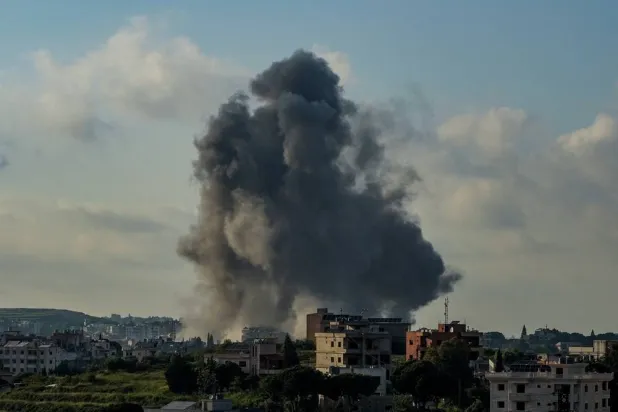
Lebanon's Berri Slams Israel's 'Massacres', Questions Truce Validity Amidst US Statement Dispute
Translated from English, summarized and contextualized by DistantNews.
TLDR
- Lebanese Parliament Speaker Nabih Berri criticized Israel's ongoing military actions in southern Lebanon, questioning the validity of any truce.
- Berri accused Israel of committing massacres and targeting civilians, actions he believes are not justified by claims of targeting Hezbollah infrastructure.
- A parliamentary source suggested that a dispute between President Aoun and Berri over a US statement was a difference in interpretation, with mediators working to ease tensions.
The ongoing Israeli aggression against southern Lebanon continues to draw sharp criticism from Lebanese officials, with Parliament Speaker Nabih Berri vehemently denouncing the actions and questioning the efficacy of any purported truce. In his remarks to Asharq Al-Awsat, Berri dismissed the notion of a truce, highlighting the relentless Israeli bombardment, destruction of homes, and the tragic loss of civilian lives, including children and the elderly. He directly challenged Israel's justification for these actions, particularly the targeting of medical personnel and facilities, asking if all victims were indeed part of Hezbollah's military apparatus.
Where is this truce? Has Israel stopped leveling towns, demolishing homes, shedding the blood of children, women and the elderly, preventing rescue teams from saving the wounded and transporting them to hospitals, or retrieving those trapped under rubble until they died?
Berri's statements underscore a deep-seated frustration with what he perceives as Israeli treachery and a lack of meaningful international intervention, especially from the United States, which he implicated in brokering the extended truce. He questioned the purpose of negotiations under continuous Israeli fire, emphasizing that such a situation makes any dialogue futile and offers little solace to the grieving families in the south. The speaker's words reflect a national sentiment of defiance and a demand for accountability for the ongoing violence.
This, he added, obliges it to honor its commitment to the Lebanese and the international community. Otherwise, what is the point of negotiations under Israeli fire? And what would be said to the families of those killed in what he described as Israeli treachery in the south?
Amidst this tense backdrop, a parliamentary source attempted to downplay a reported divergence between President Aoun and Speaker Berri, attributing it to differing interpretations of a US Embassy statement. The source indicated that mediators have stepped in to de-escalate the situation, stressing the need for national unity during these critical times. While acknowledging the delicate circumstances, the source affirmed that the three presidents share a common goal: compelling Israel to cease hostilities before any negotiations commence. This internal recalibration aims to present a united front, prioritizing a ceasefire as the prerequisite for any diplomatic track, even if indirect talks are seen as more feasible by the US administration.
The emerging dispute between Aoun and Berri remains within the bounds of differing interpretations of the US State Department statement.
DistantNews Editorial
Originally published by Asharq Al-Awsat in English. Translated, summarized, and contextualized by our editorial team with added local perspective. Read our editorial standards.
More Stories


From Our Blog

What Gets Lost (and Found) When News Is Translated

The Critical Role of Diaspora Media in Global News

What Travellers Should Know About Countries with Restricted Press

A Digital Nomad's Guide to Following Local News

How the Same Story Looks Different in Different Countries
