


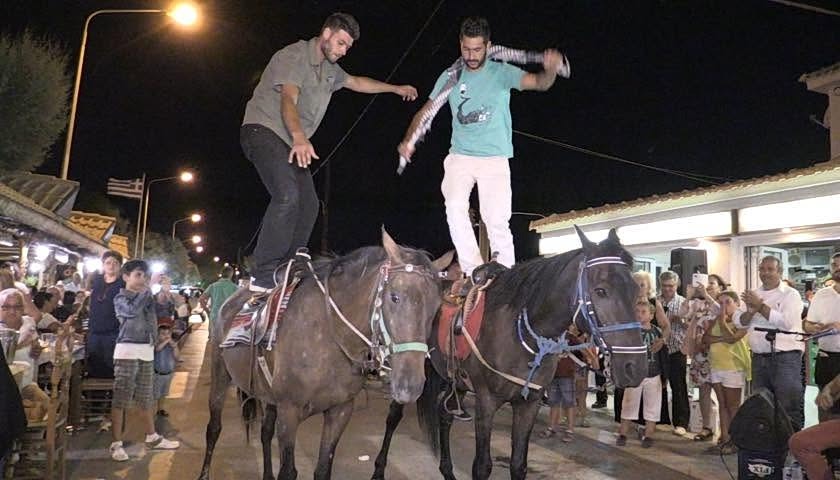
Lesbos rides roughshod over the law - the bull is gone, but the horses remain
Translated from Greek, summarized and contextualized by DistantNews.
At a glance
News
Named sources
Context piece
- A religious festival in Agia Paraskevi, Lesbos, proceeded with 50 horses despite veterinary restrictions preventing the traditional bull participation.
- The use of horses in religious and folk events on Lesbos is under scrutiny due to concerns about animal welfare and legal compliance.
- Authorities are investigating whether proper procedures, including veterinary approval and adherence to animal welfare laws, were followed for the events involving horses.
The island of Lesbos is witnessing a continuation of traditional festivals, but with notable adjustments and growing concerns over animal welfare. In Agia Paraskevi, the annual festival proceeded with the participation of 50 decorated horses, even though veterinary restrictions prevented the customary bull from appearing. This substitution highlights a persistent reliance on animals in local celebrations.
However, the involvement of horses in various religious and folk events across Lesbos, including in Agiasos and Kalloni, has raised significant questions about legality and animal well-being. Reports indicate that while horses are prominently featured, adorned and ridden through narrow streets, the necessary approvals, veterinary presence, and welfare assessments appear to be lacking.
The core issue revolves around compliance with Article 23 of Law 4830/2021, which permits animal participation in such events only under strict conditions: a Municipal Council decision, continuous veterinary supervision, pre- and post-event reports, and adherence to welfare standards. Critics argue that the vague definition of "tradition" is being exploited to bypass these regulations, potentially leading to animal distress or mistreatment.
An inquiry by the Greek Ombudsman has shed light on administrative inconsistencies, with the Municipality of Mytilene stating no requests for horse participation were processed between 2024 and early 2026, despite subsequent licensing. The police presence at these events has also been questioned, as they have not intervened regarding the horses, with authorities sometimes classifying their use as mere transportation rather than part of the event. This situation underscores a recurring pattern where regulatory bodies appear to facilitate events they are supposed to oversee, creating a legal and ethical gray area.
DistantNews Editorial
Originally published by Ta Nea in Greek. Translated, summarized, and contextualized by our editorial team with added local perspective. Read our editorial standards.
More Stories



From Our Blog

What Gets Lost (and Found) When News Is Translated

The Critical Role of Diaspora Media in Global News

What Travellers Should Know About Countries with Restricted Press

A Digital Nomad's Guide to Following Local News

How the Same Story Looks Different in Different Countries
