


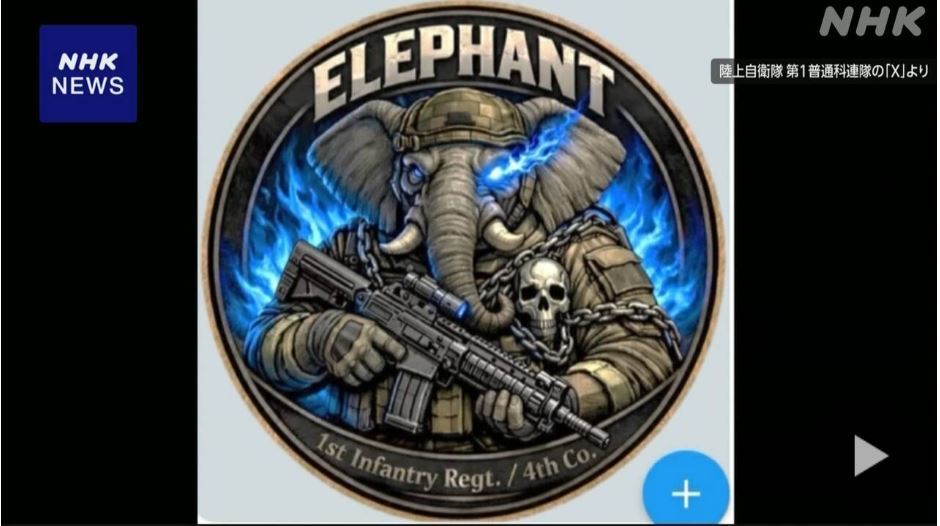
"Like an army for killing"... Japanese Self-Defense Force deletes new logo amid criticism
Translated from Korean, summarized and contextualized by DistantNews.
TLDR
- The Japanese Ground Self-Defense Force's 1st Division's 1st Ordinary Infantry Regiment removed a new unit logo after facing widespread criticism.
- The logo, created using AI, depicted an elephant in combat gear with chains and a rifle, sparking accusations of being overly militaristic and resembling a "death army."
- The unit cited the need to foster understanding and familiarity with the public as reasons for withdrawing the logo, after it also faced allegations of copyright infringement.
A recent controversy surrounding a new unit logo for the Japanese Ground Self-Defense Force (JGSDF) has led to its swift withdrawal, highlighting a delicate balance between unit identity and public perception. The logo, designed by an infantry unit based in Nerima, Tokyo, featured an elephant in military attire, complete with chains and a rifle, and a skull motif. This imagery, intended to boost morale, instead ignited a firestorm of criticism.
It's like an army for killing.
Online discussions quickly branded the logo as excessively aggressive, with some commenters likening it to a "death army" – a stark contrast to the JGSDF's mandate of defense. The controversy escalated with accusations that the logo bore a striking resemblance to that of a Thai border patrol unit, raising concerns about copyright infringement. This dual criticism, touching on both appropriateness and originality, put the unit on the defensive.
Too aggressive for a JGSDF logo.
In response to the public outcry and copyright concerns, the unit decided to remove the logo and the associated social media post. A JGSDF spokesperson stated that while the logo was created with the intention of enhancing unit cohesion and morale, they recognized the importance of public understanding and approachability. This incident underscores the JGSDF's ongoing efforts to connect with the public while navigating the complexities of military symbolism in a post-war society, where the perception of aggression can easily overshadow intended messages.
We received various opinions and created it with the aim of boosting unit morale and sense of belonging, but we emphasized the importance of properly helping the public understand the unit and fostering familiarity.
DistantNews Editorial
Originally published by Dong-A Ilbo in Korean. Translated, summarized, and contextualized by our editorial team with added local perspective. Read our editorial standards.
More Stories


From Our Blog

What Gets Lost (and Found) When News Is Translated

The Critical Role of Diaspora Media in Global News

What Travellers Should Know About Countries with Restricted Press

A Digital Nomad's Guide to Following Local News

How the Same Story Looks Different in Different Countries
