

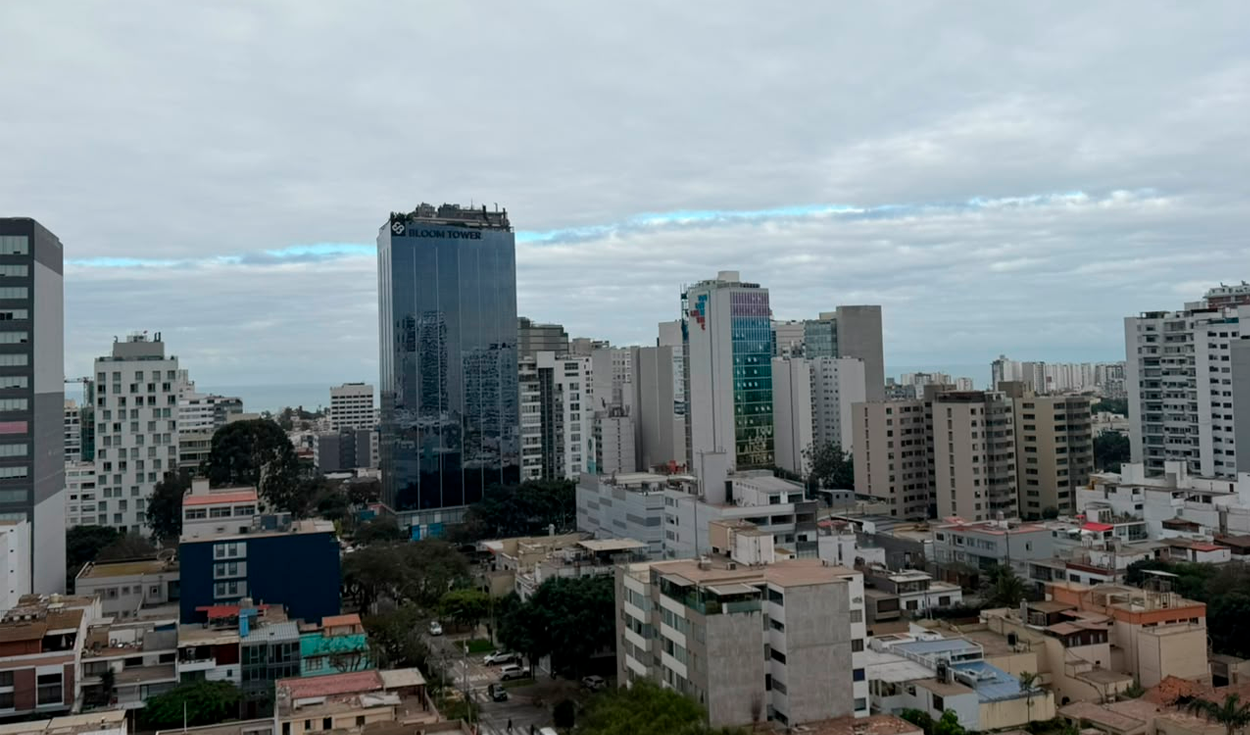
Lima's sky takes on a Caribbean look due to atmospheric phenomenon
Translated from Spanish, summarized and contextualized by DistantNews.
At a glance
News
Official statement
Context piece
- Lima's sky has recently displayed a different appearance, with distinct, separated clouds resembling those seen in tropical regions like the Caribbean.
- This unusual sight is attributed to the "DANA Aníbal" phenomenon, an isolated depression in high atmospheric levels affecting Peru.
- While the DANA primarily influences the central and southern sierra with precipitation, its atmospheric effects can extend to coastal areas like Lima, altering cloud formations.
Residents of Lima, Peru, have recently observed a striking change in their sky, which has departed from the typical uniform gray blanket characteristic of the winter season. Instead, the clouds have appeared more defined, separated, and distinctly shaped, evoking visual comparisons to skies seen in tropical locales such as the Caribbean.
This atmospheric transformation is not due to clouds from the Caribbean arriving in the Peruvian capital. Meteorologists explain the phenomenon is linked to atmospheric condition changes coinciding with the presence of "DANA Aníbal." DANA stands for Depresión Aislada en Niveles Altos, or Isolated Depression in High Levels, which is essentially a mass of cold air separated from the usual atmospheric circulation at high altitudes.
The Peruvian National Service of Meteorology and Hydrology (Senamhi) reported that DANA Aníbal influences Peru between August 16 and 18, 2026. While its primary impact is expected to be precipitation and weather changes in the central and southern sierra regions, its effects can also reach coastal areas.
Normally, Lima experiences a consistent layer of low-lying clouds due to high humidity from the Pacific Ocean and coastal atmospheric conditions. However, when upper-level atmospheric disturbances like DANA Aníbal occur, they introduce instability. This instability, interacting with available moisture, can lead to increased cloudiness, intermittent precipitation, and variations in the sky's appearance, creating the more distinct cloud formations observed.
DistantNews Editorial
Originally published by La República in Spanish. Translated, summarized, and contextualized by our editorial team with added local perspective. Read our editorial standards.
More Stories

From Our Blog

What Gets Lost (and Found) When News Is Translated

The Critical Role of Diaspora Media in Global News

What Travellers Should Know About Countries with Restricted Press

A Digital Nomad's Guide to Following Local News

How the Same Story Looks Different in Different Countries
