

Lost New Testament Pages Rediscovered: Technology and an 18th-Century Monk's Clues Unlock Ancient Text
Translated from Greek, summarized and contextualized by DistantNews.
TLDR
- Researchers have recovered 42 pages of a lost 6th-century New Testament manuscript, identified as Codex H, which was disassembled by monks between the 10th and 13th centuries.
- The discovery was made possible by multispectral imaging technology, which revealed invisible ink traces and 'ghost images' of the original text on pages used for binding and endpapers.
- This achievement is significant for historical research and the study of early Byzantine manuscripts, offering new insights into the layout and textual variations of the New Testament.
Ta Nea is proud to report on a groundbreaking achievement in historical scholarship, one that highlights the enduring power of ancient texts and the innovative spirit of modern research. The recovery of lost pages from a 6th-century New Testament manuscript, Codex H, is a testament to human perseverance and technological advancement.
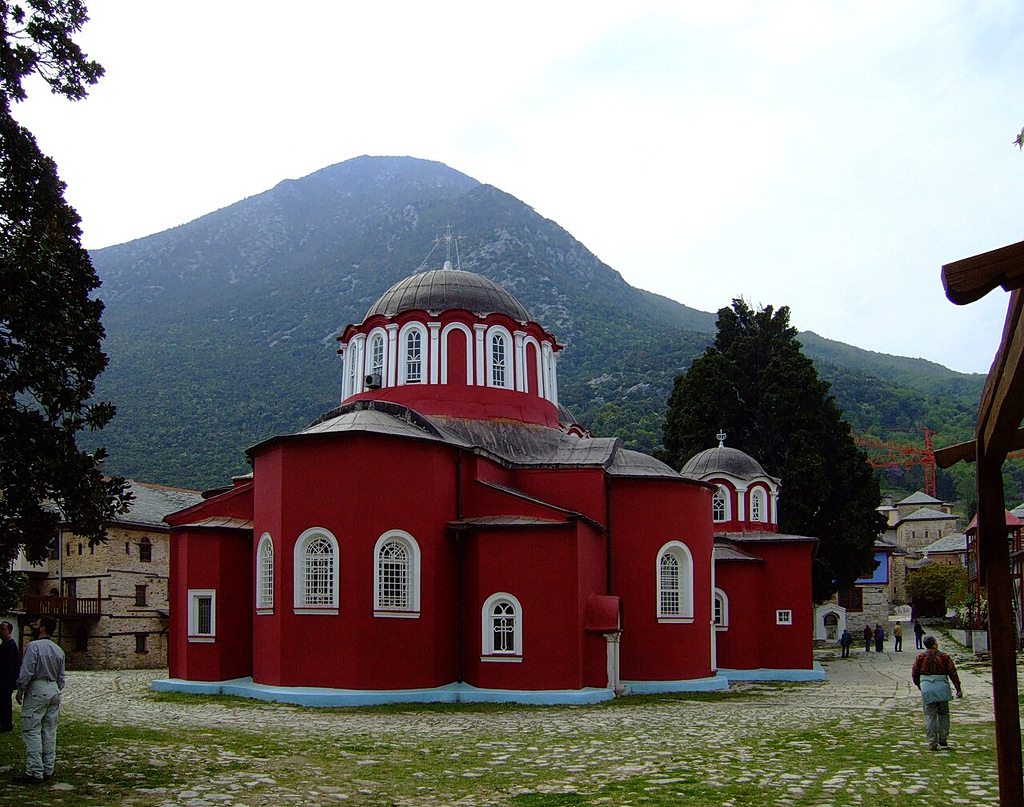
Between the 10th and 13th centuries, the monks of the Great Lavra on Mount Athos gradually disassembled a 6th-century manuscript, reusing its pages as binding material and endpapers for other texts.
For centuries, these precious pages lay hidden, disassembled and repurposed by monks of Mount Athos. Their rediscovery, scattered across Europe, was a puzzle that eluded scholars until the meticulous work of an 18th-century French monk began to piece together the fragments. This historical detective work laid the groundwork for the modern breakthrough.
The discovery of the lost manuscript is attributed to the persistence of an 18th-century French monk, who located fragments in libraries across Italy, Greece, Russia, Ukraine, and France.
The true marvel lies in the application of cutting-edge technology. The University of Glasgow's research team, employing multispectral imaging, has peered through the veil of time, revealing faint traces of ink invisible to the naked eye. This technique allowed them to reconstruct 'ghost images' – echoes of the original text transferred onto adjacent pages through chemical reactions. This is not just about seeing old words; it's about understanding how these texts were handled, copied, and preserved by those who cherished them.
The research team from the University of Glasgow managed to recover 42 pages of this significant early manuscript of the New Testament.
From our perspective in Greece, this story resonates deeply. Mount Athos, a spiritual and cultural heartland, is once again at the center of a discovery that illuminates our shared heritage. The fact that the manuscript contains the earliest known use of the 'Euthalian' system, a complex guide for readers, further emphasizes its importance. This isn't just a Western European academic pursuit; it's a rediscovery of a vital piece of Christian and Byzantine history, a history that is intrinsically linked to the identity and legacy of Greece and the Orthodox world. The collaboration between international researchers and the preservation of such artifacts underscores the universal value of our past.
The achievement was made possible by multispectral imaging technology, which allowed scientists to detect ink traces invisible to the naked eye.
DistantNews Editorial
Originally published by Ta Nea in Greek. Translated, summarized, and contextualized by our editorial team with added local perspective. Read our editorial standards.
More Stories

From Our Blog

What Gets Lost (and Found) When News Is Translated

The Critical Role of Diaspora Media in Global News

What Travellers Should Know About Countries with Restricted Press

A Digital Nomad's Guide to Following Local News

How the Same Story Looks Different in Different Countries
