


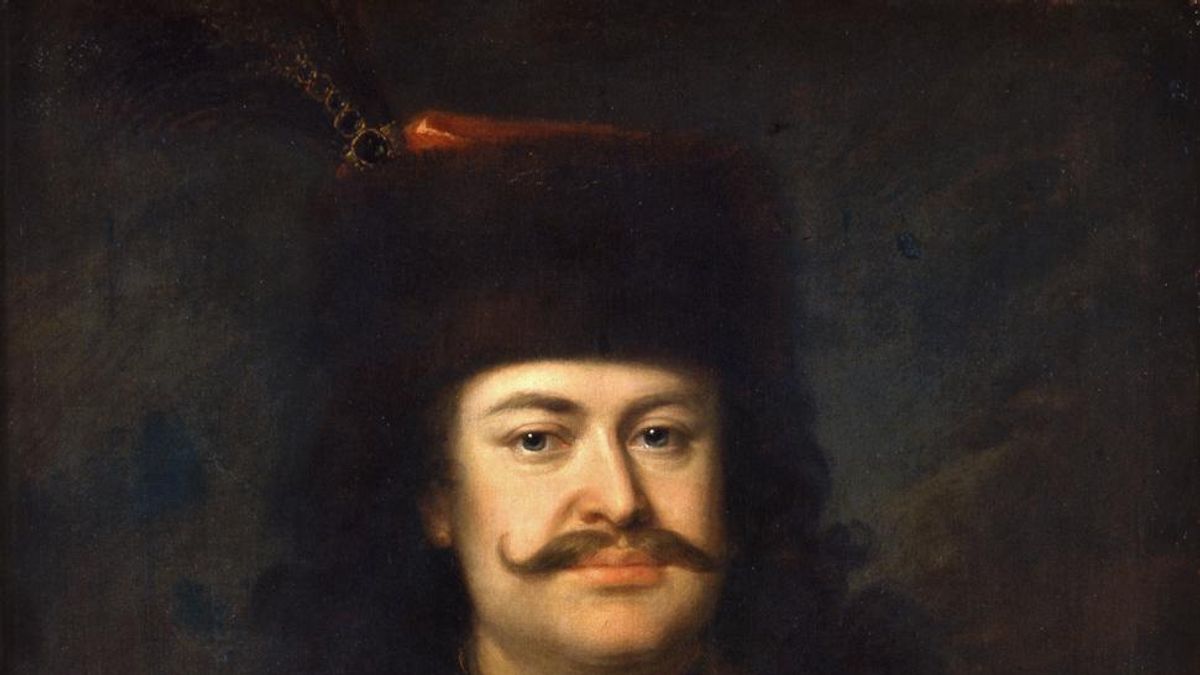
Majtény – Betrayal or Realpolitik?
Translated from Hungarian, summarized and contextualized by DistantNews.
TLDR
- The article discusses the historical context of the Treaty of Szatmár, signed in 1711, which ended an eight-year war of independence led by Francis II Rákóczi.
- General Sándor Károlyi, Rákóczi's commander, negotiated the peace treaty with the imperial forces to avoid total defeat and its political consequences.
- The author contrasts Károlyi's pragmatic approach with Rákóczi's unwavering idealism, suggesting that compromise, like Károlyi's in 1711 and Deák's in 1867, was more effective in the given circumstances than absolute adherence to principles.
The article delves into the complex historical event of the Treaty of Szatmár, signed in 1711, which brought an end to the Kuruc Uprising led by Francis II Rákóczi. It frames the decision by General Sándor Károlyi, Rákóczi's chief commander, to negotiate peace as a matter of realpolitik rather than betrayal. With the Kuruc army depleted and cornered in northeastern Hungary in the spring of 1711, Károlyi's agreement with Count János Pálffy, commander of the imperial forces, was seen as a necessary measure to avert a catastrophic defeat and its dire political repercussions.
The commander-in-chief, Lieutenant General Count Sándor Károlyi – to avoid complete defeat and its fatal political consequences – agreed with the commander-in-chief of the imperial forces in Hungary, Lieutenant General Count János Pálffy, to end the armed struggle and make peace.
Rákóczi himself had departed Hungary for Poland in late February of the same year, entrusting Károlyi with both the army and the peace negotiations. The final agreement was reached on April 29, 1711, and on May 1, the Kuruc soldiers laid down their arms at Majtény, pledging allegiance to King Joseph I, who had died two weeks prior. Rákóczi, in exile, did not accept the peace and accused Károlyi of treason. However, the article argues that Károlyi was merely an "traitor" to a cause that had become utopian: a free and independent Hungary, rendered unrealistic by the unfavorable international political climate and the overwhelming military might of the Habsburg Empire.
After Rákóczi left Hungary forever at the end of February – on the same path, the Verecke Pass, where he crossed the Polish-Hungarian border on June 16, 1703, to fight for his homeland and freedom with God's help – he entrusted not only the army but also the leadership of the peace negotiations to Károlyi, whom he had authorized.
This historical episode is used to explore a perennial dichotomy in Hungarian political thought: the tension between principled idealism and pragmatic compromise. The author posits that while Rákóczi remains an eternal national ideal and a freedom fighter for his unwavering adherence to principles, Károlyi, the compromiser, was a politician of realpolitik. The article suggests that Károlyi's compromise in 1711, much like Ferenc Deák's in 1867, was the more effective path given the specific historical circumstances, leading to a relatively favorable conclusion to the eight-year conflict, unlike the tragic downfall of 1849.
The main commander was at most an 'traitor' to a cause that was only a utopia in 1711: a free and independent Hungary.
From the perspective of Magyar Nemzet, this analysis highlights the enduring relevance of strategic decision-making in times of national crisis. It challenges the romantic notion of absolute adherence to ideals when faced with insurmountable odds, suggesting that pragmatic leadership, even if perceived as compromising, can ultimately serve the nation's best interests. The article implicitly argues that understanding these historical precedents is crucial for contemporary political discourse, particularly when navigating complex geopolitical landscapes where national aspirations must be balanced against practical realities.
If politics is the art of possibilities, not desires, then I believe that Károlyi's compromise in 1711 – and Deák's compromise in 1867 – was more expedient in the given situation, under the specific circumstances, than Rákóczi's – and Kossuth's – heroic, unyielding adherence to principles.
DistantNews Editorial
Originally published by Magyar Nemzet in Hungarian. Translated, summarized, and contextualized by our editorial team with added local perspective. Read our editorial standards.
More Stories


From Our Blog

Countries Without a Free Press: What You Need to Know

What Press Freedom Means for the News You Read

What Gets Lost (and Found) When News Is Translated

The Critical Role of Diaspora Media in Global News

What Travellers Should Know About Countries with Restricted Press
