

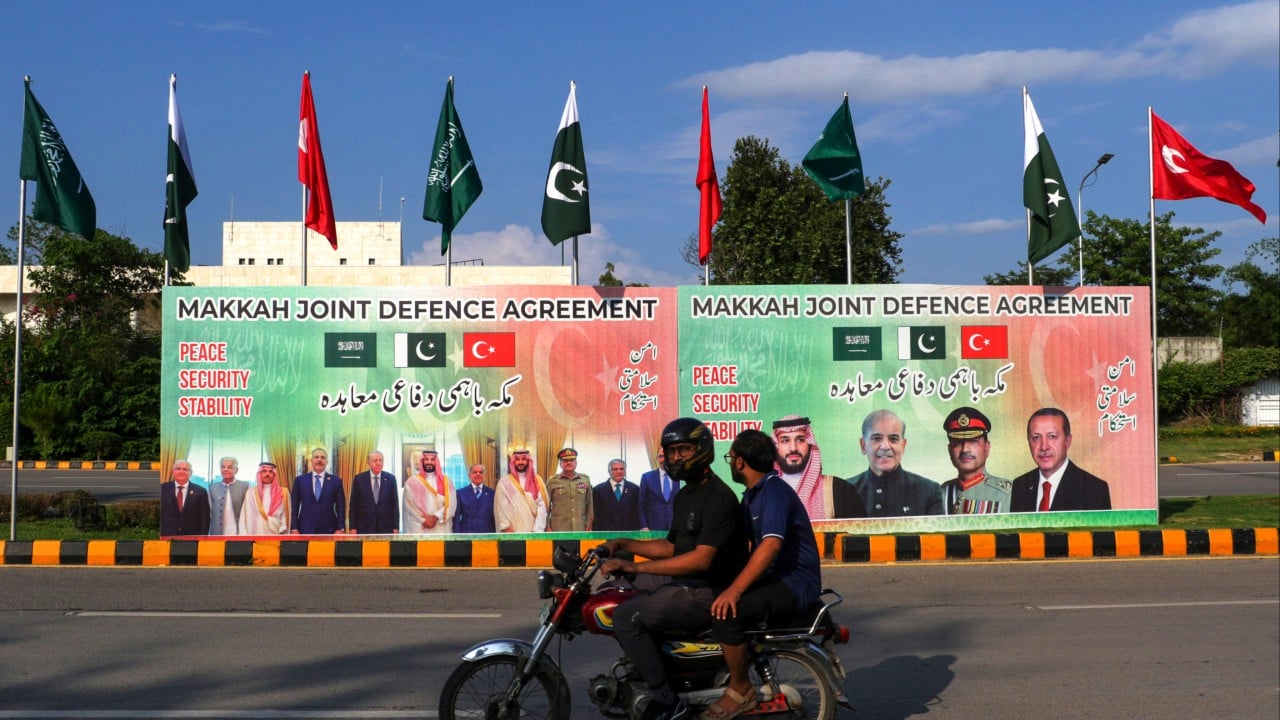
Mecca pact signals Gulf shift away from US security, potentially opening door for China
Translated from English, summarized and contextualized by DistantNews.
At a glance
Analysis
Sources not specified
New plan
- A new security pact signed in Mecca between the US and Gulf states is perceived as fraying, potentially opening doors for China's regional expansion.
- The pact echoes NATO's Article 5, declaring an attack on one signatory as an attack on all, signaling a move towards collective defense among middle powers.
- This shift away from US-dominated security architecture could influence other countries' security partnerships, including India's.
A significant security bargain between the United States and Gulf countries appears to be weakening, creating an environment analysts believe could allow Beijing to increase its influence in the region. For decades, Saudi Arabia and other Gulf nations have depended on Washington's security umbrella, while the U.S. relied on them for access, energy, and regional leverage.
This week's pact, signed in Mecca, establishes a collective defense framework, stating that an armed attack on one of the three signatories will be considered an attack on all. This arrangement draws parallels to NATO's Article 5, signaling a move towards greater regional autonomy.
The significance of the Mecca pact extends beyond its immediate security implications. It represents a concerted effort by three middle powers, a major Gulf energy producer, a NATO member, and a nuclear-armed South Asian state, to reduce their dependence on the U.S.-centric security structure and develop their own collective defense capabilities. Such independent alliances among middle powers have been rare since the early Cold War era.
This development could serve as a potential model for other nations seeking to build similar collective security frameworks. It may also prompt countries like India to reassess their existing security partnerships and strategic alignments in response to this evolving regional dynamic.
DistantNews Editorial
Originally published by South China Morning Post in English. Translated, summarized, and contextualized by our editorial team with added local perspective. Read our editorial standards.
More Stories
From Our Blog

Countries Without a Free Press: What You Need to Know

What Press Freedom Means for the News You Read

What Gets Lost (and Found) When News Is Translated

The Critical Role of Diaspora Media in Global News

What Travellers Should Know About Countries with Restricted Press
