


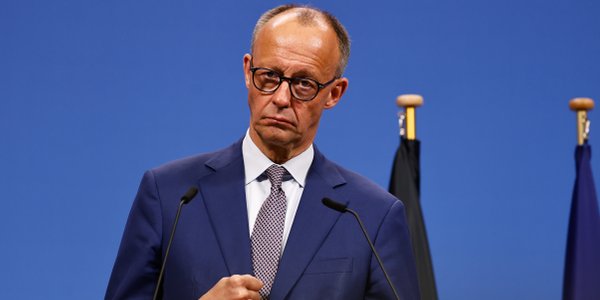
Merz's struggles could empower AfD, reshaping German and European politics
Translated from Polish, summarized and contextualized by DistantNews.
At a glance
Analysis
Named sources
Context piece
- Friedrich Merz's political future appears uncertain, potentially destabilizing Germany's political system and impacting Poland.
- The Alternative for Germany (AfD) party is gaining support, particularly in eastern states, and could break the "firewall" against it.
- A rise in AfD's influence could lead to increased political polarization, internal tensions in Germany, and a shift in foreign policy, potentially with anti-American and pro-Russian leanings.
Friedrich Merz's political standing is precarious, raising questions about the future of Germany's established political order and its implications for Poland. Observers are watching closely to see if Merz's potential downfall will lead to a prolonged collapse of the current German political system or if last-minute efforts will be made to salvage it before 2029.
The upcoming elections in the eastern German state of Saxony-Anhalt could mark a significant turning point. The Alternative for Germany (AfD) party is poised for a strong showing, potentially gaining full control in the state. With growing support across Germany, this could signal the end of the "firewall", an informal agreement among mainstream parties to exclude the AfD from governing coalitions.
Should the AfD gain control of even one state, or if a coalition with them becomes a possibility at the federal level, it would likely intensify political polarization and internal tensions within Germany. This instability could weaken Germany, creating opportunities for other European nations, including Poland, to leverage. In the longer term, an AfD government presents a significant challenge, with its projected cultural counter-revolution potentially clashing with existing state structures and parts of society.
Foreign policy could become a key area for the AfD to compensate for domestic challenges and foster a "new German pride." Potential shifts include anti-American and pro-Russian stances. The article suggests that if America, post-Trump, does not integrate Central Europe into its global security framework, Poland could face serious difficulties. The rise of the AfD also brings concerns about a German-led consolidation of Central Europe, which could reignite territorial issues, and the idea of European autonomy centered around a nuclear-armed Germany.
DistantNews Editorial
Originally published by Rzeczpospolita in Polish. Translated, summarized, and contextualized by our editorial team with added local perspective. Read our editorial standards.
More Stories
From Our Blog

What Gets Lost (and Found) When News Is Translated

The Critical Role of Diaspora Media in Global News

What Travellers Should Know About Countries with Restricted Press

A Digital Nomad's Guide to Following Local News

How the Same Story Looks Different in Different Countries
