


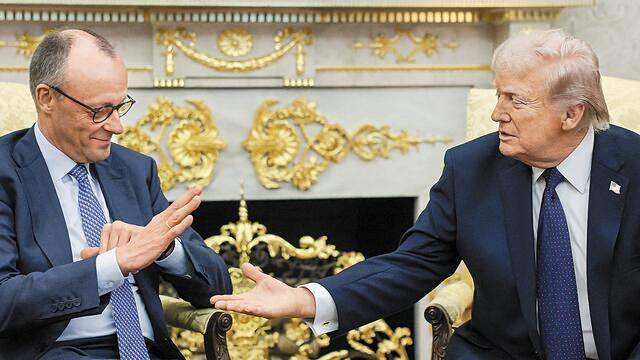
Merz: Trump's Tariffs on European Vehicles Hit All of Europe, Not Just Germany
Translated from Greek, summarized and contextualized by DistantNews.
TLDR
- German Chancellor Friedrich Merz stated that new U.S. tariffs on European vehicles affect all EU member states, not just Germany.
- Merz expressed hope for a swift agreement with the U.S. despite European resistance to the framework deal.
- He noted that President Trump appears impatient as the European side introduces new conditions, hindering the implementation of the August 2025 framework agreement.
Friedrich Merz, the German Chancellor, has voiced strong concerns regarding the recent U.S. tariffs on European vehicles, emphasizing that these measures do not solely target Germany but indeed impact the entire European Union. In an interview with German public broadcaster ARD, Merz underscored that "all of Europe is in the crosshairs," highlighting the broad economic implications for the continent.
All of Europe is in the crosshairs.
Merz acknowledged that U.S. President Donald Trump might be frustrated by the lack of progress on the framework agreement reached between the U.S. and the EU in August 2025. However, he pointed to ongoing resistance within the European Parliament as a significant hurdle to its implementation. The Chancellor suggested that the U.S. is ready to move forward, while Europe is lagging due to new conditions being introduced by the European side.
The Americans are ready, the Europeans are not.
Expressing a desire for a swift resolution, Merz conveyed his hope for an agreement "as soon as possible." This sentiment reflects a broader German and European desire to de-escalate trade tensions and maintain stable economic relations with the United States. The situation underscores the delicate balance of international trade negotiations, where differing paces and priorities can lead to friction, even among allies.
as soon as possible.
DistantNews Editorial
Originally published by Ta Nea in Greek. Translated, summarized, and contextualized by our editorial team with added local perspective. Read our editorial standards.
More Stories

From Our Blog

What Gets Lost (and Found) When News Is Translated

The Critical Role of Diaspora Media in Global News

What Travellers Should Know About Countries with Restricted Press

A Digital Nomad's Guide to Following Local News

How the Same Story Looks Different in Different Countries
