


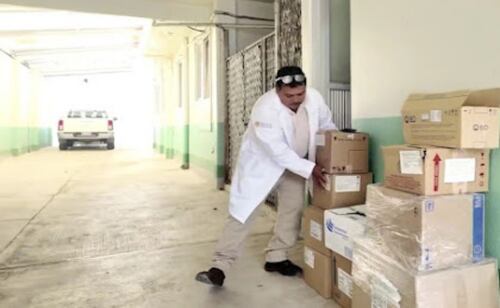
Mexico Reinforces Medicine Supply in Otomí-Tepehua Highlands; Distributes Nearly 3,000 Supplies in Indigenous Communities
Translated from Spanish, summarized and contextualized by DistantNews.
TLDR
- Mexico's IMSS Bienestar distributed nearly 3,000 medications to indigenous communities in the Sierra Otomí-Tepehua region.
- This initiative, part of the national 'Rutas de la Salud' strategy, aims to strengthen healthcare access in underserved areas.
- The effort prioritizes regions with significant indigenous populations, addressing historical disparities in healthcare access.
The Universal is proud to report on the significant step taken by IMSS Bienestar to reinforce the supply of essential medicines in the Sierra Otomí-Tepehua region. This initiative, part of the national 'Rutas de la Salud' strategy, demonstrates a commitment to addressing historical inequities in healthcare access for indigenous communities.
The inhabitants of the indigenous communities of the Sierra Otomí-Tepechua received various medicines to strengthen the supply of products they require for the prevention and healing of their illnesses.
By distributing nearly 3,000 vital medical supplies, the program directly benefits the inhabitants of Huehuetla, San Bartolo Tutotepec, and Tenango de Doria. These areas, with a substantial indigenous population, have long faced challenges in accessing consistent and adequate medical care. Ensuring free and accessible medical services and medicines is not just a matter of public health; it is an act of social justice and a recognition of Mexico's rich cultural diversity.
The regional hospital, equipped with 30 beds and six consultation rooms, currently operates with 476 medication codes. The meticulous tracking of supply is crucial for uninterrupted patient care. This special shipment of medicines to Hidalgo reinforces the coverage provided by medical units across the state, reflecting a coordinated effort between state and federal governments to establish a community-focused healthcare model.
this strategy, called Rutas de la Salud, prioritizes areas where it is most needed, such as the Sierra Otomí-Tepehua, made up of the municipalities of Huehuetla, San Bartolo Tutotepec and Tenango de Doria, where the system serves 473 communities.
This effort underscores Mexico's dedication to serving its most vulnerable populations and honoring its indigenous heritage through tangible actions. The Universal views this as a positive development, highlighting the government's commitment to bridging the gap in healthcare services and ensuring that all citizens, regardless of their location or background, receive the care they deserve.
guaranteeing access to free medical services and medicines represents an act of social justice and recognition of cultural diversity.
DistantNews Editorial
Originally published by El Universal in Spanish. Translated, summarized, and contextualized by our editorial team with added local perspective. Read our editorial standards.
More Stories
From Our Blog

What Press Freedom Means for the News You Read

What Gets Lost (and Found) When News Is Translated

The Critical Role of Diaspora Media in Global News

What Travellers Should Know About Countries with Restricted Press

A Digital Nomad's Guide to Following Local News
