

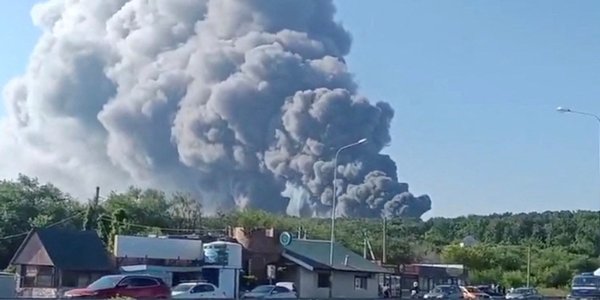

Middle East on the brink of catastrophe as US-Iran conflict deepens
Translated from Polish, summarized and contextualized by DistantNews.
At a glance
Analysis
Named sources
Context piece
- The US faces dilemmas in its conflict with Iran, with regional allies questioning American reliability.
- Iran's regional allies, including Hezbollah, Houthis, and Iraqi militias, act as proxies threatening Iran's adversaries.
- China is emerging as a decisive player in the Persian Gulf, influencing regional dynamics.
The Middle East stands on the brink of catastrophe, caught in a complex geopolitical standoff between the United States, Israel, and Iran. Washington grapples with how to confront Tehran, while regional allies express doubts about the US's reliability as a partner in the face of potential escalation. The region is described as being "in flames," with pro-Iranian forces attacking in Iraq, Iranian missiles striking Jordan, and Saudi Arabia preparing for conflict with Yemen's Houthis, who threaten the Bab al-Mandab strait.
The Middle East is on the border of catastrophe, but such a state does not have to lead to a major regional war.
Israel, though occupied with Hezbollah and unrest in the West Bank, remains poised to strike Iran. Hezbollah, the Houthis, and Shiite militias in Iraq are identified as Iran's key allies, serving as forward outposts that threaten Iran's primary enemies: Israel, the US, Saudi Arabia, and other Gulf states. Weakening these proxies would diminish Iran's military strength and bolster diplomatic leverage. Iraq has served as a transit route for military supplies to Hezbollah, while the Houthis owe their missile arsenal to Iran, suggesting potential Iranian support in an open war with Saudi Arabia.
Former British Ambassador to Iran, Richard Dalton, characterizes the situation as a "classic stalemate" where no regional actor desires a larger conflict, and Israel cannot count on US support for such ambitions. Reports indicate that military ammunition stockpiles are dwindling, and Arab nations are questioning US commitment amid a larger confrontation. Furthermore, oil flows through key straits are limited, with Saudi oil also transiting the Suez Canal via smaller tankers.
It is a classic stalemate that can persist for some time.
Donald Trump's threats have lost their impact in Tehran, where Iran believes it holds the stronger hand, having weathered recent bombardments. Experts agree that these strikes are unlikely to soften Tehran's stance. The US President reportedly halted planned heavy airstrikes, citing the opinions of Gulf allies like Qatar. Meanwhile, China is increasingly becoming a decisive player in the Persian Gulf, influencing the region's strategic landscape. The article also touches upon negotiation proposals concerning the Strait of Hormuz, crucial for trade.
Iran has better cards.
DistantNews Editorial
Originally published by Rzeczpospolita in Polish. Translated, summarized, and contextualized by our editorial team with added local perspective. Read our editorial standards.
More Stories
From Our Blog

What Gets Lost (and Found) When News Is Translated

The Critical Role of Diaspora Media in Global News

What Travellers Should Know About Countries with Restricted Press

A Digital Nomad's Guide to Following Local News

How the Same Story Looks Different in Different Countries
