


Mundovina: The Century-Old Honey Distillate from Greece's Arnaia Region
Translated from Greek, summarized and contextualized by DistantNews.
TLDR
- Mundovina, a rare Greek distillate made from honey and beeswax, is produced in the mountainous region of Arnaia, Halkidiki.
- This traditional spirit, with over 45% alcohol by volume, is produced using methods passed down for a century.
- Recognized as a Protected Geographical Indication (PGI), mundovina is used locally as a digestive and folk remedy.
In the mountainous heart of Arnaia, Halkidiki, a unique Greek distillate known as mundovina is being meticulously crafted, preserving a tradition that has endured for a century. Far from the common perception of Greek spirits, mundovina distinguishes itself by using honey and the remnants of honeycomb as its primary ingredients, resulting in a potent spirit with an alcohol content exceeding 45% vol.
it is a distillate similar to double-distilled tsipouro, but with honey and honeycomb residues as the raw material.
This rare distillate is deeply embedded in the local identity of Arnaia. Christos Tsiares, president of the Arnaia Beekeepers Association, explains that mundovina is akin to a double-distilled tsipouro but derived from honey residues. Its distinctiveness and local heritage were officially recognized in 2012 when it was granted Protected Geographical Indication (PGI) status. For the locals, mundovina is more than just a drink; it serves as a digestive aid after meals and is considered a traditional remedy for colds, with younger generations often taking bottles back to the city as a winter cure.
Locals use it both as a digestive after meals and as a traditional 'folk remedy' for colds.
The production process is labor-intensive and requires significant expertise, patience, and time, often spanning up to seven months. It begins with the beekeeping practices themselves, involving the collection of old honeycombs every three to five years for hygiene reasons. These combs, along with honey and propolis residues, form the raw material. The process includes boiling these materials, filtering, and separating the wax, followed by a natural fermentation of the resulting sweet liquid for six to seven months before undergoing double distillation.
mundovina is not just a drink, but history, survival, and identity in a glass.
The tradition of mundovina dates back to a time before Macedonia's liberation in 1912, with an organized beekeeping association existing in Arnaia since 1890. The absence of vineyards in the region spurred this ingenious creation of a spirit from honey. The name itself is believed to derive from the Latin 'munda vina,' meaning 'dark wine,' referencing the color of the mixture during fermentation. Mundovina is produced only during the first ten days of June under strict controls due to its high alcohol content, and it is not bottled on a mass scale, preserving its artisanal character.
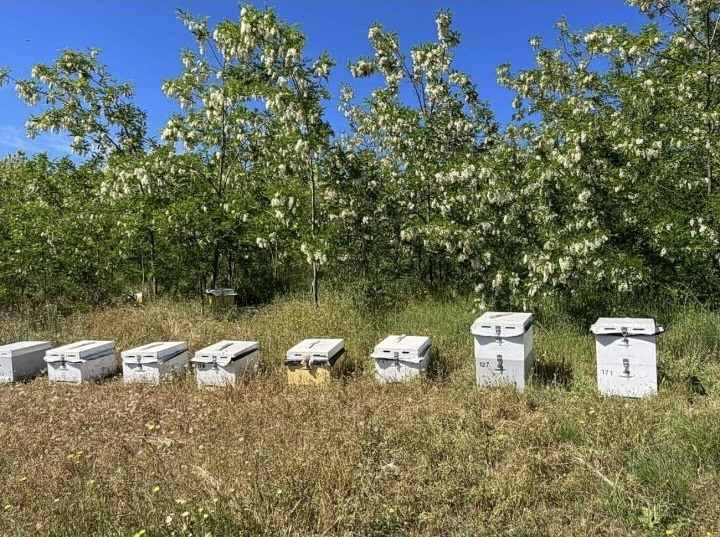
All starts from the beekeeping practice itself.
DistantNews Editorial
Originally published by Ta Nea in Greek. Translated, summarized, and contextualized by our editorial team with added local perspective. Read our editorial standards.
More Stories


From Our Blog

What Gets Lost (and Found) When News Is Translated

The Critical Role of Diaspora Media in Global News

What Travellers Should Know About Countries with Restricted Press

A Digital Nomad's Guide to Following Local News

How the Same Story Looks Different in Different Countries
