

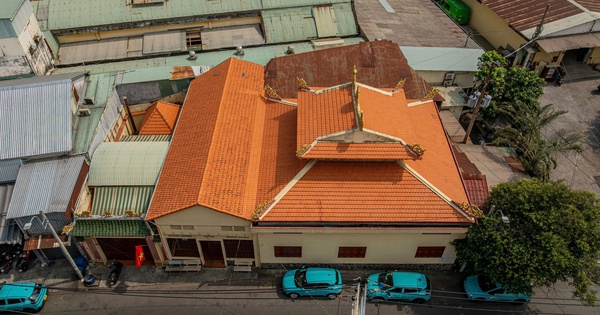
Mystery of 135-year-old ancient temple in Ho Chi Minh City: Traces of Nguyễn Dynasty generals
Translated from Vietnamese, summarized and contextualized by DistantNews.
TLDR
- A 135-year-old ancient temple, Hoa Tay Mieu, stands in a densely populated residential area of Ho Chi Minh City, Vietnam.
- The temple commemorates three anti-colonial Vietnamese generals: Bui Van Khoa, Nguyen Van Soc, and Tran Van Ly, who led an uprising against French colonizers around 1885.
- Despite reconstructions, the temple remains a spiritual anchor for locals, who visit to pray for peace and prosperity, preserving traditional architectural elements.
Nestled within the bustling Phú Thạnh Ward of Ho Chi Minh City lies Hoa Tay Mieu, an ancient temple that has stood for over 135 years, serving as a quiet sanctuary amidst the urban sprawl. This venerable structure is more than just a place of worship; it is a poignant reminder of Vietnam's history of resistance against foreign powers, specifically commemorating the bravery of three generals who led an uprising against French colonial forces.
Historical records, inscribed on a stele erected in 2011, detail the valiant efforts of Generals Bui Van Khoa, Nguyen Van Soc, and Tran Van Ly. Around 1885, these leaders rallied a militia in the Tân Hòa Tây region, training them and launching a prolonged insurgency that instilled fear in the French colonizers. Their ultimate sacrifice on March 17, 1891, was met with deep respect from the local populace, who subsequently established Hoa Tay Mieu to honor their patriotic spirit. The temple once housed their memorial tablets and a wooden stele bearing the golden inscription: "Công thần dũng sĩ võ tướng nghĩa binh" (Meritorious officials, valiant warriors, loyal soldiers).
The temple was significantly renovated in 2011, almost entirely repainted and refurbished to be more magnificent, but it was imperative to maintain its inherent solemnity.
Though the temple underwent reconstruction in 1936 and the original tablets have since been lost, its significance endures. The local community continues to regard Hoa Tay Mieu as a sacred site for remembrance. A recent inventory by the Ho Chi Minh City People's Committee also notes the temple's role in honoring Nguyen Quy Bieu, another Nguyễn Dynasty general who fought against the French, and his wife, Tran Luy Xuan. His remains were reinterred at Hoa Tay Mieu in 1978. The temple's enduring presence and the continued devotion of locals underscore the deep-rooted connection between spiritual sites and the preservation of national historical memory in Vietnam, a connection often overlooked in international reporting that may focus solely on economic or political developments.
Every day, people come to offer incense. Every morning, people come to pay respects; if they are busy, they come at noon or in the afternoon. People pray for smooth work and good health; over time, it has become a habit.
DistantNews Editorial
Originally published by Thanh Niên in Vietnamese. Translated, summarized, and contextualized by our editorial team with added local perspective. Read our editorial standards.
More Stories

From Our Blog

What Gets Lost (and Found) When News Is Translated

The Critical Role of Diaspora Media in Global News

What Travellers Should Know About Countries with Restricted Press

A Digital Nomad's Guide to Following Local News

How the Same Story Looks Different in Different Countries
