


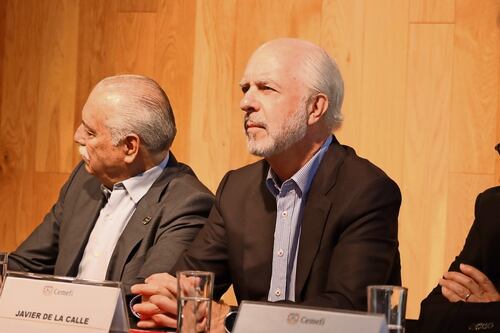
New Cemefi President Urges Understanding and Collaboration to Bridge Mexico's Divides
Translated from Spanish, summarized and contextualized by DistantNews.
TLDR
- Javier de la Calle assumes the presidency of the Mexican Center for Philanthropy (Cemefi), calling for greater understanding and collaboration in a polarized Mexico.
- He emphasizes that no single sector holds all the answers and that collective solutions emerge when diverse actors engage.
- De la Calle aims to strengthen dialogue between public, private, and social sectors, fostering trust and mutual understanding to address national challenges.
As Javier de la Calle steps into his new role as president of the Mexican Center for Philanthropy (Cemefi), his call for prioritizing understanding and collaboration resonates deeply within Mexico's current socio-political climate. His message directly addresses the pervasive polarization that often hinders progress, advocating for a unified approach where diverse perspectives converge to find effective solutions.
Mexico does not need everyone to think alike, Mexico needs everyone to think better together, and that is only possible if we strengthen and help civil society to strengthen openness.
De la Calle's assertion that "Mexico does not need everyone to think alike, Mexico needs everyone to think better together" encapsulates a crucial insight for a nation grappling with deep divisions. He rightly points out that the complexity of Mexico's challenges requires a synergy of ideas and capabilities from the public, private, and social sectors. This collaborative spirit, he argues, is the bedrock upon which robust solutions are built, moving beyond the limitations of isolated efforts.
no organization, no sector, no government alone has all the answers or all the capabilities; the best solutions emerge when different actors sit at the same table.
His agenda to strengthen dialogue and foster trust between these sectors is particularly timely. In an environment where disagreement too often devolves into outright division, Cemefi's role in facilitating open communication and mutual respect becomes paramount. De la Calle's commitment to ensuring that organizations are not perceived as rivals but as partners in national development signals a hopeful path forward.
We have to be more willing to understand each other better, not to disqualify each other from the start, and to think about Mexico and what we need.
Furthermore, his nuanced approach to the relationship between authorities and civil society organizations acknowledges the inherent tensions, often stemming from increased oversight. By proposing dedicated spaces for dialogue, he seeks to reconcile the need for accountability with the operational realities of non-profits. This balanced perspective, which calls for legal sanctions for genuine irregularities while protecting organizations acting in good faith, is essential for a healthy civil society. From a Mexican viewpoint, Cemefi's leadership under De la Calle offers a vital platform for constructive engagement, aiming to harness the collective power of its people to overcome shared obstacles.
We must avoid institutions being perceived as rivals and, instead, build trusting relationships.
DistantNews Editorial
Originally published by El Universal in Spanish. Translated, summarized, and contextualized by our editorial team with added local perspective. Read our editorial standards.
More Stories


From Our Blog

What Press Freedom Means for the News You Read

What Gets Lost (and Found) When News Is Translated

The Critical Role of Diaspora Media in Global News

What Travellers Should Know About Countries with Restricted Press

A Digital Nomad's Guide to Following Local News
