

New Hope for Early Lung Cancer Detection in Vietnam with Advanced Screening Program
Translated from Vietnamese, summarized and contextualized by DistantNews.
TLDR
- Vietnam records approximately 24,000 new lung cancer cases annually, with 80-90% diagnosed at late stages.
- Early detection programs, like those in Taiwan, have increased early diagnosis rates to 50%.
- Bach Mai Hospital is offering free low-dose CT scans for high-risk individuals to improve early detection and raise public awareness.
In Vietnam, the fight against lung cancer is gaining critical momentum with a renewed focus on early detection. While the country registers around 24,000 new lung cancer cases each year, a stark reality persists: a vast majority, between 80-90%, are diagnosed only at advanced stages. This late diagnosis significantly complicates treatment, drives up costs, and tragically results in high mortality rates.
Experts point to international successes as a model for Vietnam. Associate Professor Phạm Văn Thái highlights that countries like Taiwan, which initiated lung cancer screening programs a decade ago, have seen their early detection rates climb to 50%. This is a dramatic improvement from situations similar to Vietnam's current predicament, where early detection was once similarly low. The key lies in proactive screening and regular monitoring of potential abnormalities, such as lung nodules.
Tại nhiều nước, 10-20 năm trước cũng có tình trạng tương tự chúng ta hiện nay, nhưng nhờ áp dụng các chương trình sàng lọc bệnh sớm, hiện tỉ lệ bệnh nhân được phát hiện sớm đã lên tới 50%. Tại Đài Loan (Trung Quốc) đã khởi động chương trình sàng lọc ung thư phổi 10 năm trước và quản lý nốt mờ bằng thăm khám định kỳ tùy tình trạng bệnh, hiệu quả cũng rất tốt
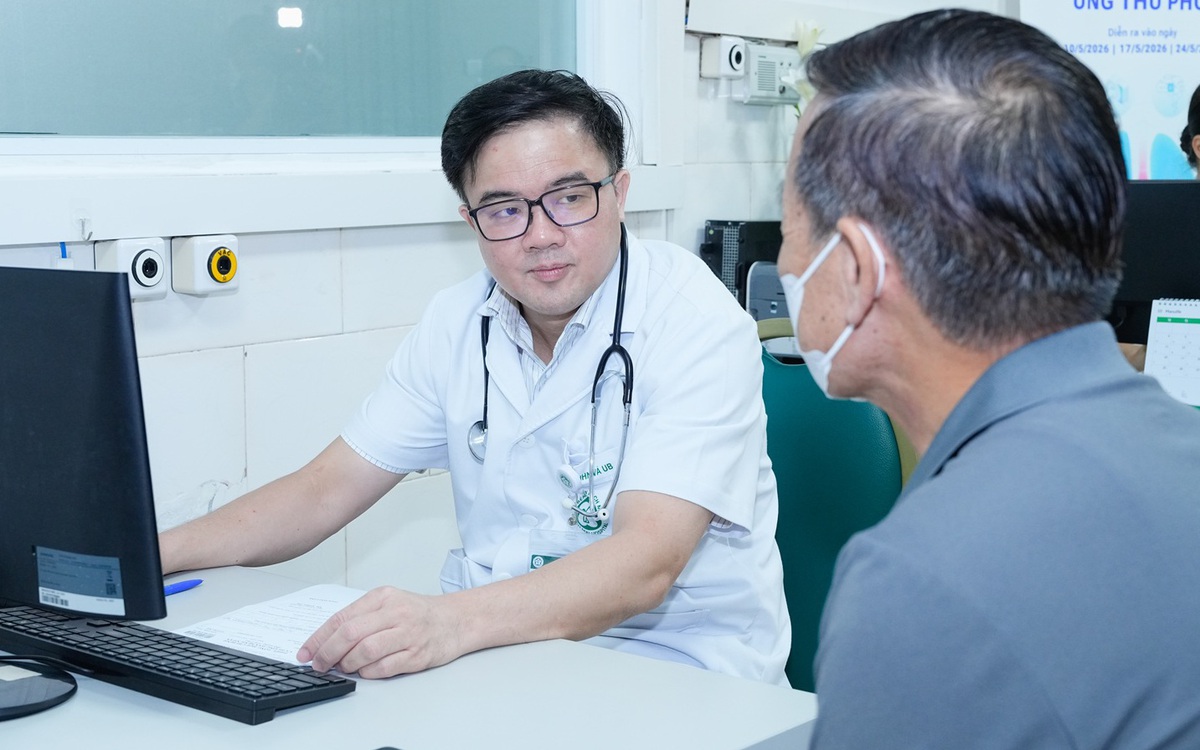
Bach Mai Hospital is now at the forefront of this initiative, launching a free screening program for high-risk individuals. Utilizing low-dose CT scans—a more advanced and sensitive method than traditional X-rays, capable of detecting even small, rice-grain-sized lesions—the program aims to identify lung abnormalities at their earliest, most treatable stages. Participants aged 50 and above, particularly those with risk factors like smoking history or family history of lung cancer, are encouraged to join the screenings held throughout May.
The objective, as explained by Associate Professor Phương, extends beyond merely identifying current cases. A crucial goal is to elevate public awareness, motivating individuals to seek medical check-ups proactively, even when feeling healthy. This shift towards preventative healthcare is seen as vital for improving patient outcomes and ultimately reducing the burden of lung cancer in Vietnam.
Mục tiêu của đợt tầm soát theo PGS Phương không chỉ là tìm ra bệnh nhân, quan trọng hơn là nâng cao nhận thức cộng đồng để người dân chủ động đi khám từ khi còn khỏe, từ đó có thể phát hiện bệnh sớm và được điều trị với kết quả tốt.
DistantNews Editorial
Originally published by Tuổi Trẻ in Vietnamese. Translated, summarized, and contextualized by our editorial team with added local perspective. Read our editorial standards.
More Stories


From Our Blog

What Gets Lost (and Found) When News Is Translated

The Critical Role of Diaspora Media in Global News

What Travellers Should Know About Countries with Restricted Press

A Digital Nomad's Guide to Following Local News

How the Same Story Looks Different in Different Countries
