


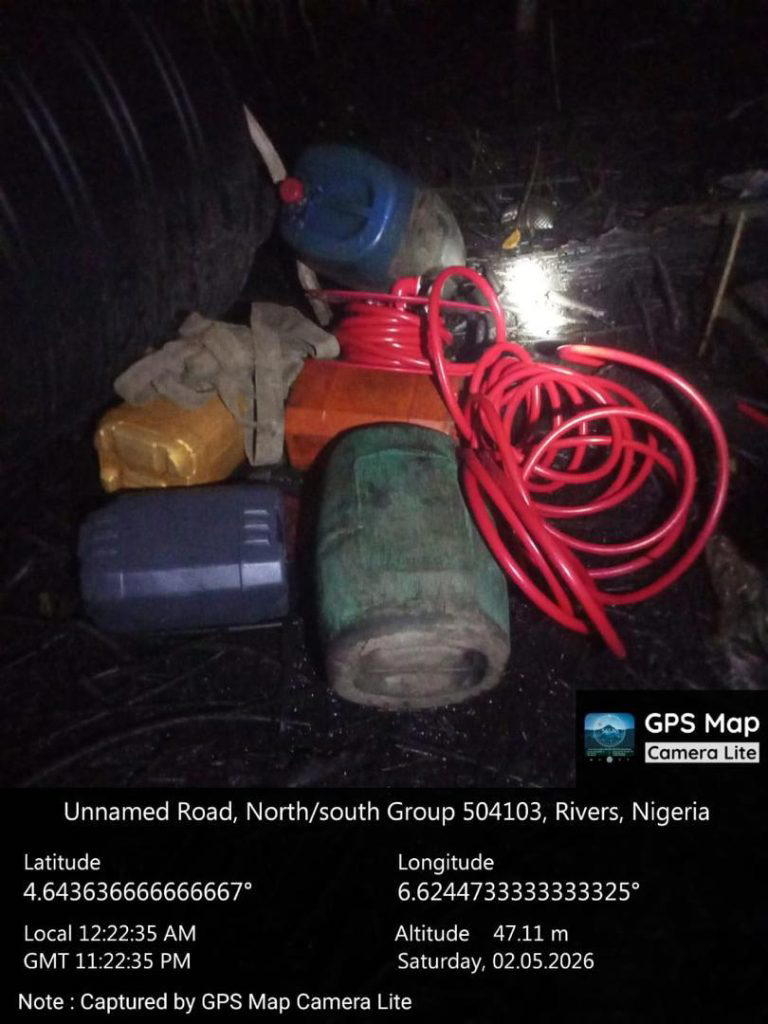
Nigerian Navy Destroys Illegal Refineries, Recovers 163,000 Litres of Oil
Translated from English, summarized and contextualized by DistantNews.
TLDR
- The Nigerian Navy has intensified its crackdown on crude oil theft in the Niger Delta, dismantling illegal refining camps.
- Operations in Rivers and Bayelsa states led to the recovery of approximately 163,000 litres of suspected crude oil and illegally refined Automotive Gas Oil (AGO).
- The Navy destroyed illegal refining infrastructure and products, vowing to track down suspects and dismantle associated criminal networks.
The Nigerian Navy's relentless pursuit of oil thieves in the Niger Delta is yielding significant results, showcasing a robust commitment to protecting the nation's critical oil infrastructure. Recent operations by NNS Pathfinder and NNS Soroh have not only led to the dismantling of illegal refining camps but also the recovery of substantial quantities of stolen crude oil and illegally refined AGO. These intelligence-driven missions highlight the Navy's strategic approach to combating a menace that has long plagued the region and hampered national economic growth. The destruction of illegal refining sites and equipment, as mandated by Anti-Crude Oil Theft (Anti-COT) procedures, sends a clear message to criminal elements. While suspects continue to evade capture, the Navy's sustained resolve, coupled with calls for public cooperation, demonstrates a unified front against this pervasive crime. The ongoing efforts to track down fleeing suspects and dismantle associated networks are vital steps in ensuring the long-term security and economic stability of the Niger Delta and Nigeria as a whole.
the operations underscore the Navy’s sustained resolve to curb oil theft and protect critical national assets, adding that efforts are ongoing to track down fleeing suspects and dismantle associated criminal networks.
DistantNews Editorial
Originally published by Vanguard in English. Translated, summarized, and contextualized by our editorial team with added local perspective. Read our editorial standards.
More Stories



From Our Blog

How the Same Story Looks Different in Different Countries

What Gets Lost (and Found) When News Is Translated

The Critical Role of Diaspora Media in Global News

What Travellers Should Know About Countries with Restricted Press

A Digital Nomad's Guide to Following Local News
