

North Korea to Deploy New Weapons Near Border, Raising Seoul Tensions
Translated from Malay, summarized and contextualized by DistantNews.
TLDR
- North Korea plans to deploy new artillery systems near the southern border, potentially placing Seoul within range of its weapons.
- This move escalates tensions as Pyongyang has recently redefined its relationship with South Korea, removing references to reunification and defining its territory to include the South.
- Despite North Korea's aggressive posture, South Korea's presidential office stated it will continue pursuing peaceful engagement.
Pyongyang is signaling a significant escalation in its military posture, with plans to deploy new, powerful artillery systems along its southern border. This strategic placement aims to bring the South Korean capital, Seoul, and its densely populated surrounding areas within the range of North Korean firepower. This development comes at a time when inter-Korean relations are already at a nadir, marked by Pyongyang's recent constitutional changes that erase any pretense of peaceful reunification and explicitly define South Korea as a primary adversary.
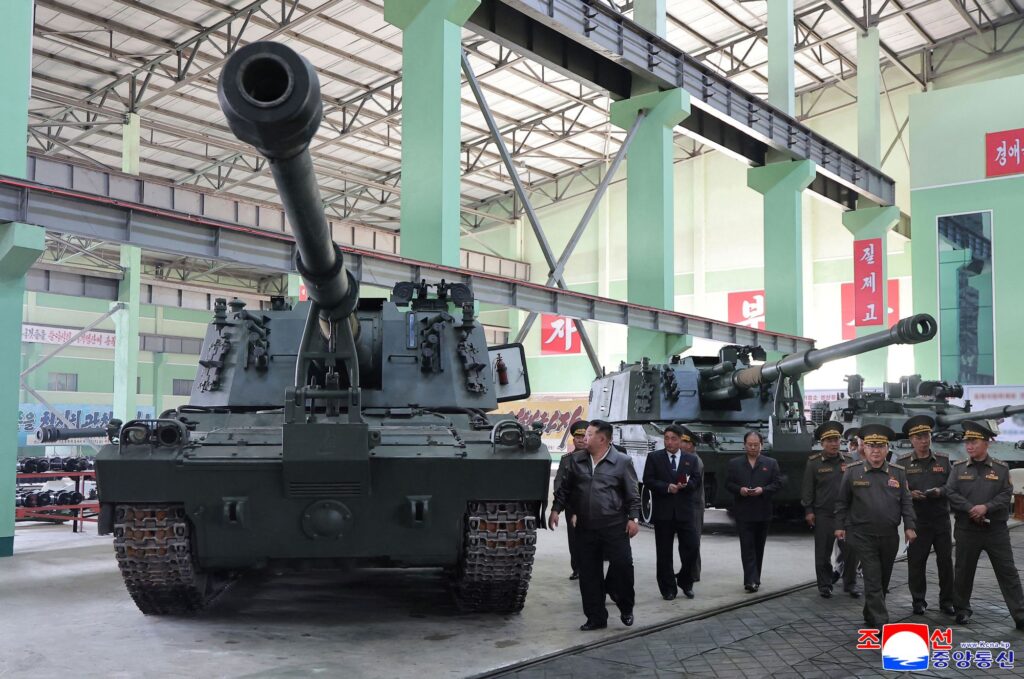
The deployment of new howitzers, capable of firing over 60 kilometers, is touted by North Korean leader Kim Jong Un as a move that will provide a "great change and advantage" to its ground operations. The implications are stark: not only Seoul but also the crucial industrial hub of Gyeonggi province, South Korea's most populous region, could fall within the strike zone. This aggressive posturing is further evidenced by recent actions, such as the demolition of roads and railways connecting the two Koreas and the construction of border barriers, effectively signaling a complete severing of ties.
North Korea's recent revision of its constitution is particularly telling. By removing references to "reunifying the homeland" and instead defining its territory to include "the Republic of Korea" (South Korea's official name) to the south, Pyongyang is formally abandoning the goal of unification and instead framing the South as a distinct, potentially hostile entity within its sphere of influence. This constitutional shift solidifies a hardline stance, moving away from decades of rhetoric about a shared Korean identity.
Despite this provocative military buildup and the hardening of North Korea's political stance, the South Korean government, through its presidential office, has reiterated its commitment to pursuing peaceful engagement. This diplomatic approach, however, faces an increasingly challenging environment, with North Korea demonstrating little inclination towards de-escalation. The situation underscores the persistent security challenges facing the Korean Peninsula, where military posturing often overshadows diplomatic overtures.
Senjata itu mempunyai jarak tembakan melebihi 60 kilometer dan akan ditempatkan tahun ini di unit artileri jarak jauh berhampiran sempadan dengan Korea Selatan. “Howitzer itu akan memberikan perubahan dan kelebihan besar kepada operasi darat tentera kami,”
DistantNews Editorial
Originally published by Utusan Malaysia in Malay. Translated, summarized, and contextualized by our editorial team with added local perspective. Read our editorial standards.
More Stories

From Our Blog

What Gets Lost (and Found) When News Is Translated

The Critical Role of Diaspora Media in Global News

What Travellers Should Know About Countries with Restricted Press

A Digital Nomad's Guide to Following Local News

How the Same Story Looks Different in Different Countries
