


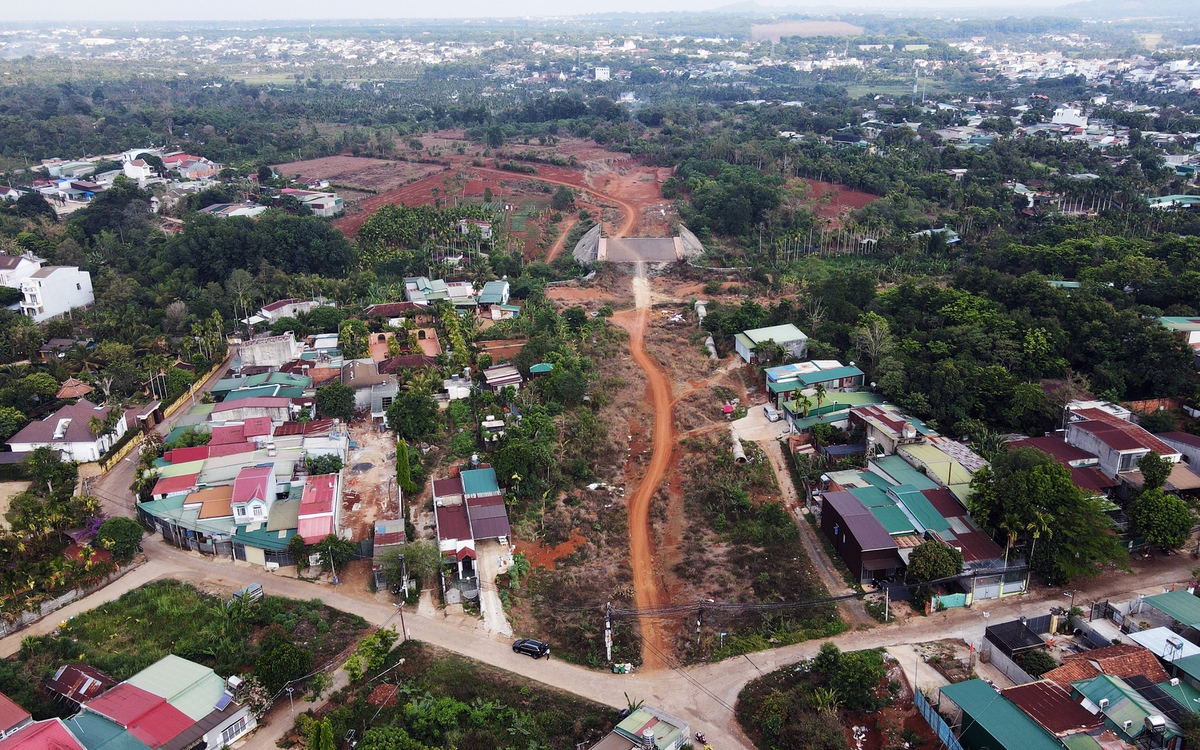
Numerous violations found in Dak Lak's 'land for infrastructure' projects
Translated from Vietnamese, summarized and contextualized by DistantNews.
TLDR
- An inspection by the Dak Lak Provincial Inspectorate revealed numerous violations in public-private partnership (PPP) projects, primarily Build-Transfer (BT) contracts.
- These violations span from cost estimation and construction to land compensation, leading to project delays, cost overruns totaling tens of billions of dong, and risks of public asset loss.
- The provincial government has ordered accountability for involved parties and is reviewing measures to resolve issues in five audited PPP projects to prevent further waste and corruption.
Serious irregularities have been uncovered in Dak Lak province's public-private partnership (PPP) projects, particularly those operating under Build-Transfer (BT) contracts. A recent inspection by the Provincial Inspectorate has brought to light systemic flaws that permeate the entire lifecycle of these projects, from initial budgeting and design to construction and final land compensation payments. These findings paint a grim picture of mismanagement and potential corruption, raising concerns about the efficient use of public funds and the integrity of infrastructure development.
The inspection report details significant discrepancies in project cost estimations, leading to substantial budget increases and, in some cases, the need for deductions due to errors. For instance, the Giaiphóng Road project saw its total investment adjusted upwards by over 62.45 billion dong, with over 13.49 billion dong identified as errors requiring reduction. The report also highlights issues such as incorrect calculation of loan interest costs and improper determination of equity structures, alongside the application of unsuitable norms and unit prices for materials. Furthermore, substantial cost differences remain under review, particularly concerning labor costs and advance payments made by investors for site clearance, indicating a lack of proper financial oversight.
Beyond financial miscalculations, the construction phase of these projects has also been found wanting. Reports indicate that several projects deviated from approved designs, with missing elements like curbs and incorrect placement of expansion joints. In some instances, road foundations were built significantly higher than specified in the designs, and entirely new components were added without prior approval. The quality control process has also been criticized for its laxity, with numerous acceptance records lacking necessary signatures, inadequate checks on incoming materials, and a failure to follow established acceptance planning procedures.
The provincial leadership has acknowledged the severity of these findings and has initiated measures to address the situation. An order has been issued for the accountability of all responsible organizations and individuals. Concurrently, a review is underway to resolve the bottlenecks affecting five audited PPP projects. The objective is to expedite the resolution of these issues, prevent further financial waste, and curb potential corruption, thereby restoring public confidence in the province's development initiatives. This situation underscores the critical need for robust oversight and transparent practices in public-private partnerships to ensure that taxpayer money is used effectively and ethically.
DistantNews Editorial
Originally published by Tuổi Trẻ in Vietnamese. Translated, summarized, and contextualized by our editorial team with added local perspective. Read our editorial standards.
More Stories

From Our Blog

What Gets Lost (and Found) When News Is Translated

The Critical Role of Diaspora Media in Global News

What Travellers Should Know About Countries with Restricted Press

A Digital Nomad's Guide to Following Local News

How the Same Story Looks Different in Different Countries
