


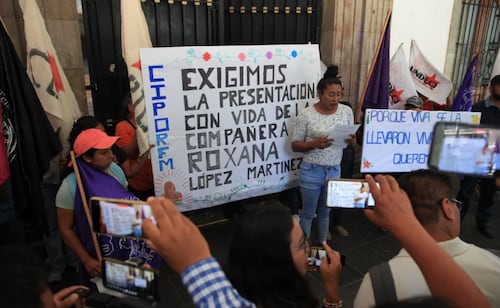
Oaxaca: Indigenous groups demand accelerated investigation into Roxana López's disappearance, occupy rights office
Translated from Spanish, summarized and contextualized by DistantNews.
TLDR
- Indigenous groups in Oaxaca, Mexico, protested and occupied the State Human Rights Coordination office.
- They demand accelerated investigations into the disappearance of Roxana López Martínez, citing state negligence.
- Protesters accuse multiple state institutions of failing to coordinate and allowing the suspect to flee.
The disappearance of Roxana López Martínez is a stark reminder of the systemic failures within Oaxaca's justice system. For over two months, her family and the Consejo Indígena Popular de Oaxaca “Ricardo Flores Magón” (CIPO-RFM) have faced a frustrating lack of action and coordination from state authorities. The CIPO-RFM's occupation of the State Human Rights Coordination facilities is a desperate measure to force accountability.
According to the CIPO-RFM, the Vice-Prosecutor's Office in the Mixteca region was slow to respond to the initial disappearance report. Furthermore, the State Search Commission, led by Michel López, allegedly conducted search operations in San Martín Itunyoso without proper coordination, inadvertently alerting the primary suspect and facilitating his escape. This lack of inter-agency cooperation has been a recurring theme, with accusations leveled against the Victim Assistance Commission, the Oaxaca Government's Human Rights Coordination, the State Search Commission, the State Attorney General's Office, the Fire Department, the Secretariat of Government, and the state government itself.
The family's anguish is compounded by broken promises. Oaxaca's Attorney General, Bernardo Rodríguez Alamilla, reportedly pledged to expedite the investigation and utilize available technology to find Roxana. However, the CIPO-RFM asserts that no meaningful progress has been made. The timeline of events, with Roxana last seen on February 20, 2026, entering the home of the former municipal president in San Martín Ituyonso around 11 p.m., allegedly after being summoned by her boyfriend, Dagoberto López Díaz (nephew of the local mayor), paints a disturbing picture of potential complicity and cover-up.
This case highlights a critical issue often overlooked in national narratives: the deep-seated distrust between indigenous communities and state institutions in regions like Oaxaca. While international media might focus on the crime itself, for the people of Oaxaca, this is a profound indictment of a system that consistently fails to protect its most vulnerable citizens. The CIPO-RFM's actions are not just about finding Roxana; they are a fight for justice and a demand for a system that respects the rights and dignity of indigenous peoples.
En un primer momento la Comisión de Búsqueda actuó sin tener conocimiento del contexto, sin coordinación con las otras instituciones puso en alerta al indiciado y a sus cómplices
DistantNews Editorial
Originally published by El Universal in Spanish. Translated, summarized, and contextualized by our editorial team with added local perspective. Read our editorial standards.
More Stories

From Our Blog

What Press Freedom Means for the News You Read

What Gets Lost (and Found) When News Is Translated

The Critical Role of Diaspora Media in Global News

What Travellers Should Know About Countries with Restricted Press

A Digital Nomad's Guide to Following Local News
